William I of Sicily
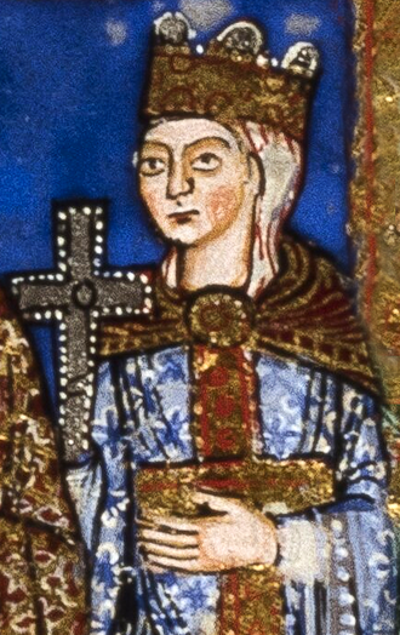
William I, called the Bad or the Wicked, was the second king of Sicily, ruling from his father's death in 1154 to his own in 1166. He was the fourth son of Roger II and Elvira of C…
William I of Sicily
Explore 33 historical events from 1160β1169.
William I, called the Bad or the Wicked, was the second king of Sicily, ruling from his father's death in 1154 to his own in 1166. He was the fourth son of Roger II and Elvira of C…
William I of Sicily
The Normans were a population arising in the medieval Duchy of Normandy from the intermingling between Norse Viking settlers and locals of West Francia. The Norse settlements in We…
Norman mercenaries land at Bannow Bay in Leinster, marking the beginning of the Norman invasion of Ireland
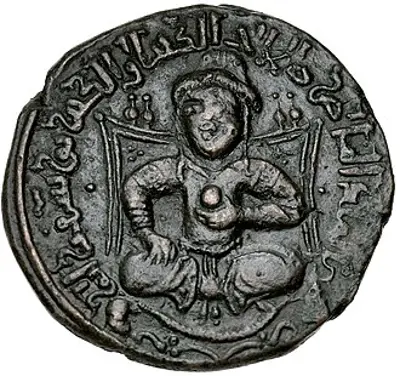
Rudolf I was Count of Bregenz, Count of Chur and Count of Lower Raetia from 1097 to his death in 1160. He may well be claimed as the first ruler of a united Vorarlberg.
Rudolf I, Count of Bregenz (born 1081)
The Anglo-Normans were the medieval ruling class in the Kingdom of England following the Norman Conquest. They were primarily a combination of Normans, Bretons, Frenchmen, Anglo-Sa…
Norman mercenaries landed at Bannow Bay in Leinster, beginning the Norman invasion of Ireland
Fergus of Galloway was a twelfth-century Lord of Galloway. Although his familial origins are unknown, it is possible that he was of Norse-Gaelic ancestry. Fergus first appears on r…
Fergus of Galloway, Scottish nobleman
Theobald of Bec was a Norman archbishop of Canterbury from 1139 to 1161. His exact birth date is unknown. Some time in the late 11th or early 12th century Theobald became a monk at…
Theobald of Bec, French-English archbishop (born 1090)
Bashnouna was a Coptic saint and martyr.
Saint Bashnouna, Egyptian saint and martyr
Victor IV was elected as a Ghibelline antipope in 1159, following the death of Pope Adrian IV and the election of Alexander III. His election was supported by Emperor Frederick Bar…
Antipope Victor IV
The Battle of Monte Porzio was fought on 29 May 1167 between the Holy Roman Empire and the Commune of Rome. The communal Roman army, which one historian has called the "greatest ar…
Battle of Monte Porzio: A Roman army supporting Pope Alexander III is defeated by Christian of Buch and Rainald of Dasse
Saint Erik, also called Eric IX or Erik Jedvardsson was King of Sweden from c. 1156 until his death in 1160. The Roman Martyrology of the Catholic Church names him as a saint memor…
Eric Jedvardsson (King Eric IX) of Sweden (since 1156); (born circa 1120)
The Anglo-Normans were the medieval ruling class in the Kingdom of England following the Norman Conquest. They were primarily a combination of Normans, Bretons, Frenchmen, Anglo-Sa…
Norman mercenaries landed at Bannow Bay in Leinster, beginning the Norman invasion of Ireland
The Normans were a population arising in the medieval Duchy of Normandy from the intermingling between Norse Viking settlers and locals of West Francia. The Norse settlements in We…
Norman mercenaries land at Bannow Bay in Leinster, marking the beginning of the Norman invasion of Ireland
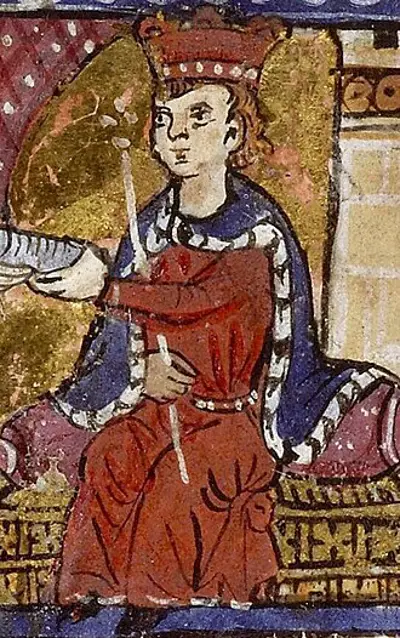
The Battle of the Blacks or Battle of the Slaves was a conflict in Cairo that occurred during the Rise of Saladin in Egypt, on 21–23 August 1169, between the black African units of…
Battle of the Blacks: Uprising by the black African forces of the Fatimid army, along with a number of Egyptian emirs…
Guido of Pisa was an Italian geographer from Pisa. In 1119 he edited and updated the Geographica, a geographic encyclopedia first created in the eighth century by the Anonymous of…
Guido of Ravenna, Italian cartographer, entomologist and historian
Emperor Zhangzong of Jin, personal name Madage, sinicized name Wanyan Jing, was the sixth emperor of the Jurchen-led Jin dynasty of China. He reigned from 20 January 1189 to 29 Dec…
Zhang Zong, Chinese emperor (died 1208)
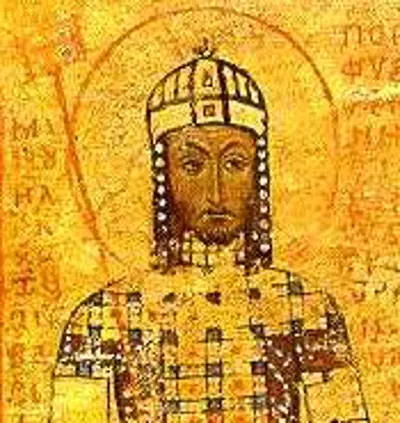
Amalric, formerly known in historiography as Amalric I, was the king of Jerusalem from 1163 until his death. His Muslim adversaries described him as the bravest and cleverest of th…
King Amalric of Jerusalem marries Byzantine princess Maria Komnene in the cathedral of Tyre.
Rainald of Dassel was Archbishop of Cologne and Archchancellor of Italy from 1159 until his death. A close advisor to the Hohenstaufen emperor Frederick Barbarossa, he had an impor…
Rainald of Dassel, Italian archbishop
The Battle of Monte Porzio was fought on 29 May 1167 between the Holy Roman Empire and the Commune of Rome. The communal Roman army, which one historian has called the "greatest ar…
Battle of Monte Porzio: A Roman army supporting Pope Alexander III is defeated by Christian of Buch and Rainald of Dasse
The Battle of Sirmium, Battle of Semlin or Battle of Zemun was fought on July 8, 1167 between the Byzantine Empire, and the Kingdom of Hungary. The Byzantines achieved a decisive v…
The Byzantines defeat the Hungarian army decisively at Sirmium, forcing the Hungarians to sue for peace.
Empress Matilda, also known as Empress Maud, was Holy Roman Empress as the consort of Emperor Henry V from 1110 until his death in 1125, and was subsequently a claimant to the Engl…
Matilda of England, Holy Roman Empress (born 1102)
Henry II was the count of Champagne from 1181 and the lord of the Kingdom of Jerusalem from his marriage to Isabella I of Jerusalem in 1192 until his death in 1197. He was an asser…
Henry II, French nobleman and king of Jerusalem (died 1197)
William I, called the Bad or the Wicked, was the second king of Sicily, ruling from his father's death in 1154 to his own in 1166. He was the fourth son of Roger II and Elvira of C…
William I of Sicily
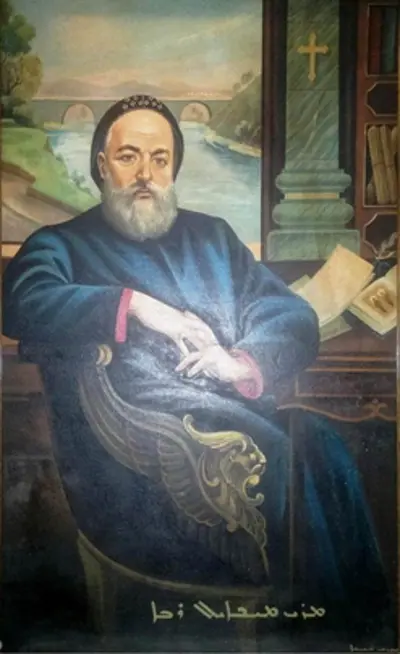
Ibn 'Arabī was a Sunni Muslim Arab scholar, Sufi mystic, poet, and Muslim philosopher from al-Andalus, who exercised notable influence within Sufi metaphysics and Islamic thought i…
Ibn Arabi, Andalusian Sufi mystic, poet, and philosopher (died 1240)
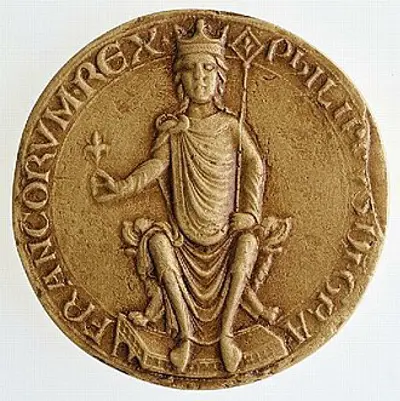
Philip II, also known as Philip Augustus, was King of France from 1180 to 1223. His predecessors had been known as kings of the Franks, but from 1190 onward, Philip became the firs…
Philip II of France (died 1223)
Emperor Nijō was the 78th emperor of Japan, according to the traditional order of succession. His reign spanned the years from 1158 through 1165.
Nijō, emperor of Japan (born 1143)
Ḥasan ʿAlā Zikrihi's-Salām or Hassan II was the hereditary Imam of the Nizari Isma'ilis of the Alamut Period from 1162 until 1166. From his capital of Alamut he ruled parts of Pers…
Hassan II of Alamut proclaims the qiyāma, according to which Ismaili practice would change from traditional islamic…
The Battle of Harim (Harenc) was fought on 12 August 1164 at Harim, Syria, between the forces of Nur ad-Din, and a combined army from the County of Tripoli, the Principality of Ant…
Battle of Harim: Nur ad-Din Zangi defeats the Crusader armies of the County of Tripoli and the Principality of Antioch.
Victor IV was elected as a Ghibelline antipope in 1159, following the death of Pope Adrian IV and the election of Alexander III. His election was supported by Emperor Frederick Bar…
Antipope Victor IV
Bashnouna was a Coptic saint and martyr.
Saint Bashnouna, Egyptian saint and martyr
Elisabeth of Schönau was a German Benedictine visionary. She was an abbess at the Schönau Abbey in the Duchy of Nassau, and reportedly experienced numerous religious visions, for w…
Elisabeth of Schönau, German Benedictine visionary (born c
Emperor Sutoku was the 75th emperor of Japan, according to the traditional order of succession. Along with Sugawara no Michizane and Taira no Masakado, he is known as one of the "…
Emperor Sutoku of Japan (born 1119)
Géza II was King of Hungary and Croatia from 1141 to 1162. He was the oldest son of King Béla the Blind and his wife, Helena of Serbia. When his father died, Géza was still a child…
Géza II, king of Hungary (born 1130)
Odo II was Duke of Burgundy between 1143 and 1162.
Odo II, Duke of Burgundy (born 1118)
Haakon II Sigurdsson, also known as Haakon Herdebrei meaning Haakon Broadshoulder, was King of Norway from 1157 until 1162 during the civil war era in Norway.
Haakon II Sigurdsson, king of Norway (born 1147)