
Abu Abdullah Muhammad ibn Yusuf ibn Nasr, also known as Ibn al-Ahmar and by his honorific al-Ghalib billah, was the first ruler of the Emirate of Granada, the last independent Muslim state on the Iberian Peninsula, and the founder of its ruling Nasrid dynasty. He lived during a time when Iberia's Christian kingdoms—especially Portugal, Castile and Aragon—were expanding at the expense of the Islamic territory in Iberia, called Al-Andalus. Muhammad ibn Yusuf took power in his native Arjona in 1232 when he rebelled against the de facto leader of Al-Andalus, Ibn Hud. During this rebellion, he was able to take control of Córdoba and Seville briefly, before he lost both cities to Ibn Hud. Forced to acknowledge Ibn Hud's suzerainty, Muhammad was able to retain Arjona and Jaén. In 1236, he betrayed Ibn Hud by helping Ferdinand III of Castile take Córdoba. In the years that followed, Muhammad was able to gain control over southern cities, including Granada (1237), Almería (1238), and Málaga (1239). In 1244, he lost Arjona to Castile. Two years later, in 1246, he agreed to surrender Jaén and accept Ferdinand's overlordship in exchange for a 20-year truce.
Muhammad ibn Yusuf, who later established the Emirate of Granada, the last Muslim state in Spain, was elected the ruler of Arjona.
On July 16, in the year 1232, Muhammad ibn Yusuf, who later established the Emirate of Granada, the last Muslim state in Spain, was elected the ruler of Arjona. This event is recorded as a Selected Events event in the history of July 16, one of 408 recorded events on this date across all of history.
Key Facts
- This event took place on July 16, 1232 (AD era).
- It is categorised as a Selected Events event in recorded history.
- Referenced in 3 Wikipedia articles.
- Wikipedia source last updated on 9 June 2026.
On This Date in History 408
This article draws on content from Wikipedia, available under CC BY-SA 4.0.
More on July 16

At least 23 students died and dozens more fell ill at a primary school in the Indian state of Bihar after consuming a…
Bihar is a state in eastern India. It borders Uttar Pradesh to its west, Nepal to the north, the northern part of West Bengal to the east, and Jharkhand to the south. Bihar is spl…
At least 23 students died and dozens more fell ill at a primary school in the Indian state of Bihar after consuming a…

A tainted milk powder scandal broke in China which ultimately involved an estimated 300,000 victims, the vast majority…
The 2008 Chinese milk scandal was a significant food safety incident in China. The scandal involved Sanlu Group's milk and infant formula along with other food materials and compo…
A tainted milk powder scandal broke in China which ultimately involved an estimated 300,000 victims, the vast majority…
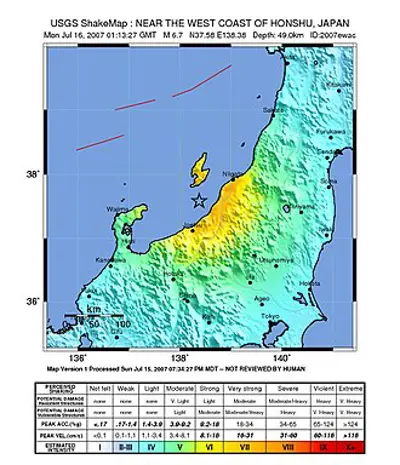
An earthquake of magnitude .mw-parser-output .tooltip-dotted{border-bottom:1px dotted;cursor:help}Mw 6.6 struck…
The Chūetsu offshore earthquake was a powerful magnitude 6.6 earthquake that occurred 10:13 local time on July 16, 2007, in the northwest Niigata Prefecture of Japan. The earthqu…
An earthquake of magnitude .mw-parser-output .tooltip-dotted{border-bottom:1px dotted;cursor:help}Mw 6.6 struck…

Millennium Park, a public park in Chicago, Illinois, and one of the world's largest rooftop gardens, opened to the…
Millennium Park is a public park in the Loop community area of Chicago, Illinois, United States, operated by the Chicago Department of Cultural Affairs and Special Events (DCASE).…
Millennium Park, a public park in Chicago, Illinois, and one of the world's largest rooftop gardens, opened to the…
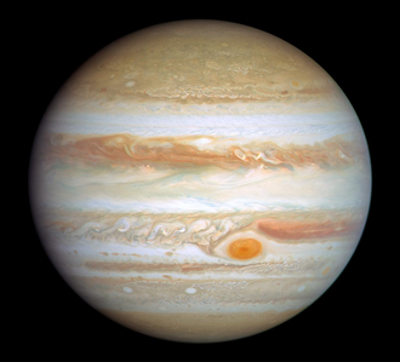
Fragments of Comet Shoemaker–Levy 9 began colliding with the planet Jupiter , with the first impact causing a fireball…
Comet Shoemaker–Levy 9 was a comet that broke apart in July 1992 and collided with Jupiter in July 1994, providing the first direct observation of an extraterrestrial collision of…
Fragments of Comet Shoemaker–Levy 9 began colliding with the planet Jupiter , with the first impact causing a fireball…

A 7.8 MS earthquake struck the densely populated Philippine island of Luzon, killing an estimated 1,621 people.
The surface wave magnitude scale is one of the magnitude scales used in seismology to describe the size of an earthquake. It is based on measurements of Rayleigh surface waves tha…
A 7.8 MS earthquake struck the densely populated Philippine island of Luzon, killing an estimated 1,621 people.

Comments 0
Sign in to join the discussion.