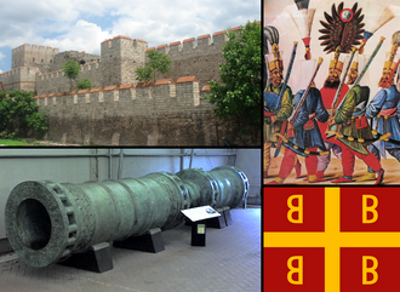
The Byzantine–Ottoman wars were a series of decisive conflicts between the Byzantine Greeks and Ottoman Turks and their allies that led to the final destruction of the Byzantine Empire and the rise of the Ottoman Empire. The Byzantines, already having been in a weak state even before the dismemberment of their Empire following the Fourth Crusade, failed to recover fully under the rule of the Palaiologos dynasty. Thus, the Byzantines faced increasingly disastrous defeats at the hands of the Ottomans. Ultimately, they lost Constantinople in 1453, formally ending the conflicts.
Byzantine–Ottoman wars: The Empire of Trebizond, the longest-surviving Byzantine successor state, was conquered by Ottoman forces following a month-long siege.
On August 15, in the year 1461, Byzantine–Ottoman wars: The Empire of Trebizond, the longest-surviving Byzantine successor state, was conquered by Ottoman forces following a month-long siege. This event is recorded as a Selected Events event in the history of August 15, one of 485 recorded events on this date across all of history.
Key Facts
- This event took place on August 15, 1461 (AD era).
- It is categorised as a Selected Events event in recorded history.
- Referenced in 5 Wikipedia articles.
- Wikipedia source last updated on 27 July 2026.
On This Date in History 485
This article draws on content from Wikipedia, available under CC BY-SA 4.0.
More on August 15
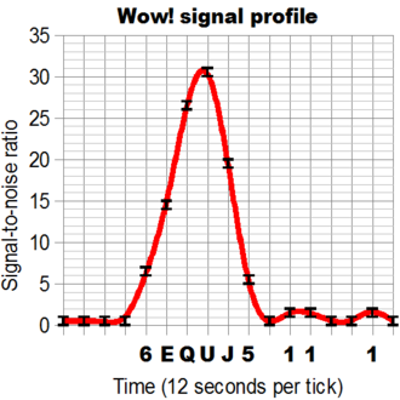
1977
Big Ear, a radio telescope at Ohio State University, received a strong, apparently extraterrestrial radio signal that…
The Ohio State University Radio Observatory was a Kraus-type radio telescope located on the grounds of the Perkins Observatory at Ohio Wesleyan University in Delaware, Ohio from 1…
Big Ear, a radio telescope at Ohio State University, received a strong, apparently extraterrestrial radio signal that…
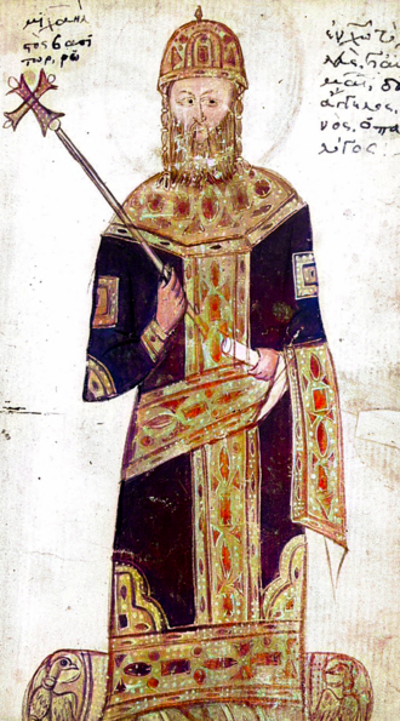
1261
765 years ago
Michael VIII Palaiologoswas crowned Byzantine emperor in Constantinople.
Michael VIII Palaiologos or Palaeologus reigned as Byzantine emperor from 1261 until his death in 1282, and previously as the co-emperor of the Empire of Nicaea from 1259 to 1261.…
Michael VIII Palaiologoswas crowned Byzantine emperor in Constantinople.
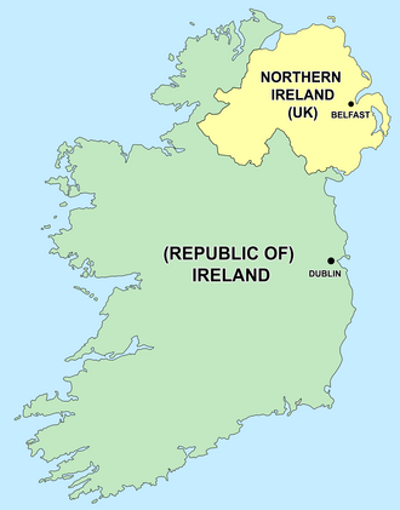
1998
The Troubles: A car bomb attack carried out by the Real Irish Republican Army killed 29 people and injured…
The Troubles were an ethno-nationalist conflict in Northern Ireland that lasted for about 30 years from the late 1960s to 1998. Also known internationally as the Northern Ireland …
The Troubles: A car bomb attack carried out by the Real Irish Republican Army killed 29 people and injured…
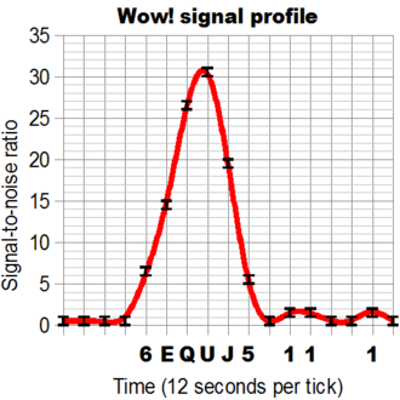
1977
Big Ear, a radio telescope at Ohio State University received a strong, apparently extraterrestrial radio signal that…
The Ohio State University Radio Observatory was a Kraus-type radio telescope located on the grounds of the Perkins Observatory at Ohio Wesleyan University in Delaware, Ohio from 1…
Big Ear, a radio telescope at Ohio State University received a strong, apparently extraterrestrial radio signal that…
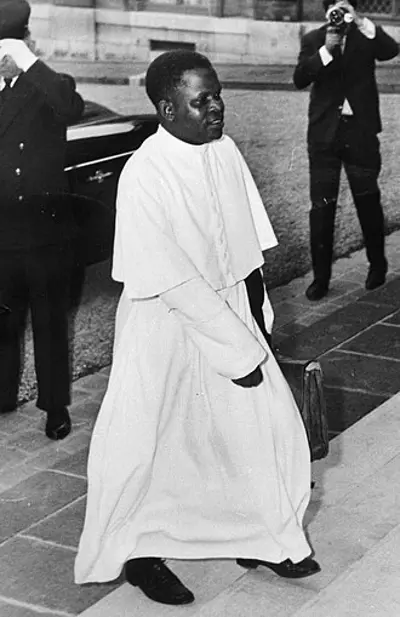
1963
President Fulbert Youlou was overthrown in the Republic of Congo, after a three-day uprising in the capital.
Fulbert Youlou was a Congolese nationalist leader and former Catholic priest who became the first President of the Republic of the Congo upon its independence in 1960.
President Fulbert Youlou was overthrown in the Republic of Congo, after a three-day uprising in the capital.
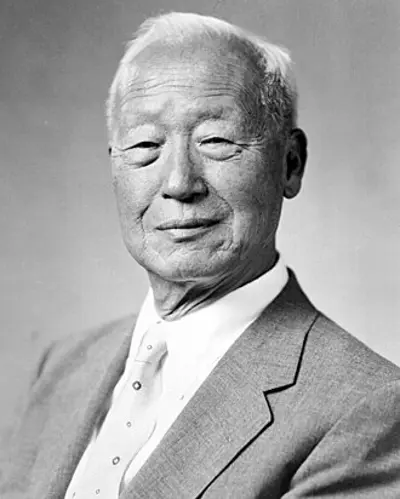
1948
The Republic of Korea was established with Syngman Rhee (pictured) as its first president.
The history of South Korea begins with the Japanese surrender on 2 September 1945. At that time, South Korea and North Korea were divided, despite being the same people and on the…
The Republic of Korea was established with Syngman Rhee (pictured) as its first president.
Comments 0
Sign in to join the discussion.