
The Massachusetts Bay Colony (1628–1691), more formally the Colony of Massachusetts Bay, was an English settlement on the east coast of North America around Massachusetts Bay, a territory inhabited by Algonquian Native American tribes. The colony was in a territory the colonists called New England, with initial settlements on two natural harbors and surrounding land about 15.4 miles (24.8 km) apart—the areas around Salem and Boston, north of the previously established Plymouth Colony. The territory nominally administered by the Massachusetts Bay Colony covered much of central New England, including portions of what are now Massachusetts, Maine, New Hampshire, and Connecticut. The territory of the Massachusetts Bay colony was one of the several colonial territories reorganized as the Province of Massachusetts Bay in 1691.
The Massachusetts Bay Colony votes to establish a theological college, which would later become Harvard University.
On October 28, in the year 1636, The Massachusetts Bay Colony votes to establish a theological college, which would later become Harvard University. This event is recorded as a Historical Events event in the history of October 28, one of 451 recorded events on this date across all of history.
Key Facts
- This event took place on October 28, 1636 (AD era).
- It is categorised as a Historical Events event in recorded history.
- Referenced in 2 Wikipedia articles.
- Wikipedia source last updated on 20 October 2026.
On This Date in History 451
This article draws on content from Wikipedia, available under CC BY-SA 4.0.
More on October 28
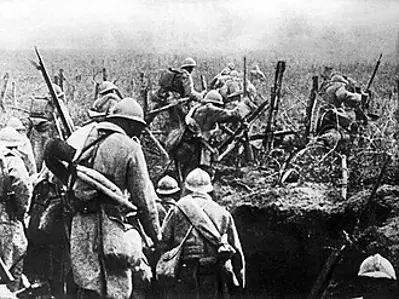
World War I: A new Polish government in western Galicia is established, triggering the Polish–Ukrainian War.
World War I, or the First World War, also known as the Great War, was a global conflict between two coalitions: the Allies and the Central Powers. One of the deadliest conflicts i…
World War I: A new Polish government in western Galicia is established, triggering the Polish–Ukrainian War.

World War I: Czech politicians peacefully take over the city of Prague, thus establishing the First Czechoslovak…
The First Czechoslovak Republic, often colloquially referred to as the First Republic, was the first Czechoslovak state that existed from 1918 to 1938, a union of ethnic Czechs an…
World War I: Czech politicians peacefully take over the city of Prague, thus establishing the First Czechoslovak…
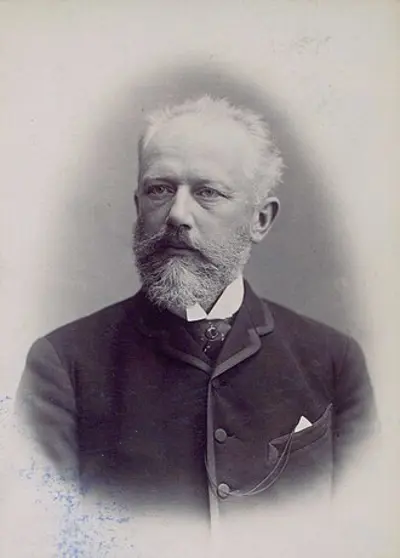
Pyotr Tchaikovsky's Symphony No. 6 in B Minor, Pathétique receives its première performance only nine days before the…
Pyotr Ilyich Tchaikovsky was a Russian composer of the Romantic period. He was the first Russian composer whose music made a lasting impression internationally. Tchaikovsky wrote …
Pyotr Tchaikovsky's Symphony No. 6 in B Minor, Pathétique receives its première performance only nine days before the…
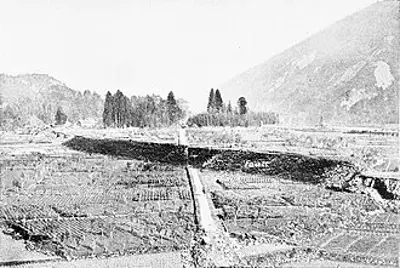
The Mino–Owari earthquake, the largest inland earthquake in Japan's history, occurs.
The 1891 Mino–Owari earthquake struck the Japanese provinces of Mino and Owari in the Nōbi Plain in the early morning of October 28 with a surface-wave magnitude of 8.0 and momen…
The Mino–Owari earthquake, the largest inland earthquake in Japan's history, occurs.
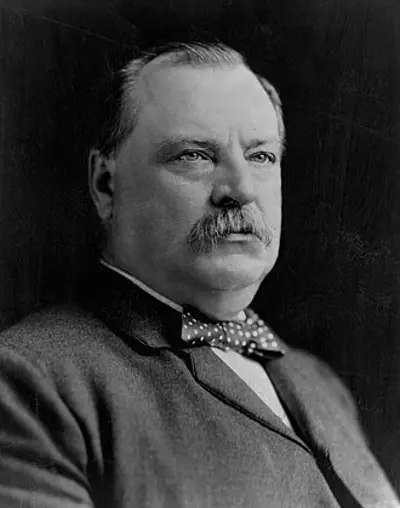
US president Grover Cleveland dedicates the Statue of Liberty.
Stephen Grover Cleveland was the 22nd and 24th president of the United States, serving from 1885 to 1889 and from 1893 to 1897. He was the first Democrat elected president after t…
US president Grover Cleveland dedicates the Statue of Liberty.
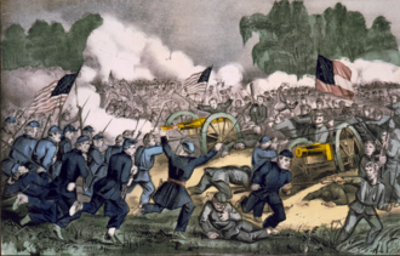
American Civil War: In East Tennessee, Union forces under General Alvan C. Gillem route Confederate troops under…
The American Civil War was a civil war in the United States between the Union and the Confederacy, which formed in 1861 by Southern states that had decided to secede from the Unio…
American Civil War: In East Tennessee, Union forces under General Alvan C. Gillem route Confederate troops under…
Comments 0
Sign in to join the discussion.