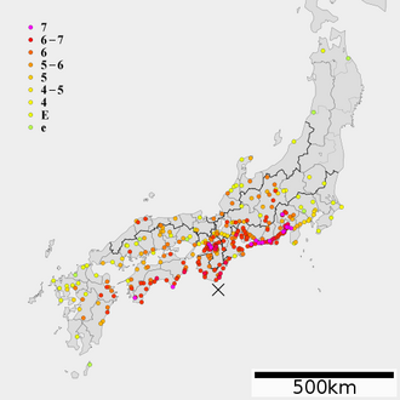
The 1707 Hōei earthquake struck south-central Japan at around 13:45 local time on 28 October 1707. It was the largest earthquake in Japanese history until it was surpassed by the 2011 Tōhoku earthquake. It caused moderate-to-severe damage throughout southwestern Honshu, Shikoku and southeastern Kyūshū. The earthquake, and the resulting destructive tsunami, caused more than 5,000 casualties. This event ruptured all of the segments of the Nankai megathrust simultaneously, the only earthquake known to have done this, with an estimated magnitude of 8.6 ML or 8.7 Mw. It possibly also triggered the last eruption of Mount Fuji 49 days later.
The 1707 Hōei earthquake causes more than 5,000 deaths in Japan.
On October 28, in the year 1707, The 1707 Hōei earthquake causes more than 5,000 deaths in Japan. This event is recorded as a Historical Events event in the history of October 28, one of 451 recorded events on this date across all of history.
Key Facts
- This event took place on October 28, 1707 (AD era).
- It is categorised as a Historical Events event in recorded history.
- Referenced in 1 Wikipedia article.
- The event is associated with a specific geographical location (see map below).
- Wikipedia source last updated on 26 July 2026.
On This Date in History 451
This article draws on content from Wikipedia, available under CC BY-SA 4.0.
More on October 28
1918
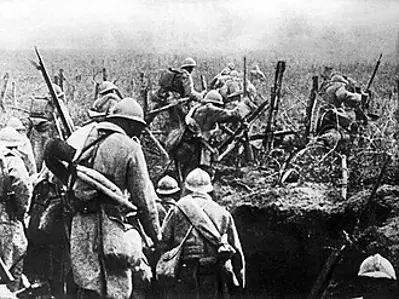
World War I: A new Polish government in western Galicia is established, triggering the Polish–Ukrainian War.
World War I, or the First World War, also known as the Great War, was a global conflict between two coalitions: the Allies and the Central Powers. One of the deadliest conflicts i…
World War I: A new Polish government in western Galicia is established, triggering the Polish–Ukrainian War.

1918
World War I: Czech politicians peacefully take over the city of Prague, thus establishing the First Czechoslovak…
The First Czechoslovak Republic, often colloquially referred to as the First Republic, was the first Czechoslovak state that existed from 1918 to 1938, a union of ethnic Czechs an…
World War I: Czech politicians peacefully take over the city of Prague, thus establishing the First Czechoslovak…
1893
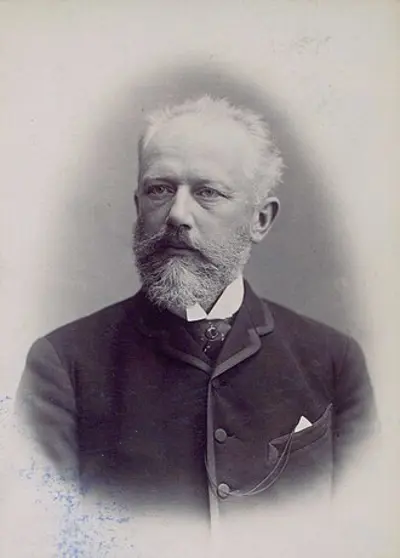
Pyotr Tchaikovsky's Symphony No. 6 in B Minor, Pathétique receives its première performance only nine days before the…
Pyotr Ilyich Tchaikovsky was a Russian composer of the Romantic period. He was the first Russian composer whose music made a lasting impression internationally. Tchaikovsky wrote …
Pyotr Tchaikovsky's Symphony No. 6 in B Minor, Pathétique receives its première performance only nine days before the…
1891
135 years ago
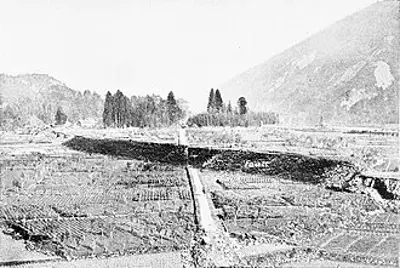
The Mino–Owari earthquake, the largest inland earthquake in Japan's history, occurs.
The 1891 Mino–Owari earthquake struck the Japanese provinces of Mino and Owari in the Nōbi Plain in the early morning of October 28 with a surface-wave magnitude of 8.0 and momen…
The Mino–Owari earthquake, the largest inland earthquake in Japan's history, occurs.
1886
140 years ago
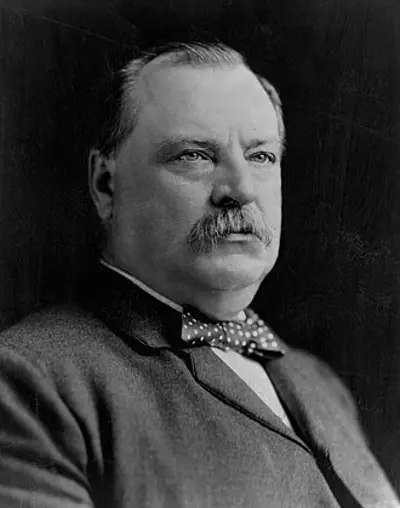
US president Grover Cleveland dedicates the Statue of Liberty.
Stephen Grover Cleveland was the 22nd and 24th president of the United States, serving from 1885 to 1889 and from 1893 to 1897. He was the first Democrat elected president after t…
US president Grover Cleveland dedicates the Statue of Liberty.
1864
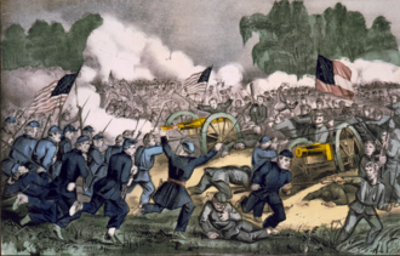
American Civil War: In East Tennessee, Union forces under General Alvan C. Gillem route Confederate troops under…
The American Civil War was a civil war in the United States between the Union and the Confederacy, which formed in 1861 by Southern states that had decided to secede from the Unio…
American Civil War: In East Tennessee, Union forces under General Alvan C. Gillem route Confederate troops under…
Comments 0
Sign in to join the discussion.