
A villa is a type of house that was originally an ancient Roman upper class country house that provided an escape from urban life. Since its origins in the Roman villa, the idea and function of a villa have evolved considerably. After the fall of the Roman Republic, villas became small farming compounds, which were increasingly fortified in Late Antiquity, sometimes transferred to the Church for reuse as a monastery. They gradually re-evolved through the Middle Ages into elegant upper-class country homes. In the early modern period, any comfortable detached house with a garden near a city or town was likely to be described as a villa; most surviving villas have now been engulfed by suburbia. In modern parlance, "villa" can refer to various types and sizes of residences, ranging from the suburban semi-detached double villa to, in some countries, especially around the Mediterranean, residences of above average size in the countryside.
The then-villa of Mayagüez, Puerto Rico, formally receives its city charter from the Royal Crown of Spain.
On July 10, in the year 1877, The then-villa of Mayagüez, Puerto Rico, formally receives its city charter from the Royal Crown of Spain. This event is recorded as a Historical Events event in the history of July 10, one of 488 recorded events on this date across all of history.
Key Facts
- This event took place on July 10, 1877 (AD era).
- It is categorised as a Historical Events event in recorded history.
- Referenced in 2 Wikipedia articles.
- Wikipedia source last updated on 31 May 2026.
On This Date in History 488
This article draws on content from Wikipedia, available under CC BY-SA 4.0.
More on July 10
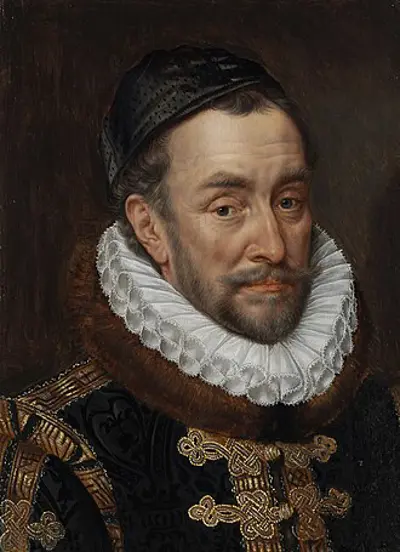
William I of Orange is assassinated in his home in Delft, Holland, by Balthasar Gérard.
William the Silent or William the Taciturn, more commonly known in the Netherlands as William of Orange and in the Dutch National anthem as Willem van Nassau, was the leader of th…
William I of Orange is assassinated in his home in Delft, Holland, by Balthasar Gérard.
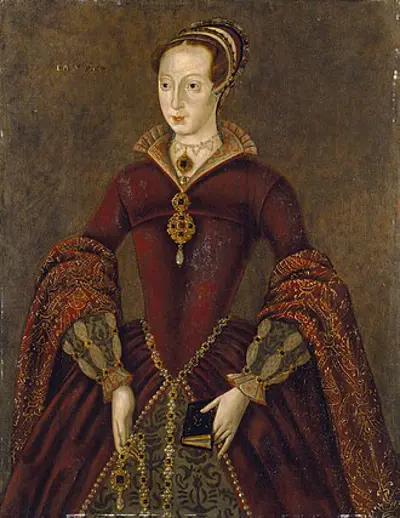
Lady Jane Grey takes the throne of England.
Lady Jane Grey, also known as Lady Jane Dudley after her marriage, and nicknamed as the "Nine Days Queen", was an English noblewoman who was proclaimed Queen of England and Irelan…
Lady Jane Grey takes the throne of England.
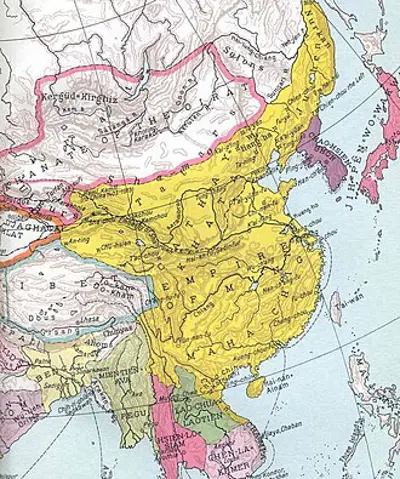
Zhu Chenhao declares the Ming dynasty's Zhengde Emperor a usurper, beginning the Prince of Ning rebellion, and leads…
Zhu Chenhao was a prince of the Ming dynasty, being a fifth-generation descendant of Zhu Quan, the seventeenth son of the founder and first emperor of the dynasty, the Hongwu Empe…
Zhu Chenhao declares the Ming dynasty's Zhengde Emperor a usurper, beginning the Prince of Ning rebellion, and leads…
The Spanish conquest of Iberian Navarre commences with the capture of Goizueta.
The Spanish conquest of the Iberian part of Navarre was initiated by Ferdinand II of Aragon and completed by his grandson and successor Holy Roman Emperor Charles V in a series of…
The Spanish conquest of Iberian Navarre commences with the capture of Goizueta.
The Portuguese explorer Nicolau Coelho returns to Lisbon after discovering the sea route to India as a companion of…
Nicolau Coelho was an expert Portuguese navigator and explorer during the Age of Discovery. He participated in the discovery of the route to India by Vasco da Gama, where he comma…
The Portuguese explorer Nicolau Coelho returns to Lisbon after discovering the sea route to India as a companion of…
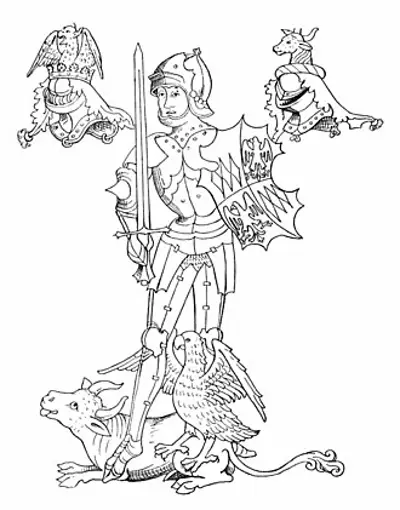
Richard Neville, 16th Earl of Warwick, defeats the king's Lancastrian forces and takes King Henry VI prisoner in the…
Richard Neville, 16th Earl of Warwick, 6th Earl of Salisbury, known as Warwick the Kingmaker, was an English nobleman, administrator, landowner of the House of Neville fortune and…
Richard Neville, 16th Earl of Warwick, defeats the king's Lancastrian forces and takes King Henry VI prisoner in the…
Comments 0
Sign in to join the discussion.