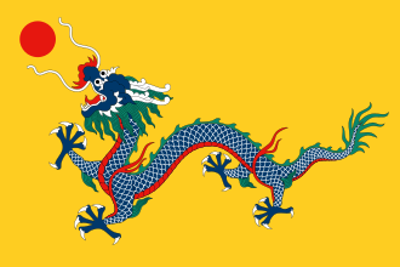
The Qing dynasty, officially the Great Qing, also known as the Qing Empire or Qing China, was a Manchu-led imperial dynasty of China and an early modern empire in East Asia which existed from 1636/1644 to 1912. The last imperial dynasty in Chinese history, the Qing dynasty was preceded by the Ming dynasty and succeeded by the Republic of China. At the height of its power, the empire stretched from the Sea of Japan in the east to the Pamir Mountains in the west, and from the Mongolian Plateau in the north to the South China Sea in the south. Originally emerging from the Later Jin dynasty founded in 1616 and proclaimed in Shenyang in 1636, the dynasty seized control of the Ming capital Beijing and North China in 1644, traditionally considered the start of the dynasty's rule. The dynasty lasted until the Xinhai Revolution of October 1911 led to the abdication of the last emperor in February 1912. The multi-ethnic Qing dynasty assembled the territorial base for modern China. The Qing controlled the most territory of any dynasty in Chinese history, and in 1790 was the fourth-largest empire in world history to that point. It was also the most populous state at the time, with over 426 million citizens in 1907.
Qing China signed the Treaty of Livadia with the Russian Empire, but the terms were so unfavorable that the Chinese government refused to ratify the treaty.
On October 2, in the year 1879, Qing China signed the Treaty of Livadia with the Russian Empire, but the terms were so unfavorable that the Chinese government refused to ratify the treaty. This event is recorded as a Selected Events event in the history of October 2, one of 308 recorded events on this date across all of history.
Key Facts
- This event took place on October 2, 1879 (AD era).
- It is categorised as a Selected Events event in recorded history.
- Referenced in 3 Wikipedia articles.
- The event is associated with a specific geographical location (see map below).
- Wikipedia source last updated on 20 September 2026.
On This Date in History 308
This article draws on content from Wikipedia, available under CC BY-SA 4.0.
More on October 2

The Shubert Theatre (pictured) opened on Broadway with a production of Hamlet.
The Shubert Theatre is a Broadway theater at 225 West 44th Street in the Theater District of Midtown Manhattan in New York City, New York, U.S. Opened in 1913, the theater was des…
The Shubert Theatre (pictured) opened on Broadway with a production of Hamlet.
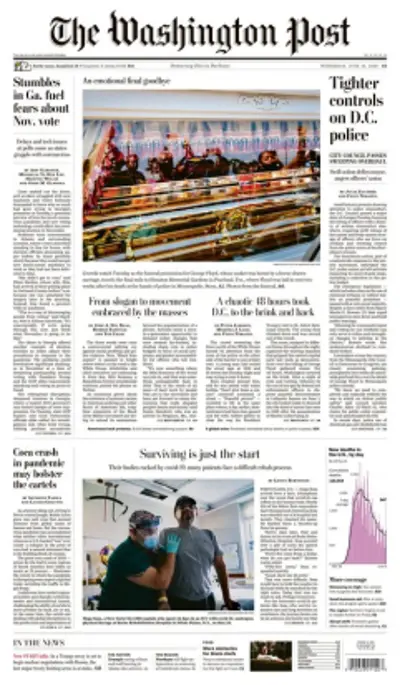
The Washington Post journalist Jamal Khashoggi was assassinated in the Saudi consulate in Istanbul, Turkey.
The Washington Post is an American daily newspaper published in Washington, D.C. It is the most widely circulated newspaper in the Washington metropolitan area and is considered a…
The Washington Post journalist Jamal Khashoggi was assassinated in the Saudi consulate in Istanbul, Turkey.

A gunman killed five Amish girls before committing suicide in a one-room schoolhouse in Nickel Mines, Pennsylvania.
On October 2, 2006, a mass shooting occurred at the West Nickel Mines School, an Amish one-room schoolhouse in the Old Order Amish community of Nickel Mines, a village in Bart Tow…
A gunman killed five Amish girls before committing suicide in a one-room schoolhouse in Nickel Mines, Pennsylvania.
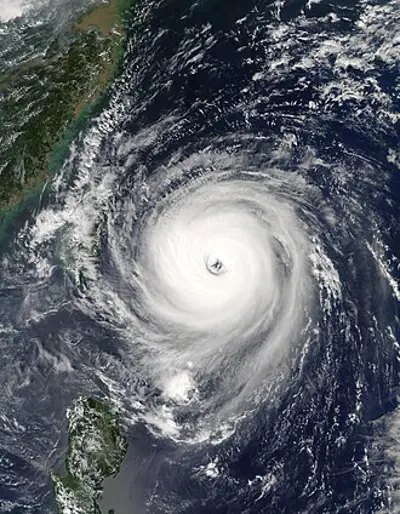
Typhoon Longwang made landfall in China as the deadliest tropical cyclone in that year to impact the country.
Typhoon Longwang, known in the Philippines as Typhoon Maring, was the deadliest tropical cyclone to impact China during the 2005 Pacific typhoon season. Longwang was first identif…
Typhoon Longwang made landfall in China as the deadliest tropical cyclone in that year to impact the country.
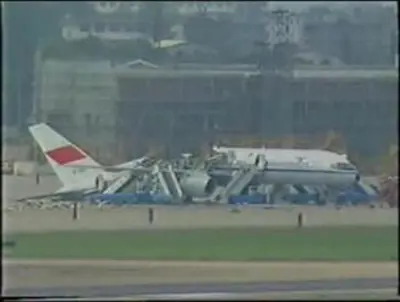
A hijacked airliner collided with two other planes while attempting to land at Guangzhou Baiyun International Airport…
Aircraft hijacking is the unlawful seizure of an aircraft by an individual or a group. Dating from the earliest of hijackings, most cases involve the pilot being forced to fly acc…
A hijacked airliner collided with two other planes while attempting to land at Guangzhou Baiyun International Airport…
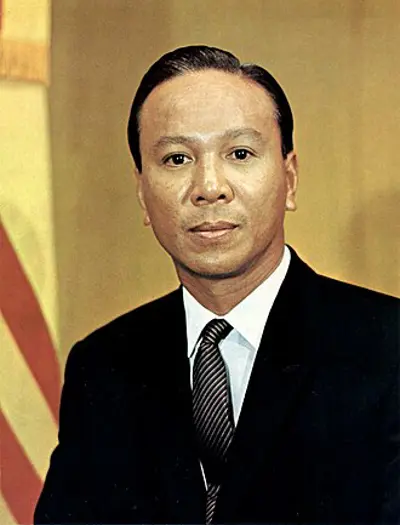
Nguyễn Văn Thiệu was re-elected unopposed as President of South Vietnam.
Nguyễn Văn Thiệu was a South Vietnamese military officer and politician who was the president of South Vietnam from 1967 to 1975. He was a general in the Republic of Vietnam Armed…
Nguyễn Văn Thiệu was re-elected unopposed as President of South Vietnam.
Comments 0
Sign in to join the discussion.