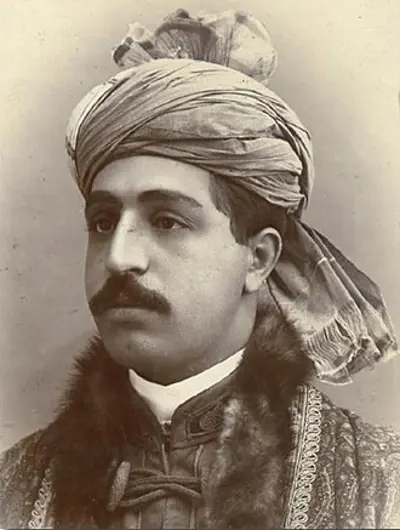
Ghazi Mohammad Ayub Khan Barakzai, nicknamed the Victor of Maiwand, and as the Afghan Prince Charlie was, for a while, the governor of Herat Province in the Emirate of Afghanistan. He was briefly the Emir of Afghanistan, from 12 October 1879 to 31 May 1880. He also led the Afghan troops during the Second Anglo-Afghan War and defeated the British Indian Army at the Battle of Maiwand. Following his defeat at the Battle of Kandahar, Ayub Khan was deposed and exiled to British India. However, Ayub Khan fled to Persia. After negotiations in 1888 with Sir Mortimer Durand, the United Kingdom's ambassador at Tehran, Ayub Khan became a pensioner of the British Raj and traveled to British India in 1888, where he lived in Lahore, Punjab, until his death in 1914. He was buried in Peshawar and had eleven wives, fifteen sons, and ten daughters. Two of his grandsons, Sardar Hissam Mahmud el-Effendi and Sardar Muhammad Ismail Khan, served as brigadiers in the Pakistan Army.
The army of Mohammad Ayub Khan is routed by the British at the Battle of Kandahar, ending the Second Anglo-Afghan War.
On September 1, in the year 1880, The army of Mohammad Ayub Khan is routed by the British at the Battle of Kandahar, ending the Second Anglo-Afghan War. This event is recorded as a Historical Events event in the history of September 1, one of 403 recorded events on this date across all of history.
Key Facts
- This event took place on September 1, 1880 (AD era).
- It is categorised as a Historical Events event in recorded history.
- Referenced in 3 Wikipedia articles.
- Wikipedia source last updated on 3 July 2026.
On This Date in History 403
This article draws on content from Wikipedia, available under CC BY-SA 4.0.
More on September 1
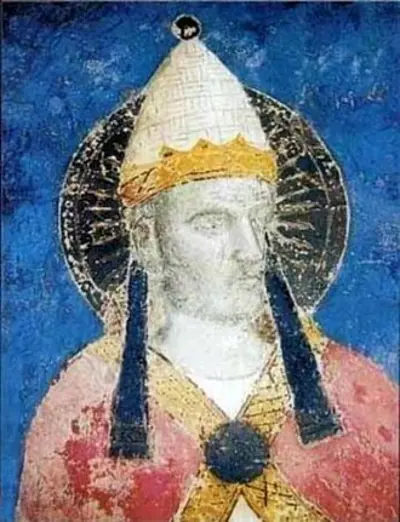
Election of pope Gregory X following the death of Clement IV three years prior.
The papal election that followed the death of Pope Clement IV lasted from 1 December 1268 to 1 September 1271 and was the longest in the history of the Catholic Church. This was d…
Election of pope Gregory X following the death of Clement IV three years prior.
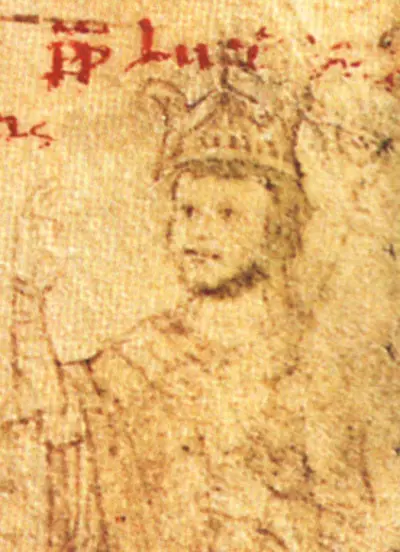
Election of pope Lucius III following the death of pope Alexander III in the previous month.
Pope Lucius III, born Ubaldo Allucingoli, reigned as head of the Catholic Church and ruler of the Papal States from 1 September 1181 to his death in 1185. Born to an aristocratic …
Election of pope Lucius III following the death of pope Alexander III in the previous month.
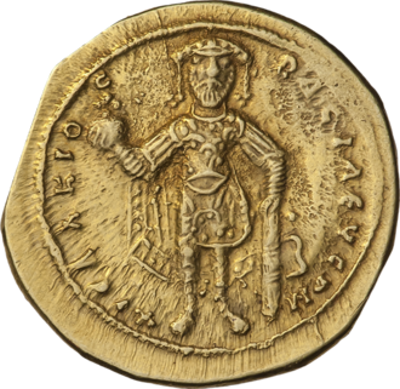
Byzantine general Isaak Komnenos is crowned Byzantine Emperor by patriarch Cerularius at the Hagia Sophia.
Isaac I Komnenos or Comnenus was Byzantine emperor from 1057 to 1059, the first reigning member of the Komnenian dynasty.
Byzantine general Isaak Komnenos is crowned Byzantine Emperor by patriarch Cerularius at the Hagia Sophia.
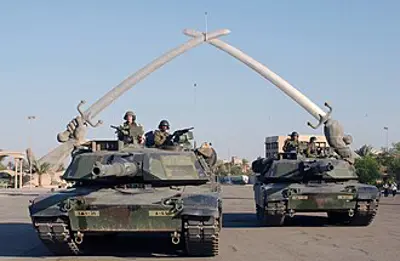
Iraq War: The United States Armed Forces transfers control of Anbar Province to the Iraqi Armed Forces.
The Iraq War, also referred to as the Second Gulf War, was a protracted armed conflict in Iraq from 2003 to 2011. It began with the invasion by a United States–led coalition, whic…
Iraq War: The United States Armed Forces transfers control of Anbar Province to the Iraqi Armed Forces.

The Beslan school siege begins when armed terrorists take schoolchildren and school staff hostage in North Ossetia,…
The Beslan school siege, also referred to as the Beslan school hostage crisis or the Beslan massacre, was a terrorist attack that occurred from 1 September 2004 to 3 September 200…
The Beslan school siege begins when armed terrorists take schoolchildren and school staff hostage in North Ossetia,…
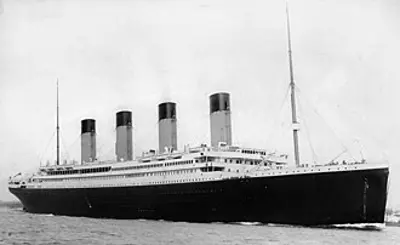
The wreck of the Titanic is discovered by an American-French expedition led by Robert Ballard and Jean-Louis Michel.
RMS Titanic was a British ocean liner that sank in the early hours of 15 April 1912 after striking an iceberg on her maiden voyage from Southampton, England, to New York City. Of …
The wreck of the Titanic is discovered by an American-French expedition led by Robert Ballard and Jean-Louis Michel.
Comments 0
Sign in to join the discussion.