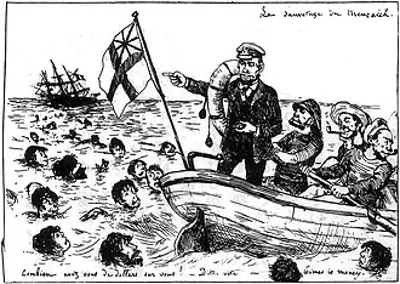
The Normanton incident was a series of events surrounding the sinking of the British merchantman Normanton of the coast of Japan's Wakayama Prefecture on 24 October 1886. Normanton, which had a mixed crew of Europeans and Asians along with 25 Japanese passengers onboard, was sailing from Yokohama to Kobe when it ran aground in bad weather and began sinking. The ship's British captain, John William Drake, escaped in Normanton's lifeboats along with his European crew members. None of the Asian crew or Japanese passengers survived the sinking, and three European sailors died of hypothermia while making their way back to the shore.
Normanton incident: As the British merchant vessel Normanton sinks off the coast of Japan, her European officers appear to commandeer the ship's lifeboats for themselves, leaving her Asian crew and passengers to die and conjuring significant political outrage in Japan.
On October 24, in the year 1886, Normanton incident: As the British merchant vessel Normanton sinks off the coast of Japan, her European officers appear to commandeer the ship's lifeboats for themselves, leaving her Asian crew and passengers to die and conjuring significant political outrage in Japan. This event is recorded as a Historical Events event in the history of October 24, one of 534 recorded events on this date across all of history.
Key Facts
- This event took place on October 24, 1886 (AD era).
- It is categorised as a Historical Events event in recorded history.
- Referenced in 2 Wikipedia articles.
- Wikipedia source last updated on 13 June 2026.
On This Date in History 534
This article draws on content from Wikipedia, available under CC BY-SA 4.0.
More on October 24
1596
430 years ago
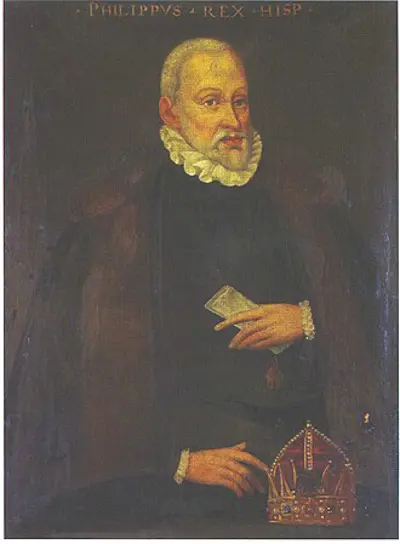
The second Spanish armada sets sail to strike against England, but is smashed by storms off Cape Finisterre forcing a…
The Second Spanish Armada also known as the Spanish Armada of 1596 was a naval operation that took place during the Anglo–Spanish War. Another invasion of England or Ireland was a…
The second Spanish armada sets sail to strike against England, but is smashed by storms off Cape Finisterre forcing a…
1590
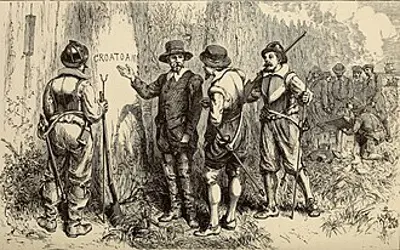
John White, the governor of the second Roanoke Colony, returns to England after an unsuccessful search for the "lost"…
John White was an English colonial governor, explorer, artist, and cartographer. White was among those who sailed with Richard Grenville in the first attempt to colonise Roanoke I…
John White, the governor of the second Roanoke Colony, returns to England after an unsuccessful search for the "lost"…
1360
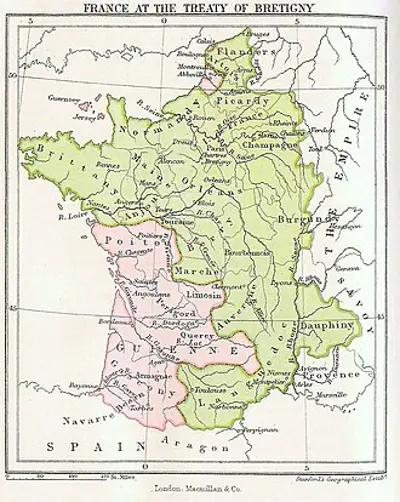
The Treaty of Brétigny is ratified, marking the end of the first phase of the Hundred Years' War.
The Treaty of Brétigny was a treaty, drafted on 8 May 1360 and ratified on 24 October 1360, between Kings Edward III of England and John II of France. In retrospect, it is seen as…
The Treaty of Brétigny is ratified, marking the end of the first phase of the Hundred Years' War.
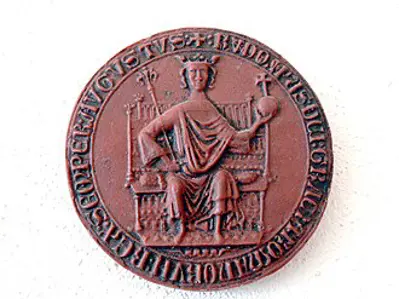
1273
Rudolf of Habsburg is crowned king of the Romans in Aachen.
Rudolf of Habsburg (1 May 1218 – 15 July 1291) was a German nobleman and the first member of the House of Habsburg to become King of the Romans, reigning from 1273 until his death…
Rudolf of Habsburg is crowned king of the Romans in Aachen.
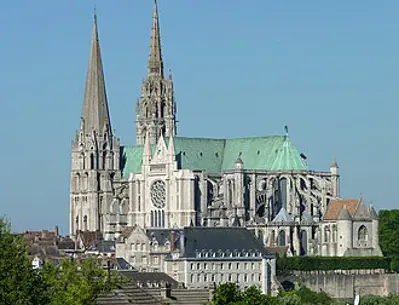
1260
Chartres Cathedral is dedicated in the presence of King Louis IX of France.
Chartres Cathedral is a Catholic cathedral in Chartres, France, about 80 km southwest of Paris, and is the seat of the Bishop of Chartres. Dedicated in honour of the Virgin Mary, …
Chartres Cathedral is dedicated in the presence of King Louis IX of France.
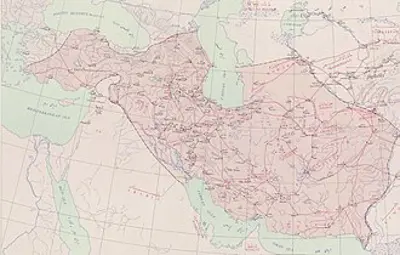
1260
After defeating the Mongols at the Battle of Ain Jalut and assassinating the previous Mamluk sultan, Qutuz, Baybars…
The Ilkhanate or Il-khanate was a Mongol khanate founded in the southwestern territories of the Mongol Empire. It was ruled by the Il-Khans or Ilkhanids, and was known to the Mong…
After defeating the Mongols at the Battle of Ain Jalut and assassinating the previous Mamluk sultan, Qutuz, Baybars…
Comments 0
Sign in to join the discussion.