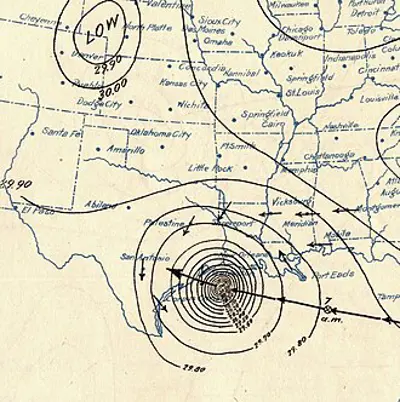
The 1900 Galveston hurricane was a catastrophic tropical cyclone that became the deadliest natural disaster in the history of the United States. The strongest storm of the 1900 Atlantic hurricane season, it left between 6,000 and 12,000 fatalities; the number most cited in official reports is 8,000. Most of these deaths occurred in and near Galveston, Texas, after the storm surge inundated the coastline city with 8 to 12 ft of water. As of 2026, it remains the fourth deadliest Atlantic hurricane on record. In addition to the number killed, the storm destroyed about 7,000 buildings in Galveston, which included 3,636 demolished homes; every dwelling in the city suffered some degree of damage. The hurricane left approximately 10,000 people in the city homeless, out of a total population of fewer than 38,000. The disaster ended the Golden Era of Galveston; the hurricane alarmed potential investors, who turned to Houston instead. In response to the storm, three engineers designed and oversaw plans to raise the Gulf of Mexico shoreline of Galveston Island by 17 ft (5.2 m) and erect a 10 mi (16 km) seawall.
The Great Galveston hurricane, the deadliest natural disaster in U.S. history, struck Galveston, Texas, with estimated winds of 135 miles per hour (215 km/h) at landfall, killing at least 6,000 people.
On September 8, in the year 1900, The Great Galveston hurricane, the deadliest natural disaster in U.S. history, struck Galveston, Texas, with estimated winds of 135 miles per hour (215 km/h) at landfall, killing at least 6,000 people. This event is recorded as a Selected Events event in the history of September 8, one of 597 recorded events on this date across all of history.
Key Facts
- This event took place on September 8, 1900 (AD era).
- It is categorised as a Selected Events event in recorded history.
- Referenced in 3 Wikipedia articles.
- Wikipedia source last updated on 29 August 2026.
On This Date in History 597
This article draws on content from Wikipedia, available under CC BY-SA 4.0.
More on September 8
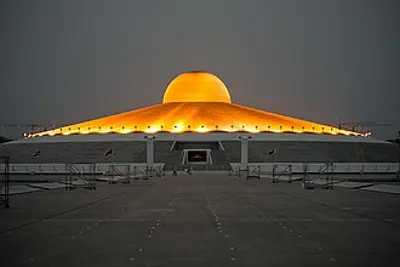
Construction began on the Dhammakaya Cetiya, a giant stupa at the Wat Phra Dhammakaya, a Buddhist temple in Pathum…
Wat Phra Dhammakaya is a Buddhist temple in Thailand. It was founded in 1970 by the maechi (nun) Chandra Khonnokyoong and Luang Por Dhammajayo. The temple's founding has roots in …
Construction began on the Dhammakaya Cetiya, a giant stupa at the Wat Phra Dhammakaya, a Buddhist temple in Pathum…

Queen Elizabeth II opened the Severn Bridge (pictured), linking South Gloucestershire in England and Monmouthshire in…
Elizabeth II was Queen of the United Kingdom and other Commonwealth realms from 6 February 1952 until her death in 2022. She was queen regnant of 32 sovereign states during her li…
Queen Elizabeth II opened the Severn Bridge (pictured), linking South Gloucestershire in England and Monmouthshire in…
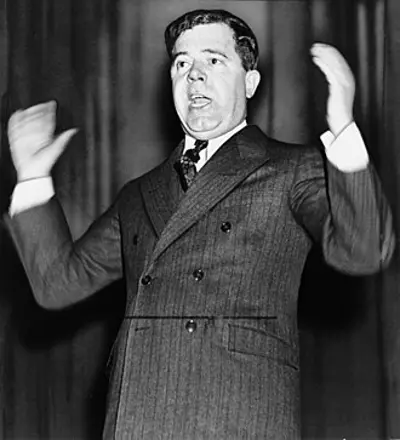
Huey Long, a U.S. senator, was shot in Baton Rouge, Louisiana, dying two days later.
Huey Pierce Long Jr., nicknamed "The Kingfish", was an American politician who served as the 40th governor of Louisiana from 1928 to 1932 and as a United States senator from 1932 …
Huey Long, a U.S. senator, was shot in Baton Rouge, Louisiana, dying two days later.
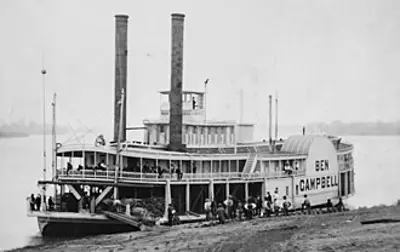
The paddle steamer Lady Elgin (pictured) was rammed by a schooner on Lake Michigan and sank, resulting in the loss of…
A paddle steamer is a steamship or steamboat powered by a steam engine driving paddle wheels to propel the craft through the water. Earlier ships that are driven by a paddle wheel…
The paddle steamer Lady Elgin (pictured) was rammed by a schooner on Lake Michigan and sank, resulting in the loss of…
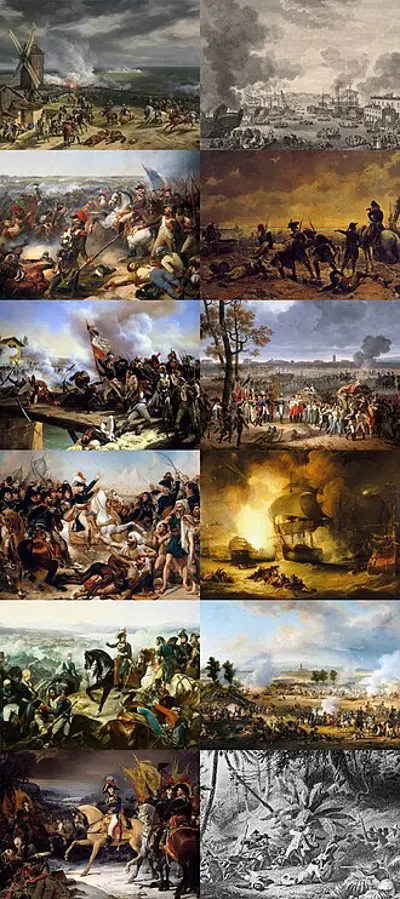
French Revolutionary Wars: Led by Napoleon, French forces defeated the Austrians at the Battle of Bassano in Veneto,…
The French Revolutionary Wars were a series of sweeping military conflicts resulting from the French Revolution that lasted from 1792 until 1802. They pitted France against Great …
French Revolutionary Wars: Led by Napoleon, French forces defeated the Austrians at the Battle of Bassano in Veneto,…
Maltese priests discontented with the Order of Saint John led an uprising that was quickly suppressed by the Order.
The Order of Knights of the Hospital of Saint John of Jerusalem, commonly known as the Knights Hospitaller, is a Catholic military order. It was founded in the crusader Kingdom of…
Maltese priests discontented with the Order of Saint John led an uprising that was quickly suppressed by the Order.

Comments 0
Sign in to join the discussion.