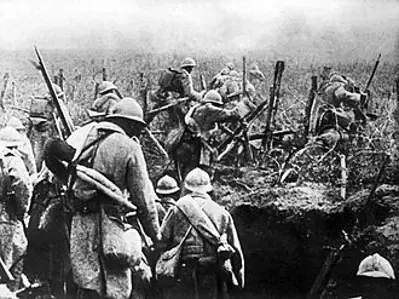
World War I, or the First World War, also known as the Great War, was a global conflict between two coalitions: the Allies and the Central Powers. One of the deadliest conflicts in history, World War I resulted in an estimated 15 to 22 million deaths, including those in war crimes and genocides. The war also helped spread the Spanish flu pandemic. The conflict saw important developments in weaponry, including the first large-scale use of machine guns, artillery, aircraft, chemical weapons, and tanks.
World War I: The Battle of Polygon Wood, part of the Battle of Passchendaele, began near Ypres, Belgium.
On September 26, in the year 1917, World War I: The Battle of Polygon Wood, part of the Battle of Passchendaele, began near Ypres, Belgium. This event is recorded as a Selected Events event in the history of September 26, one of 457 recorded events on this date across all of history.
Key Facts
- This event took place on September 26, 1917 (AD era).
- It is categorised as a Selected Events event in recorded history.
- Referenced in 4 Wikipedia articles.
- Wikipedia source last updated on 7 September 2026.
On This Date in History 457
This article draws on content from Wikipedia, available under CC BY-SA 4.0.
More on September 26
1928
The Republic of China adopted Gwoyeu Romatzyh (designer pictured) as the official system for romanization of Mandarin…
The Nationalist government, officially the National Government of the Republic of China was the government of China from 1925 to 1948. It was established by the Kuomintang (KMT) i…
The Republic of China adopted Gwoyeu Romatzyh (designer pictured) as the official system for romanization of Mandarin…

1919
The Revolutionary Insurgent Army of Ukraine defeated the White Russian Volunteer Army at the Battle of Peregonovka.
The Revolutionary Insurgent Army of Ukraine, also known as Makhnovtsi (Махновці), named after their founder Nestor Makhno, was an anarchist army formed largely of Ukrainian peasan…
The Revolutionary Insurgent Army of Ukraine defeated the White Russian Volunteer Army at the Battle of Peregonovka.
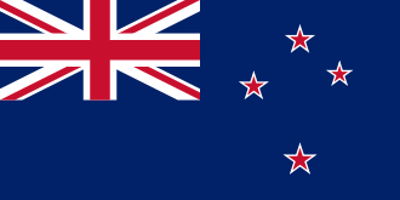
1907
The British colony of New Zealand officially became a dominion to reflect its political independence since the 1850s.
The Colony of New Zealand was a colony of the United Kingdom from 1841 to 1907. British authority was vested in a governor. The colony had three successive capitals: Okiato in 184…
The British colony of New Zealand officially became a dominion to reflect its political independence since the 1850s.
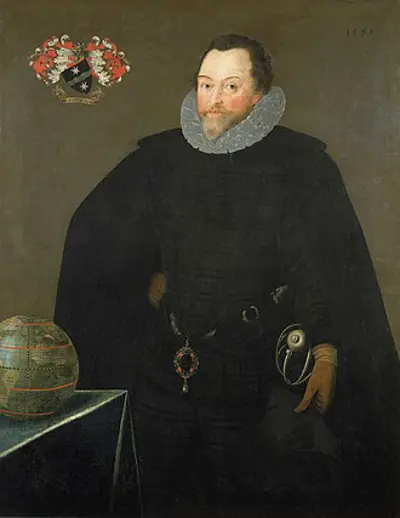
1580
English explorer Francis Drake's galleon the Golden Hind (replica pictured) sailed into Plymouth, completing his…
Sir Francis Drake was an English explorer and privateer best known for making the second circumnavigation of the world in a single expedition between 1577 and 1580. He is also kno…
English explorer Francis Drake's galleon the Golden Hind (replica pictured) sailed into Plymouth, completing his…
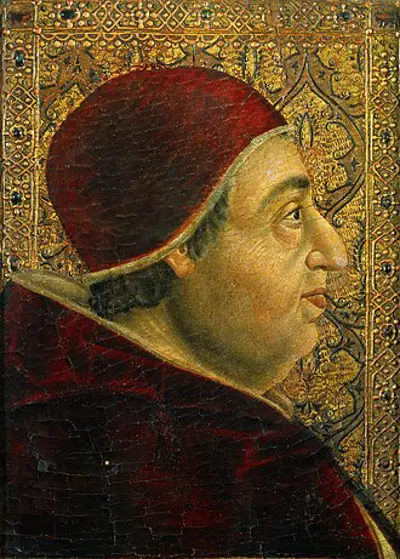
1493
Pope Alexander VI issued the papal bull Dudum siquidem, one of the Bulls of Donation, marking the beginning of the…
Pope Alexander VI was head of the Catholic Church and leader of the Papal States from 11 August 1492 until his death in 1503.
Pope Alexander VI issued the papal bull Dudum siquidem, one of the Bulls of Donation, marking the beginning of the…
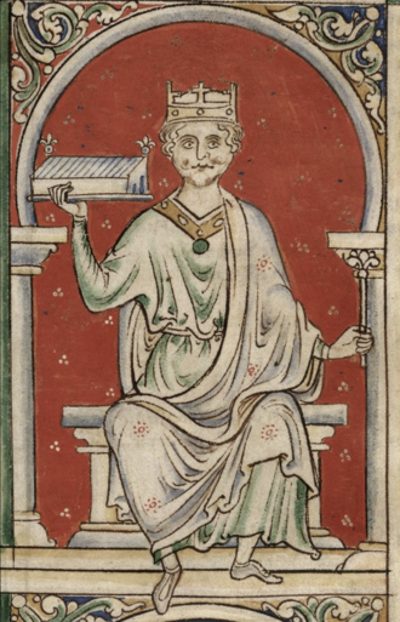
1087
William II, son of William the Conqueror, was crowned king of England.
William II was King of England from 26 September 1087 until his death in 1100, with powers over Normandy and influence in Scotland. He was less successful in extending his control…
William II, son of William the Conqueror, was crowned king of England.

Comments 0
Sign in to join the discussion.