
The Agricultural Adjustment Act (AAA) of 1933 was a United States federal law of the New Deal era designed to boost agricultural prices by reducing surpluses. The government bought livestock for slaughter and paid farmers subsidies not to plant on part of their land. The money for these subsidies was generated through an exclusive tax on companies that processed farm products. The Act created a new agency, the Agricultural Adjustment Administration, also called "AAA" (1933–1942), within the U.S. Department of Agriculture, to oversee the distribution of the subsidies. The Agriculture Marketing Act, which established the Federal Farm Board in 1929, was seen as an important precursor to this act. The AAA, along with other New Deal programs, represented the federal government's first substantial effort to address economic welfare in the United States.
The Agricultural Adjustment Act, which restricts agricultural production through government purchase of livestock for slaughter and paying subsidies to farmers when they remove land from planting, is signed into law by President Franklin D. Roosevelt.
On May 12, in the year 1933, The Agricultural Adjustment Act, which restricts agricultural production through government purchase of livestock for slaughter and paying subsidies to farmers when they remove land from planting, is signed into law by President Franklin D. Roosevelt. This event is recorded as a Historical Events event in the history of May 12, one of 326 recorded events on this date across all of history.
Key Facts
- This event took place on May 12, 1933 (AD era).
- It is categorised as a Historical Events event in recorded history.
- Referenced in 4 Wikipedia articles.
- Wikipedia source last updated on 30 April 2026.
On This Date in History 326
This article draws on content from Wikipedia, available under CC BY-SA 4.0.
More on May 12
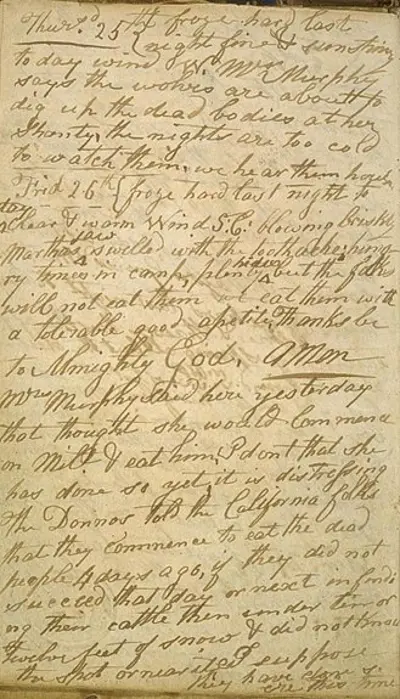
The Donner Party of pioneers departs Independence, Missouri for California, on what will become a year-long journey of h
The Donner Party, sometimes called the Donner–Reed Party, was a group of American pioneers who migrated to California in a wagon train from the Midwest. Delayed by a multitude of …
The Donner Party of pioneers departs Independence, Missouri for California, on what will become a year-long journey of h
The first major battle of the Greek War of Independence against the Turks is fought in Valtetsi
The Greek War of Independence, also known as the Greek Revolution or the Greek Revolution of 1821, was a successful war of independence fought by Greek revolutionaries against the…
The first major battle of the Greek War of Independence against the Turks is fought in Valtetsi
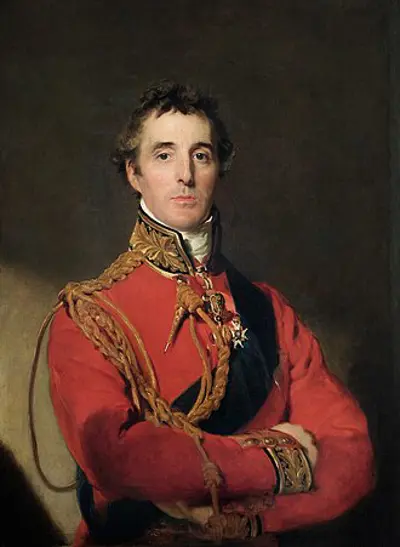
British contingents under Arthur Wellesley force a French army under general Soult to retreat in the battle of Oporto
Field Marshal Arthur Wellesley, 1st Duke of Wellington was an Anglo-Irish British Army officer and statesman who was one of the leading military and political figures in Britain d…
British contingents under Arthur Wellesley force a French army under general Soult to retreat in the battle of Oporto
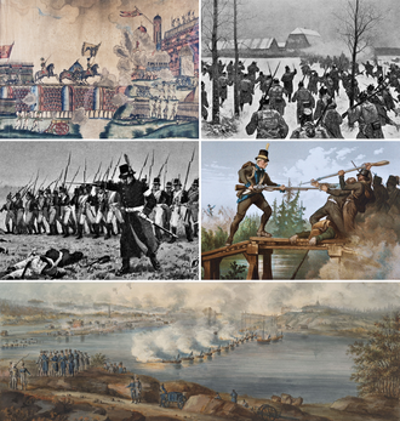
Finnish War: Swedish-Finnish troops, led by Captain Karl Wilhelm Malmi, conquer the city of Kuopio from Russians after t
The Finnish War was fought between the Kingdom of Sweden and the Russian Empire from 21 February 1808 to 17 September 1809 as part of the Napoleonic Wars. As a result of the war, …
Finnish War: Swedish-Finnish troops, led by Captain Karl Wilhelm Malmi, conquer the city of Kuopio from Russians after t
War of the First Coalition: Napoleon Bonaparte conquers Venice
The War of the First Coalition was a set of wars between a coalition of several European powers and France fought between 1792 and 1797. The coalition was only loosely allied and …
War of the First Coalition: Napoleon Bonaparte conquers Venice
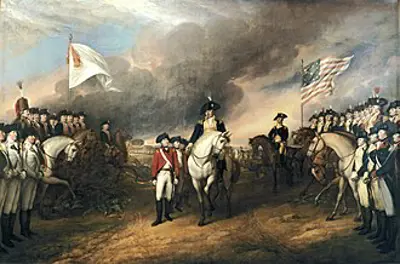
American Revolutionary War: In the largest defeat of the Continental Army, Charleston, South Carolina is taken by Britis
The American Revolutionary War, also known as the Revolutionary War or American War of Independence, was the armed conflict that comprised the final eight years of the broader Ame…
American Revolutionary War: In the largest defeat of the Continental Army, Charleston, South Carolina is taken by Britis

Comments 0
Sign in to join the discussion.