The Indian Army (IA) is the land-based branch and largest component of the Indian Armed Forces. The President of India is the Supreme Commander of the Indian Army, and its professional head is the Chief of the Army Staff (COAS). The Indian Army was established on 1 April 1895 alongside the long established presidency armies of the East India Company, which too were absorbed into it in 1903. Some princely states maintained their own armies which formed the Imperial Service Troops which, along with the Indian Army formed the land component of the Armed Forces of the Crown of India, responsible for the defence of the Indian Empire. The Imperial Service Troops were merged into the Indian Army after independence. The units and regiments of the Indian Army have diverse histories and have participated in several battles and campaigns around the world, earning many battle and theatre honours before and after Independence.
The Indian Army captures the city of Aurangabad as part of Operation Polo.
On September 14, in the year 1948, The Indian Army captures the city of Aurangabad as part of Operation Polo. This event is recorded as a Historical Events event in the history of September 14, one of 502 recorded events on this date across all of history.
Key Facts
- This event took place on September 14, 1948 (AD era).
- It is categorised as a Historical Events event in recorded history.
- Referenced in 3 Wikipedia articles.
- Wikipedia source last updated on 24 August 2026.
On This Date in History 502
This article draws on content from Wikipedia, available under CC BY-SA 4.0.
More on September 14
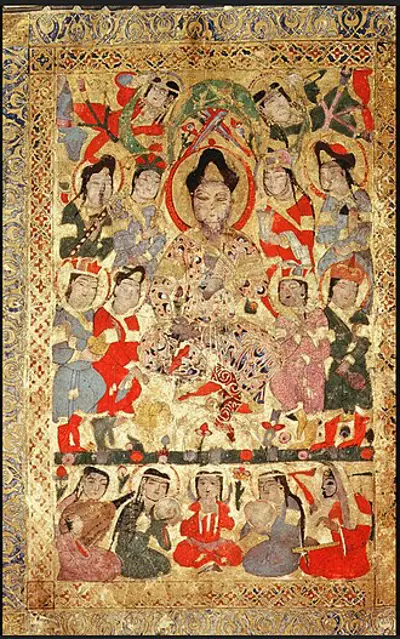
Seljuk atabeg Imad al-Din Zengi of Mosul is assassinated by a slave and succeeded by his quarrelling sons.
The Seljuk Empire, or the Great Seljuk Empire, was a high medieval, culturally Turco-Persian empire established and ruled by the Qïnïq branch of Oghuz Turks. The empire spanned a …
Seljuk atabeg Imad al-Din Zengi of Mosul is assassinated by a slave and succeeded by his quarrelling sons.
An army of queen Matilda defeats and disperses an army of empress Matilda which was besieging Winchester. Robert of…
Matilda of Boulogne was the countess of Boulogne in her own right from 1125 and queen of England as the wife of King Stephen from 1135 until her death. She supported Stephen in hi…
An army of queen Matilda defeats and disperses an army of empress Matilda which was besieging Winchester. Robert of…
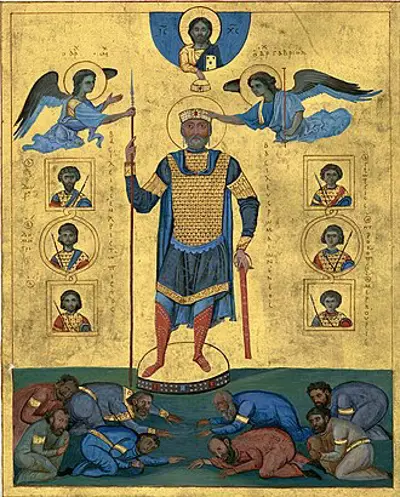
Bardas Phokas the Younger rebels against Byzantine emperor Basil II and declares himself emperor.
Bardas Phokas was a Byzantine general who took a conspicuous part in three revolts for and against the ruling Macedonian dynasty.
Bardas Phokas the Younger rebels against Byzantine emperor Basil II and declares himself emperor.
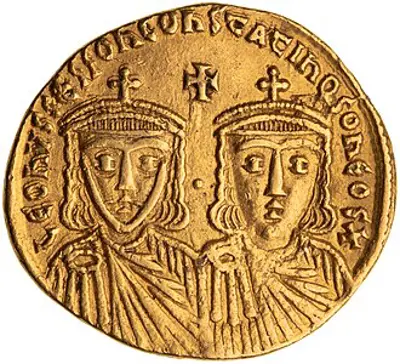
Leo IV the Khazar becomes Byzantine Emperor following the death of his father Constantine V.
Leo IV the Khazar was Byzantine emperor from 775 to 780 AD. He was born to Emperor Constantine V and Empress Tzitzak in 750. He was elevated to co-emperor in the next year, in 751…
Leo IV the Khazar becomes Byzantine Emperor following the death of his father Constantine V.
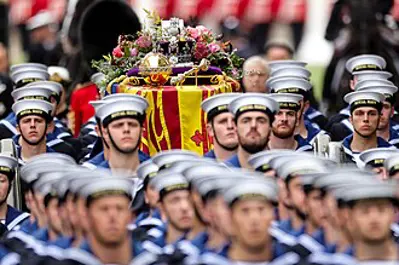
Death of Queen Elizabeth II: The Queen's coffin is taken from Buckingham Palace, placed on a gun carriage of The…
Elizabeth II, Queen of the United Kingdom and other Commonwealth realms, died on 8 September 2022 at Balmoral Castle in Scotland, at the age of 96. Elizabeth's reign of 70 years a…
Death of Queen Elizabeth II: The Queen's coffin is taken from Buckingham Palace, placed on a gun carriage of The…

Yemen's Houthi rebels claim responsibility for an attack on Saudi Arabian oil facilities.
Yemen, officially the Republic of Yemen, is a country in West Asia. Located in southern Arabia, the country includes the Socotra Archipelago and borders Saudi Arabia to the north,…
Yemen's Houthi rebels claim responsibility for an attack on Saudi Arabian oil facilities.
Comments 0
Sign in to join the discussion.