
Springhill mining disaster may refer to any of three deadly Canadian mining disasters that occurred in 1891, 1956, and 1958 in different mines within the Springhill coalfield, near the town of Springhill in Cumberland County, Nova Scotia. In the 1891 accident, 125 died; in 1956, 39 were killed; and in 1958, 75 miners were killed.
The Springhill mining disaster in Springhill, Nova Scotia kills 39 miners; 88 are rescued.
On November 1, in the year 1956, The Springhill mining disaster in Springhill, Nova Scotia kills 39 miners; 88 are rescued. This event is recorded as a Historical Events event in the history of November 1, one of 467 recorded events on this date across all of history.
Key Facts
- This event took place on November 1, 1956 (AD era).
- It is categorised as a Historical Events event in recorded history.
- Referenced in 2 Wikipedia articles.
- Wikipedia source last updated on 22 July 2026.
On This Date in History 467
This article draws on content from Wikipedia, available under CC BY-SA 4.0.
More on November 1

1856
170 years ago
The British Empire declare war on Iran following Naser al-Din Shah's capture of Herat.
The British Empire comprised the dominions, colonies, protectorates, mandates, and other territories ruled or administered by the United Kingdom and its predecessor states. It beg�

1848
In Boston, Massachusetts, the first medical school for women, Boston Female Medical School (which later merged with…
Boston is the capital and most populous city of the U.S. state of Massachusetts. It serves as a cultural and financial center of New England, a region of the Northeastern United S�
1814
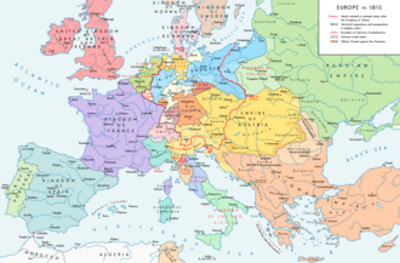
Congress of Vienna opens to re-draw the European political map after the defeat of France in the Napoleonic Wars.
The Congress of Vienna of 1814–1815 was a series of international diplomatic meetings to discuss and agree upon a possible new layout of the European political and constitutional �
1805
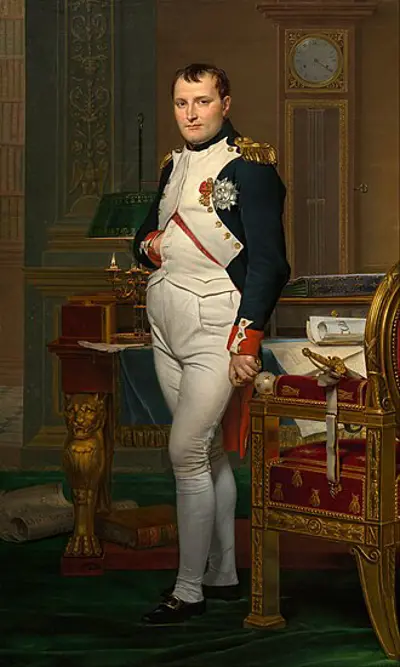
Napoleon Bonaparte invades Austria during the War of the Third Coalition.
Napoleon Bonaparte, was Emperor of the French from 18 May 1804 until his first abdication in 1814, with a brief restoration during the Hundred Days in 1815. He rose to prominence �

1800
John Adams becomes the first President of the United States to live in the Executive Mansion (later renamed the White…
John Adams was a Founding Father and the second president of the United States from 1797 to 1801. Before his presidency, he was a leader of the American Revolution that achieved i�
1790
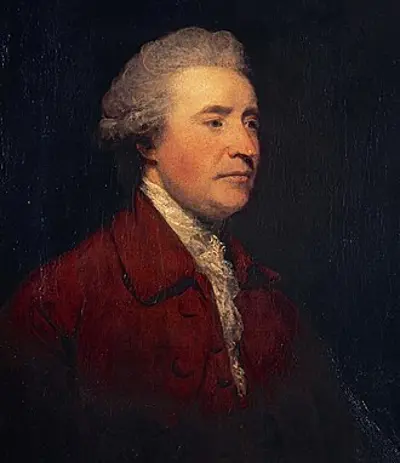
Edmund Burke publishes Reflections on the Revolution in France, in which he predicts that the French Revolution will…
Edmund Burke was an Anglo-Irish writer, philosopher, and politician who is widely credited as the founder of the cultural and political philosophy of conservatism. Regarded as one�

Comments 0
Sign in to join the discussion.