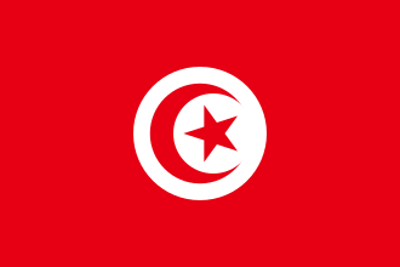
Tunisia, officially the Republic of Tunisia, is a country in the Maghreb region of North Africa. It is bordered by Algeria to the west and southwest, Libya to the southeast, and the Mediterranean Sea to the north and east. Tunisia also shares maritime borders with Italy through the islands of Sicily and Sardinia to the north and Malta to the east. It features the archaeological sites of Carthage dating back to the 9th century BC, as well as the Great Mosque of Kairouan. Known for its ancient architecture, souks, and blue coasts, it covers 163,610 km2 (63,170 sq mi), and has a population of 12.1 million. It contains the eastern end of the Atlas Mountains and the northern reaches of the Sahara desert; much of its remaining territory is arable land. Its 1,300 km (810 mi) of coastline includes the African conjunction of the western and eastern parts of the Mediterranean Basin. Tunisia is home to Africa's northernmost point, Cape Angela. Located on the northeastern coast, Tunis is the capital of the country, which is itself named after Tunis. The official language of Tunisia is Arabic. The vast majority of Tunisia's population is Arab and Muslim. Vernacular Tunisian Arabic is the most spoken language, and French serves as an administrative and educational language in some contexts, but has no official status.
In Tunisia, president Habib Bourguiba is overthrown and replaced by Prime Minister Zine El Abidine Ben Ali.
On November 7, in the year 1987, In Tunisia, president Habib Bourguiba is overthrown and replaced by Prime Minister Zine El Abidine Ben Ali. This event is recorded as a Historical Events event in the history of November 7, one of 497 recorded events on this date across all of history.
Key Facts
- This event took place on November 7, 1987 (AD era).
- It is categorised as a Historical Events event in recorded history.
- Referenced in 3 Wikipedia articles.
- The event is associated with a specific geographical location (see map below).
- Wikipedia source last updated on 26 October 2026.
On This Date in History 497
This article draws on content from Wikipedia, available under CC BY-SA 4.0.
More on November 7
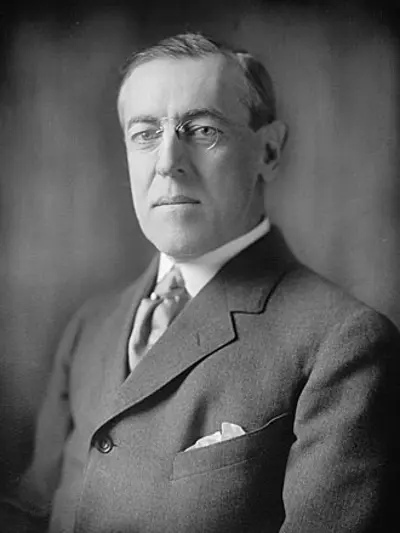
Woodrow Wilson is reelected as President of the United States.
Thomas Woodrow Wilson was the 28th president of the United States, serving from 1913 to 1921. He was the only Democrat to serve as president during the Progressive Era, when Repub�
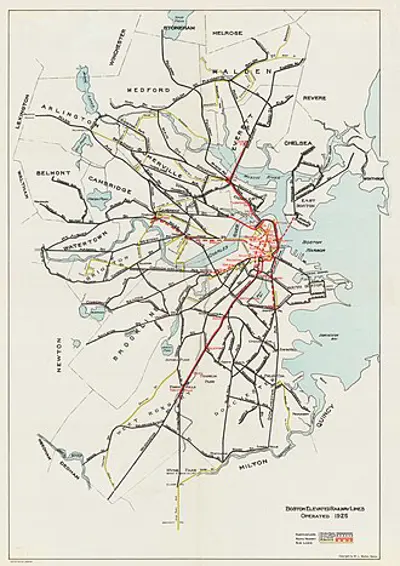
Boston Elevated Railway Company's streetcar No. 393 smashes through the warning gates of the open Summer Street…
The Boston Elevated Railway (BERy) was a streetcar and rapid transit railroad operated on, above, and below, the streets of Boston, Massachusetts and surrounding communities. Foun�

The German colony of Kiaochow Bay and its centre at Tsingtao are captured by Japanese forces. This leaves Germany…
The German Empire, also referred to as Imperial Germany or the Second Reich, was the period of the German Reich from the unification of Germany in 1871 until the November revoluti�
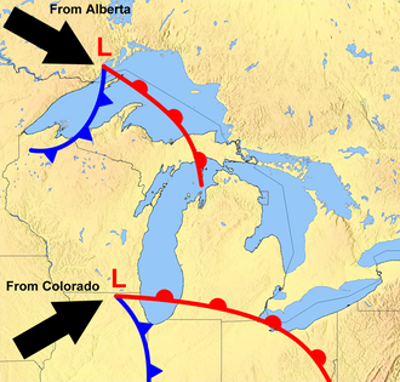
The first day of the Great Lakes Storm of 1913, a massive blizzard that ultimately killed 250 and caused over…
The Great Lakes Storm of 1913, historically referred to as the Big Blow, the Freshwater Fury and the White Hurricane, was a blizzard with hurricane-force winds that devastated the�

The Deutsche Opernhaus (now Deutsche Oper Berlin) opens in the Berlin neighborhood of Charlottenburg, with a…
The Deutsche Oper Berlin is a German opera company located in the Charlottenburg district of Berlin. The resident building is the country's second largest opera house and also hom�

The first air freight shipment (from Dayton, Ohio, to Columbus, Ohio) is undertaken by the Wright brothers and…
Air cargo is any property carried or to be carried in an aircraft. Air cargo comprises air freight, air express and airmail.
Comments 0
Sign in to join the discussion.