The Medellín Cartel was a confederation of Colombian drug trafficking organizations based primarily in Medellín, Colombia, that played a central role in the expansion of the international cocaine trade during the late 1970s and 1980s. Rather than a single hierarchical organization, contemporary law-enforcement assessments and subsequent scholarship describe the cartel as a network of semi-autonomous traffickers who cooperated in production, transportation, financing, and enforcement while retaining independent control over their respective operations. The network included prominent traffickers such as Pablo Escobar, Carlos Lehder, Gonzalo Rodríguez Gacha, and the Ochoa brothers—Jorge Luis Ochoa Vásquez, Fabio Ochoa Vásquez, and Juan David Ochoa Vásquez—whose activities collectively shaped the structure and scale of Colombian cocaine trafficking during this period. Estimates by U.S. and Colombian authorities during the 1980s attributed a substantial share of cocaine entering the United States to trafficking networks associated with Medellín, though contemporaneous reports emphasized that market share fluctuated over time and could not be ascribed to a single unified organization.
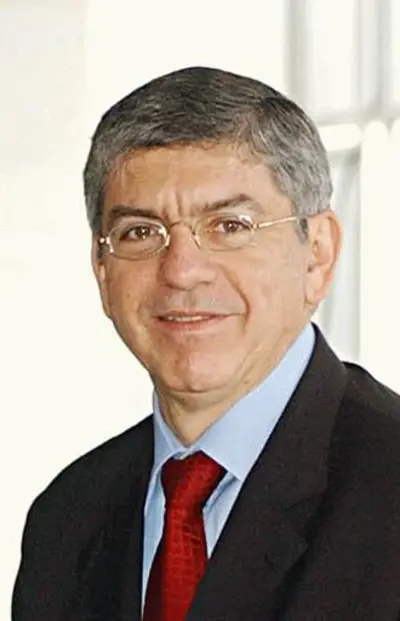
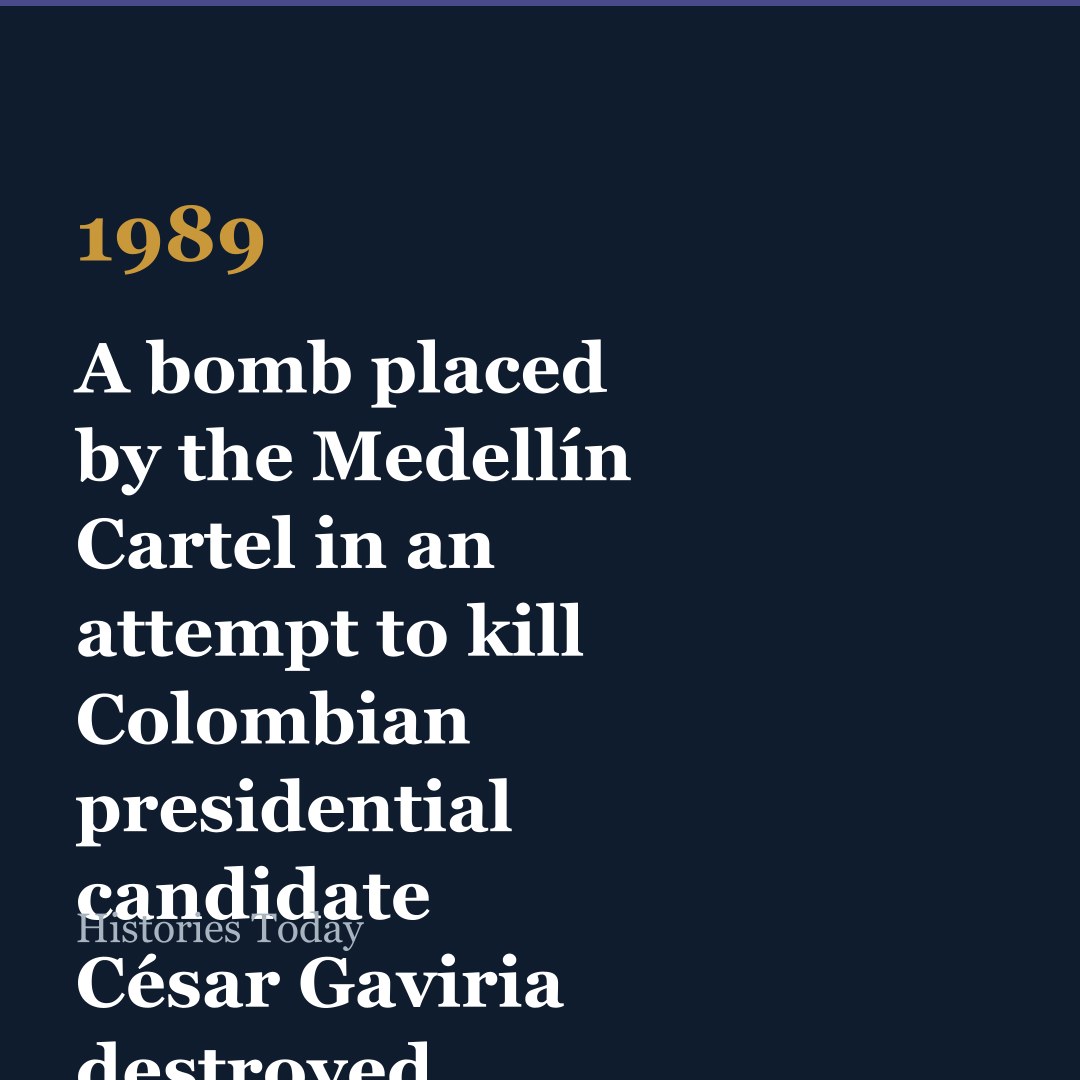
A bomb placed by the Medellín Cartel in an attempt to kill Colombian presidential candidate César Gaviria destroyed Avianca Flight 203, killing all 107 people on board, excluding Gaviria, who was not on the flight.
On November 27, in the year 1989, A bomb placed by the Medellín Cartel in an attempt to kill Colombian presidential candidate César Gaviria destroyed Avianca Flight 203, killing all 107 people on board, excluding Gaviria, who was not on the flight. This event is recorded as a Selected Events event in the history of November 27, a notable event in this corner of history.
Key Facts
- This event took place on November 27, 1989 (AD era).
- It is categorised as a Selected Events event in recorded history.
- Referenced in 3 Wikipedia articles.
- Wikipedia source last updated on 11 November 2026.
On This Date in History
This article draws on content from Wikipedia, available under CC BY-SA 4.0.
More on November 27
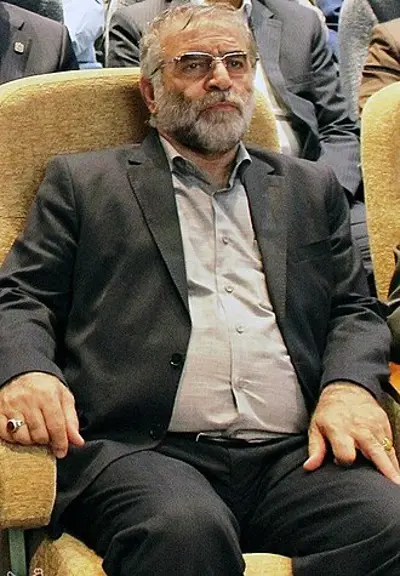
Nuclear physicist Mohsen Fakhrizadeh, regarded as the chief of Iran's nuclear program, was assassinated, allegedly by…
Mohsen Fakhrizadeh Mahabadi was an Iranian nuclear physicist and scientist. He was regarded as the chief of Iran's nuclear program.
Nuclear physicist Mohsen Fakhrizadeh, regarded as the chief of Iran's nuclear program, was assassinated, allegedly by…
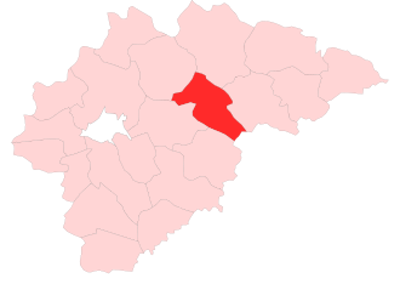
A bomb exploded under, and derailed, a Russian high-speed train travelling between Moscow and Saint Petersburg,…
The 2009 Nevsky Express bombing occurred on 27 November 2009 when a bomb exploded under a high speed train travelling between the Russian cities of Moscow and Saint Petersburg cau…
A bomb exploded under, and derailed, a Russian high-speed train travelling between Moscow and Saint Petersburg,…
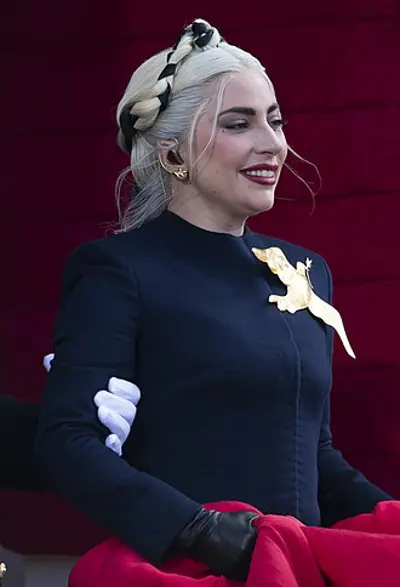
Lady Gaga performed the first concert of The Monster Ball Tour, which became the highest-grossing tour in history for…
Stefani Joanne Angelina Germanotta, known professionally as Lady Gaga, is an American singer, songwriter, and actress. An influential figure in popular music, she is known for her…
Lady Gaga performed the first concert of The Monster Ball Tour, which became the highest-grossing tour in history for…

Astronomers announced the detection of sodium in the atmosphere of the extrasolar planet HD 209458 b, the first…
Sodium is a chemical element; it has symbol Na and atomic number 11. It is a soft, silvery-white, highly reactive metal. Sodium is an alkali metal, being in group 1 of the periodi…
Astronomers announced the detection of sodium in the atmosphere of the extrasolar planet HD 209458 b, the first…
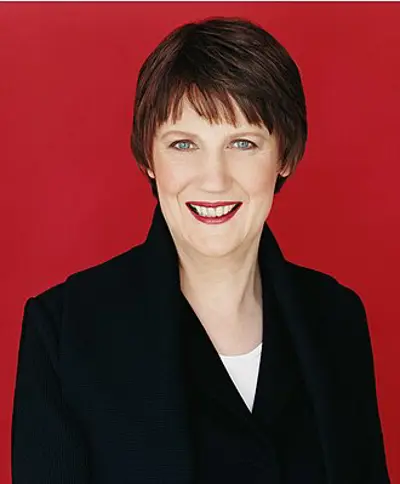
The Labour Party defeated the governing National Party in the New Zealand general election, with Labour's Helen Clark…
The New Zealand Labour Party, also known simply as Labour, is a centre-left political party in New Zealand. The party's platform programme describes its founding principle as demo…
The Labour Party defeated the governing National Party in the New Zealand general election, with Labour's Helen Clark…
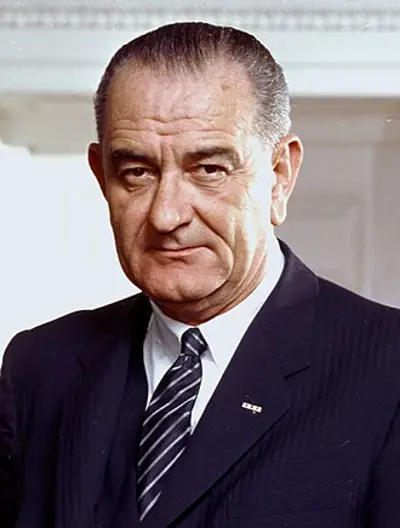
President Lyndon B. Johnson delivered the "Let Us Continue" speech, in which he advocated for civil-rights legislation…
Lyndon Baines Johnson, also known as LBJ, was the 36th president of the United States, serving from 1963 to 1969. The 37th vice president, he assumed the presidency following the …
President Lyndon B. Johnson delivered the "Let Us Continue" speech, in which he advocated for civil-rights legislation…
Comments 0
Sign in to join the discussion.