The World Wide Web is a global interconnected information system that enables content sharing over the Internet. It facilitates access to documents and other web resources according to specific rules of the Hypertext Transfer Protocol (HTTP).
The World Wide Web was opened to the public.
On August 23, in the year 1991, The World Wide Web was opened to the public. This event is recorded as a Selected Events event in the history of August 23, a notable event in this corner of history.
Key Facts
- This event took place on August 23, 1991 (AD era).
- It is categorised as a Selected Events event in recorded history.
- Referenced in 1 Wikipedia article.
- Wikipedia source last updated on 2 August 2026.
On This Date in History
This article draws on content from Wikipedia, available under CC BY-SA 4.0.
More on August 23
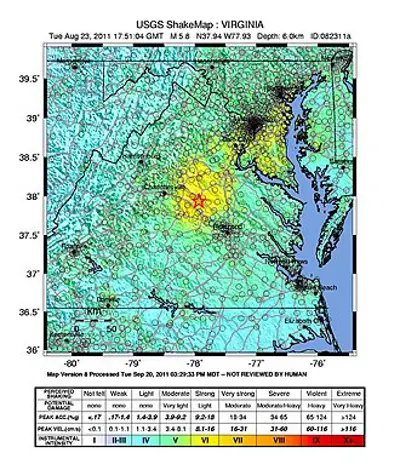
2011
15 years ago
A 5.8 MW earthquake struck the Piedmont region of Virginia, and was felt by more people than any other quake in U.S.…
The moment magnitude scale is a measure of an earthquake's magnitude based on its seismic moment. Mw was defined in a 1979 paper by Thomas C. Hanks and Hiroo Kanamori. Before Hank…
A 5.8 MW earthquake struck the Piedmont region of Virginia, and was felt by more people than any other quake in U.S.…

2006
20 years ago
Natascha Kampusch (pictured), who had been abducted at the age of ten in Vienna, escaped from her captor's house in…
Natascha Maria Kampusch is an Austrian author and former talk show host. At the age of 10, on 2 March 1998, she was abducted and held in a secret cellar by her kidnapper, Wolfgang…
Natascha Kampusch (pictured), who had been abducted at the age of ten in Vienna, escaped from her captor's house in…
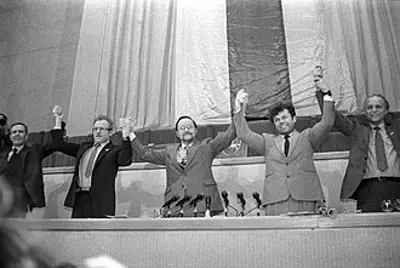
1989
Singing Revolution: Approximately two million people joined hands to form a human chain spanning 675.5 kilometres…
The Singing Revolution was a series of events from 1987 to 1991 that led to the restoration of independence of the three Soviet-occupied Baltic countries of Estonia, Latvia, and L…
Singing Revolution: Approximately two million people joined hands to form a human chain spanning 675.5 kilometres…
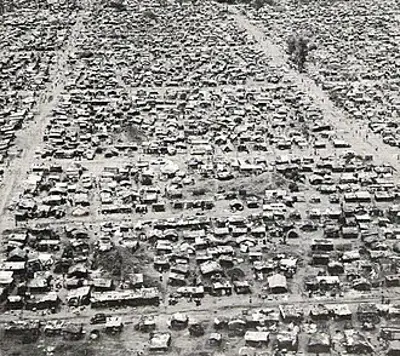
1960
Congo Crisis: In order to stop the secession of South Kasai from the Republic of Congo, Armée Nationale Congolaise…
The Congo Crisis was a period of political upheaval and conflict between 1960 and 1965 in the Republic of the Congo. The crisis began almost immediately after the Congo became ind…
Congo Crisis: In order to stop the secession of South Kasai from the Republic of Congo, Armée Nationale Congolaise…
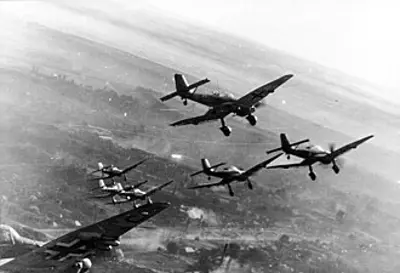
1943
Second World War: A decisive Soviet victory against German forces at the Battle of Kursk gave the Red Army the…
World War II, or the Second World War, was a global conflict between two coalitions: the Allies and the Axis powers. Nearly all of the world's countries participated, with many en…
Second World War: A decisive Soviet victory against German forces at the Battle of Kursk gave the Red Army the…
1939
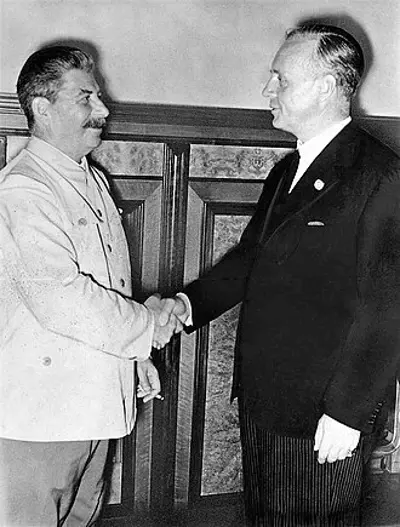
Nazi Germany and the Soviet Union signed the Molotov–Ribbentrop Pact (pictured), a ten-year mutual non-aggression…
The Molotov–Ribbentrop Pact, officially the Treaty of Non-Aggression between Germany and the Union of Soviet Socialist Republics, was a non-aggression pact between Nazi Germany an…
Nazi Germany and the Soviet Union signed the Molotov–Ribbentrop Pact (pictured), a ten-year mutual non-aggression…
Comments 0
Sign in to join the discussion.