
Bill Clinton's tenure as the 42nd president of the United States began with his first inauguration on January 20, 1993, and ended on January 20, 2001. Clinton, a Democrat from Arkansas, took office after defeating the Republican incumbent president George H. W. Bush and independent businessman Ross Perot in the 1992 presidential election. Four years later, he won re-election in the 1996 presidential election, after defeating the Republican nominee Bob Dole, and also Perot again. Alongside Clinton's presidency, the Democratic Party also held their majorities in the House of Representatives and the Senate during the 103rd U.S. Congress following the 1992 elections, thereby attained an overall federal government trifecta. Clinton was constitutionally limited to two terms and was succeeded by Republican George W. Bush, who won the 2000 presidential election against Clinton's preferred successor, vice president Al Gore.
The United States, under the Clinton administration, returns Haiti's first democratically elected president, Jean-Bertrand Aristide, to the island.
On October 15, in the year 1994, The United States, under the Clinton administration, returns Haiti's first democratically elected president, Jean-Bertrand Aristide, to the island. This event is recorded as a Historical Events event in the history of October 15, a notable event in this corner of history.
Key Facts
- This event took place on October 15, 1994 (AD era).
- It is categorised as a Historical Events event in recorded history.
- Referenced in 2 Wikipedia articles.
- Wikipedia source last updated on 21 September 2026.
On This Date in History
This article draws on content from Wikipedia, available under CC BY-SA 4.0.
More on October 15
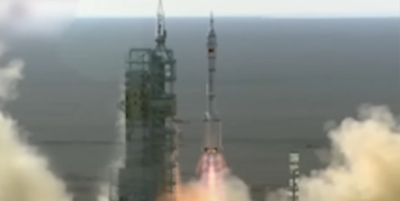
China launches Shenzhou 5, its first crewed space mission.
Shenzhou 5 was the first human spaceflight mission of the Chinese space program, launched on 15 October 2003. The Shenzhou spacecraft was launched on a Long March 2F launch vehicl…
China launches Shenzhou 5, its first crewed space mission.
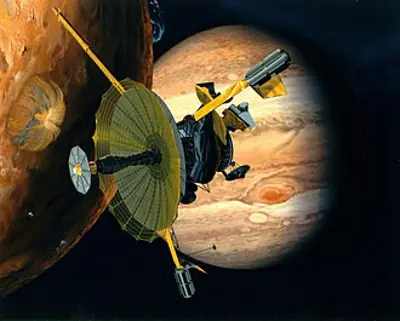
NASA's Galileo spacecraft passes within 112 miles (180 km) of Jupiter's moon Io.
Galileo was an American robotic space probe that studied the planet Jupiter and its moons, as well as the asteroids Gaspra and Ida. Named after the Italian astronomer Galileo Gali…
NASA's Galileo spacecraft passes within 112 miles (180 km) of Jupiter's moon Io.
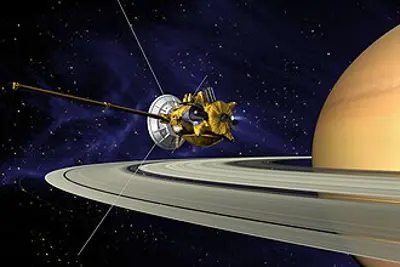
The Cassini probe launches from Cape Canaveral on its way to Saturn.
Cassini–Huygens, commonly called Cassini, was a joint space-research mission by NASA, the European Space Agency (ESA), and the Italian Space Agency (ASI) to send a space probe to …
The Cassini probe launches from Cape Canaveral on its way to Saturn.

The "Oh-My-God particle", an ultra-high-energy cosmic ray measured at 40,000,000 times that of the highest energy…
The Oh-My-God particle (as physicists dubbed it) was an ultra-high-energy cosmic ray detected on 15 October 1991 by the Fly's Eye camera in Dugway Proving Ground, Utah, United Sta…
The "Oh-My-God particle", an ultra-high-energy cosmic ray measured at 40,000,000 times that of the highest energy…
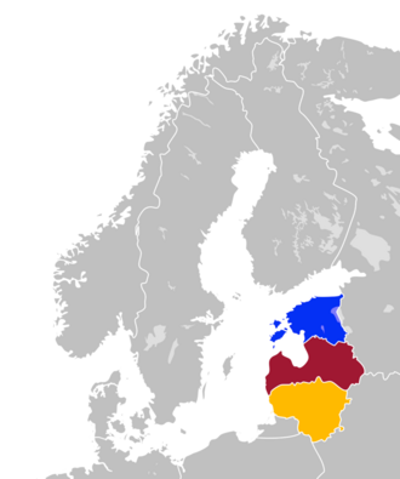
The leaders of the Baltic States, Arnold Rüütel of Estonia, Anatolijs Gorbunovs of Latvia and Vytautas Landsbergis of…
The Baltic states or the Baltic countries is a geopolitical term encompassing Estonia, Latvia, and Lithuania. All three countries are members of NATO, the European Union, the Euro…
The leaders of the Baltic States, Arnold Rüütel of Estonia, Anatolijs Gorbunovs of Latvia and Vytautas Landsbergis of…
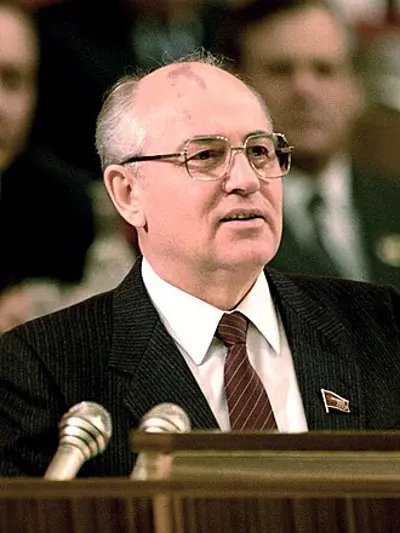
Soviet Union leader Mikhail Gorbachev is awarded the Nobel Peace Prize for his efforts to lessen Cold War tensions and…
Mikhail Sergeyevich Gorbachev was a Soviet and Russian politician who was the last leader of the Soviet Union from 1985 until the country's dissolution in 1991. He served as Gener…
Soviet Union leader Mikhail Gorbachev is awarded the Nobel Peace Prize for his efforts to lessen Cold War tensions and…

Comments 0
Sign in to join the discussion.