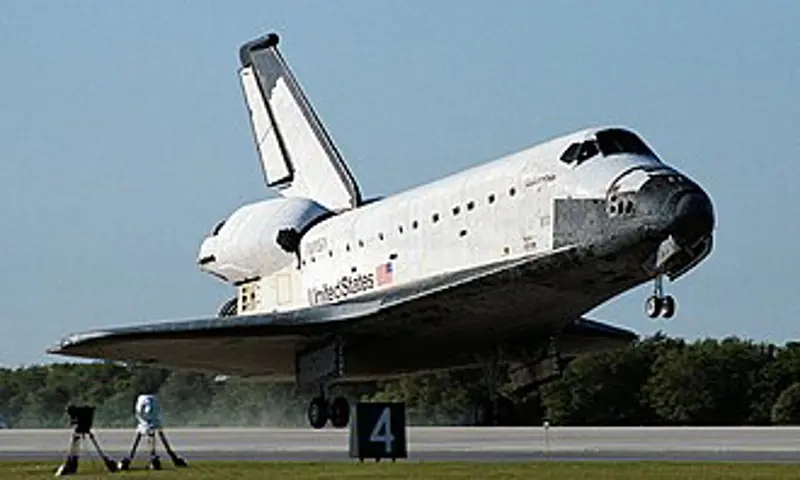
Space Shuttle Columbia (OV-102) was a Space Shuttle orbiter manufactured by Rockwell International and operated by NASA. Named after the first American ship to circumnavigate the globe, and the female personification of the United States, Columbia was the first of five Space Shuttle orbiters to fly in space, debuting the Space Shuttle launch vehicle on its maiden flight on April 12, 1981 and becoming the first spacecraft to be re-used after its first flight when it launched on STS-2 on November 12, 1981. As only the second full-scale orbiter to be manufactured after the Approach and Landing Test vehicle Enterprise, Columbia retained unique external and internal features compared with later orbiters, such as test instrumentation and distinctive black chines. In addition to a heavier aft fuselage and the retention of an internal airlock throughout its lifetime, these made Columbia the heaviest of the five spacefaring orbiters: around 1,000 kilograms heavier than Challenger and 3,600 kilograms heavier than Endeavour when originally constructed. Columbia also carried ejection seats based on those from the SR-71 during its first six flights until 1983, and from 1986 onwards carried an imaging pod on its vertical stabilizer.
Space Shuttle Columbia launches on STS-78 to conduct life science and microgravity research aboard the Spacelab module.
On June 20, in the year 1996, Space Shuttle Columbia launches on STS-78 to conduct life science and microgravity research aboard the Spacelab module. This event is recorded as a Historical Events event in the history of June 20, one of 364 recorded events on this date across all of history.
Key Facts
- This event took place on June 20, 1996 (AD era).
- It is categorised as a Historical Events event in recorded history.
- Referenced in 3 Wikipedia articles.
- Wikipedia source last updated on 26 May 2026.
On This Date in History 364
This article draws on content from Wikipedia, available under CC BY-SA 4.0.
More on June 20
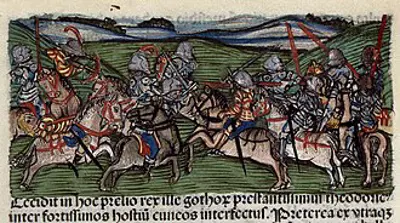
Battle of Chalons: Flavius Aetius battles Attila the Hun
The Battle of the Catalaunian Plains, also called the Battle of the Campus Mauriacus, Battle of Châlons, Battle of Troyes or the Battle of Maurica, took place on 20 June 451 AD, b…
Battle of Chalons: Flavius Aetius battles Attila the Hun
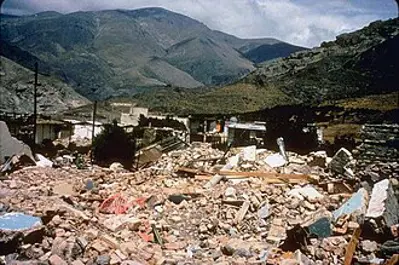
The 7
The 1990 Manjil–Rudbar earthquake occurred on Thursday, 21 June 1990 at 00:30:14 local time in the Caspian Sea region of northern Iran. The shock had a moment magnitude of 7.4 and…
The 7
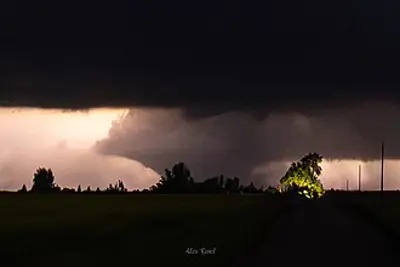
The first EF5 tornado in 12 years occurs in Enderlin, North Dakota
On the night of June 20, 2025, a very large, extremely violent, and historic EF5 tornado moved through rural North Dakota, United States, passing near the community of Enderlin. P…
The first EF5 tornado in 12 years occurs in Enderlin, North Dakota
Iran's Air Defense Forces shoot down an American surveillance drone over the Strait of Hormuz amid rising tensions betwe
The Islamic Republic of Iran Air Defense Force is the anti-aircraft warfare branch of Iran's regular military, the Islamic Republic of Iran Army (Artesh). It split from the air fo…
Iran's Air Defense Forces shoot down an American surveillance drone over the Strait of Hormuz amid rising tensions betwe
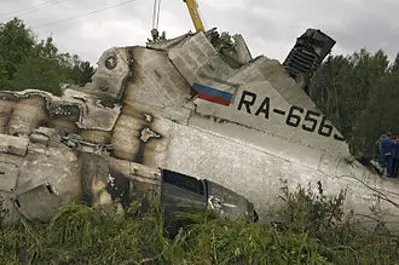
RusAir Flight 9605 crashes in Besovets during approach to Petrozavodsk Airport, killing 47
RusAir Flight 9605 was a passenger flight which crashed near Petrozavodsk in the Republic of Karelia, Russia, on 20 June 2011 while attempting to land in thick fog. The aircraft i…
RusAir Flight 9605 crashes in Besovets during approach to Petrozavodsk Airport, killing 47

The Wikimedia Foundation is founded in St
The Wikimedia Foundation, Inc. (WMF) is an American 501(c)(3) nonprofit organization headquartered in San Francisco, California, and registered there as a charitable foundation. I…
The Wikimedia Foundation is founded in St
Comments 0
Sign in to join the discussion.