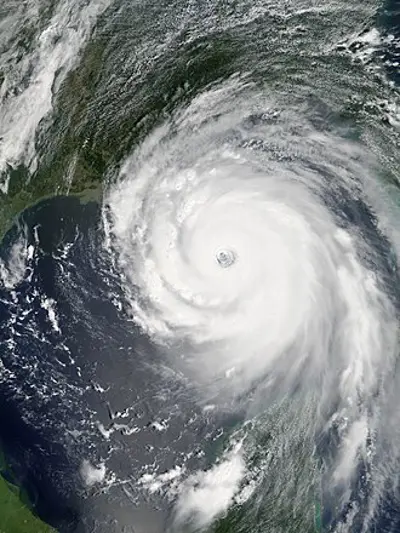
Hurricane Katrina was an extremely powerful and catastrophic tropical cyclone that affected the Southeastern United States in late August 2005, particularly in and around the city of New Orleans. Katrina became the United States' costliest tropical cyclone, with an estimated $125 billion in damages, making it the costliest. The hurricane killed 1,392 people, making it the deadliest American hurricane since the 1928 Okeechobee hurricane. Katrina was the twelfth tropical cyclone, the fifth hurricane, the third major hurricane, and the second Category 5 hurricane of the 2005 Atlantic hurricane season. It was also the fourth-most intense Atlantic hurricane to make landfall in the contiguous United States, as measured by barometric pressure. When not adjusted for inflation, it ties with 2017's Hurricane Harvey as the costliest tropical cyclone.
Hurricane Katrina devastates much of the U.S. Gulf Coast from Louisiana to the Florida Panhandle, killing up to 1,392 people and causing $125 billion in damage.
On August 29, in the year 2005, Hurricane Katrina devastates much of the U.S. Gulf Coast from Louisiana to the Florida Panhandle, killing up to 1,392 people and causing $125 billion in damage. This event is recorded as a Historical Events event in the history of August 29, one of 431 recorded events on this date across all of history.
Key Facts
- This event took place on August 29, 2005 (AD era).
- It is categorised as a Historical Events event in recorded history.
- Referenced in 5 Wikipedia articles.
- Wikipedia source last updated on 29 July 2026.
On This Date in History 431
This article draws on content from Wikipedia, available under CC BY-SA 4.0.
More on August 29
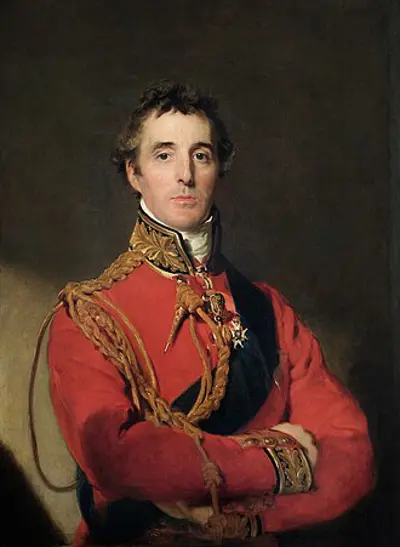
British troops under Sir Arthur Wellesley defeat a Danish militia outside Copenhagen in the Battle of Køge.
Field Marshal Arthur Wellesley, 1st Duke of Wellington, was a British Army officer and statesman. A leading figure in early-19th-century British politics, Wellesley served as Prim…
British troops under Sir Arthur Wellesley defeat a Danish militia outside Copenhagen in the Battle of Køge.
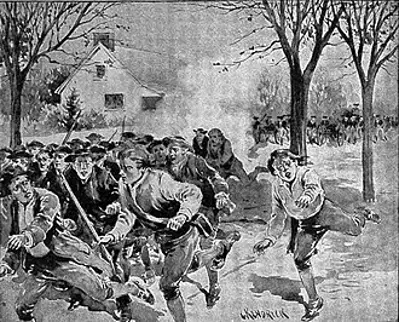
Shays' Rebellion, an armed uprising of Massachusetts farmers, begins in response to high debt and tax burdens.
Shays's Rebellion was an armed uprising in Western Massachusetts and Worcester in response to a debt crisis among the citizenry and in opposition to the state government's increas…
Shays' Rebellion, an armed uprising of Massachusetts farmers, begins in response to high debt and tax burdens.

American Revolutionary War: American forces battle and defeat the British and Iroquois forces at the Battle of Newtown.
The Haudenosaunee Confederacy, also known as the Iroquois, are a confederacy of Iroquoian-speaking indigenous peoples in northeast North America. They were known by the French dur…
American Revolutionary War: American forces battle and defeat the British and Iroquois forces at the Battle of Newtown.
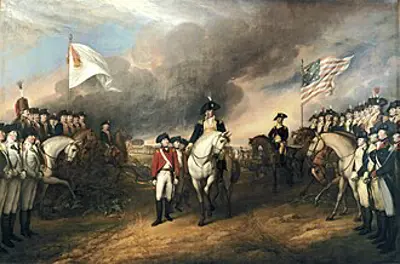
American Revolutionary War: British and American forces battle indecisively at the Battle of Rhode Island.
The American Revolutionary War, also known as the Revolutionary War or American War of Independence or simply the American Revolution, was the armed conflict that comprised the fi…
American Revolutionary War: British and American forces battle indecisively at the Battle of Rhode Island.
The Treaty of Easton establishes the first American Indian reservation, at Indian Mills, New Jersey, for the Lenape.
The Treaty of Easton was a colonial agreement signed in Easton, Pennsylvania in October 1758 during the French and Indian War between British colonials and the chiefs of 13 Native…
The Treaty of Easton establishes the first American Indian reservation, at Indian Mills, New Jersey, for the Lenape.
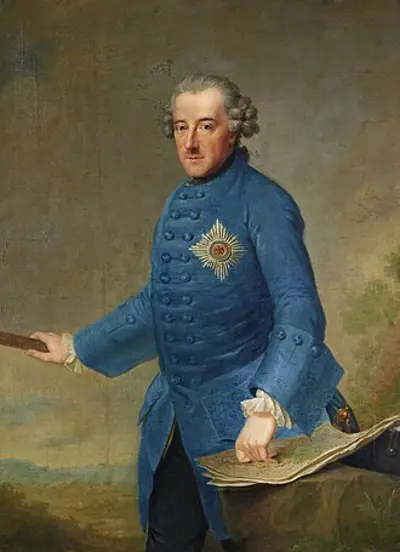
Frederick the Great attacks Saxony, beginning the Seven Years' War in Europe.
Frederick II was the monarch of Prussia from 1740 until his death in 1786. He was the last Hohenzollern monarch titled King in Prussia, declaring himself King of Prussia after ann…
Frederick the Great attacks Saxony, beginning the Seven Years' War in Europe.
Comments 0
Sign in to join the discussion.