
Assyria was a major ancient Mesopotamian civilization that existed as a city-state from the 21st century BC to the 14th century BC and eventually expanded into an empire from the 14th century BC to the 7th century BC. Assyrian history spans from the early Bronze Age to the late Iron Age; modern historians typically divide ancient Assyrian history into the Early Assyrian, Old Assyrian, Middle Assyrian, Neo-Assyrian, and post-imperial periods, based on political events and gradual changes in language. Assur, the first Assyrian capital, was founded c. 2600 BC, but there is no evidence that the city was independent until the collapse of the Third Dynasty of Ur, in the 21st century BC, when a line of independent kings starting with Puzur-Ashur I began ruling the city. Centered in the Assyrian heartland in northern Mesopotamia, Assyrian power fluctuated over time. The city underwent several periods of foreign rule or domination before Assyria rose under Ashur-uballit I in the early 14th century BC as the Middle Assyrian Empire. In the Middle and Neo-Assyrian periods, Assyria was one of the two major Mesopotamian kingdoms, alongside Babylonia in the south, and at times became the dominant power in the ancient Near East. Assyria was at its strongest in the Neo-Assyrian period, when the Assyrian army was the strongest military power in the world and the Assyrians ruled the largest empire then yet assembled in world history, spanning from parts of modern-day Iran in the east to Egypt in the west.
Assyrians record a solar eclipse that is later used to fix the chronology of Mesopotamian history.
On June 15, in the year 763 BC, Assyrians record a solar eclipse that is later used to fix the chronology of Mesopotamian history. This event is recorded as a Historical Events event in the history of June 15, one of 382 recorded events on this date across all of history.
Key Facts
- This event took place on June 15, 763 BC (BC era).
- It is categorised as a Historical Events event in recorded history.
- Referenced in 4 Wikipedia articles.
- Wikipedia source last updated on 5 June 2026.
On This Date in History 382
This article draws on content from Wikipedia, available under CC BY-SA 4.0.
More on June 15
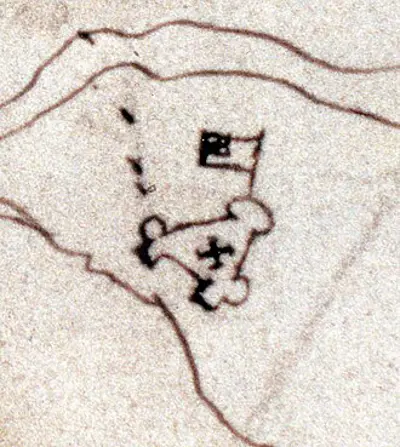
Virginia colonists finish building James's Fort, to defend against Spanish and Native American attacks
The Jamestown settlement in the Colony of Virginia was the first permanent English settlement in the Americas. It was located on the northeast bank of the James River, about 2.5 m…
Virginia colonists finish building James's Fort, to defend against Spanish and Native American attacks
A bomb explodes on a bus in the Pakistani city of Quetta, killing at least 25 people and wounding 22 others
On 15 June 2013, a series of bombings resulted in the deaths of 26 people and injuries to dozens more. On the same day, separatist militants attacked and demolished the historic Q…
A bomb explodes on a bus in the Pakistani city of Quetta, killing at least 25 people and wounding 22 others
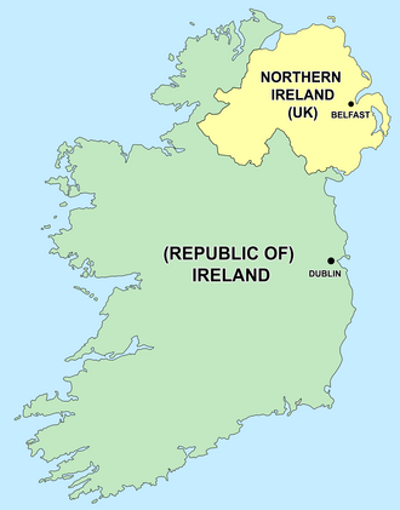
The Troubles: The Provisional Irish Republican Army (IRA) detonates a powerful truck bomb in the middle of Manchester, E
The Troubles were an ethno-nationalist conflict in Northern Ireland that lasted for about 30 years from the late 1960s to 1998. Also known internationally as the Northern Ireland …
The Troubles: The Provisional Irish Republican Army (IRA) detonates a powerful truck bomb in the middle of Manchester, E

The United States Supreme Court rules in United States v
The Supreme Court of the United States (SCOTUS) is the highest court in the federal judiciary of the United States. It has ultimate appellate jurisdiction over all U.S. federal co…
The United States Supreme Court rules in United States v

In the Philippines, Mount Pinatubo erupts in the second largest volcanic eruption of the 20th century, killing over 800
Mount Pinatubo is an active stratovolcano in the Zambales Mountains in Luzon in the Philippines. Located on the tripoint of Zambales, Tarlac and Pampanga provinces, most people we…
In the Philippines, Mount Pinatubo erupts in the second largest volcanic eruption of the 20th century, killing over 800
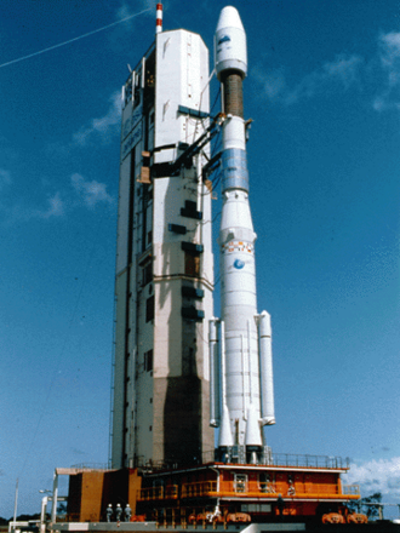
The Ariane 4 rocket is launched on its maiden flight
The Ariane 4 was a European expendable launch vehicle, developed by the Centre national d'études spatiales (CNES), the French space agency, for the European Space Agency (ESA). It…
The Ariane 4 rocket is launched on its maiden flight
Comments 0
Sign in to join the discussion.