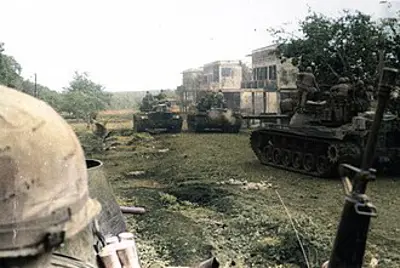
1975
The Cambodian Civil War ends and the Cambodian Genocide begins
The Cambodian Civil War ends and the Cambodian Genocide begins. The Khmer Rouge captures the capital Phnom Penh and Cambodian government forces surrender.
22733 results for “Solomon R. Guggenheim” (1458 ms)
The Cambodian Civil War ends and the Cambodian Genocide begins. The Khmer Rouge captures the capital Phnom Penh and Cambodian government forces surrender.
Forces of the Communist-controlled Greek People's Liberation Army attack the smaller National and Social Liberation resistance group, which surrenders. Its leader Dimitrios Psarros is murdered.
The Supreme Court of the United States decides Lochner v. New York, which holds that the "right to free contract" is implicit in the due process clause of the Fourteenth Amendment to the United State�
The Treaty of Shimonoseki between China and Japan is signed. This marks the end of the First Sino-Japanese War, and the defeated Qing Empire is forced to renounce its claims on Korea and to concede t�
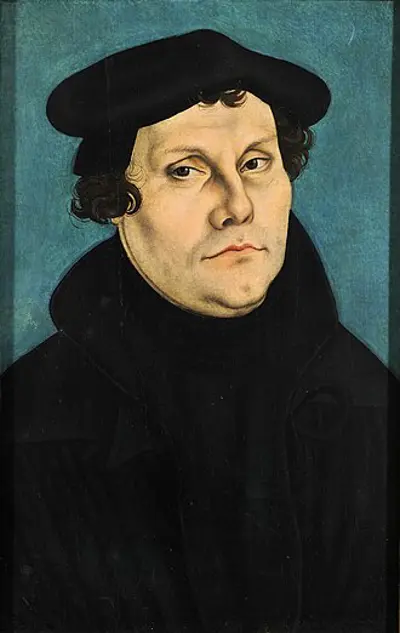
Trial of Martin Luther over his teachings begins during the assembly of the Diet of Worms. Initially intimidated, he asks for time to reflect before answering and is given a stay of one day.


Metropolitan Police officer Yvonne Fletcher was shot and killed while on duty during a protest outside the Libyan embassy in London, resulting in an 11-day police siege of the building and a breakdow�
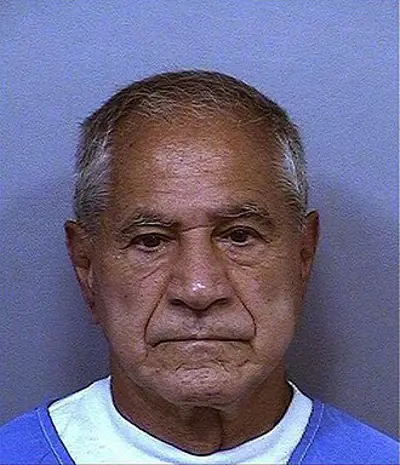
Sirhan Sirhan was convicted of the assassination of U.S. senator Robert F. Kennedy.

Minas Geraes (pictured), the first of three Brazilian dreadnought battleships, was laid down, sparking a vastly expensive South American naval arms race with Argentina and Chile.

The Republic of Zimbabwe (formerly Rhodesia) comes into being, with Canaan Banana as the country's first President. The Zimbabwean dollar replaces the Rhodesian dollar as the official currency.

Three-Fifths Compromise: The first instance of black slaves in the United States of America being counted as three-fifths of persons (for the purpose of taxation), in a resolution of the Congress of �
American Revolution: The British Army advances up the Charles River in Massachusetts to destroy supplies of American militias, while Paul Revere and other riders rapidly warn the countryside.
Trial of Martin Luther begins its second day during the assembly of the Diet of Worms. He refuses to recant his teachings despite the risk of excommunication.
Peace of Ferrara between Republic of Venice, Duchy of Milan, Republic of Florence and House of Gonzaga: ending of the second campaign of the Wars in Lombardy fought until the Treaty of Lodi in 1454, �