
1968
U
U.S. President Lyndon B. Johnson declares a national day of mourning following the assassination of Senator Robert F. Kennedy.
351 results for “John Vane” — type: events (265 ms)
U.S. President Lyndon B. Johnson declares a national day of mourning following the assassination of Senator Robert F. Kennedy.

�inside the United States Holocaust Memorial Museum and fatally shoots Museum Special Police Officer Stephen Tyrone Johns. Other security guards returned fire, wounding von Brunn, who was apprehended.
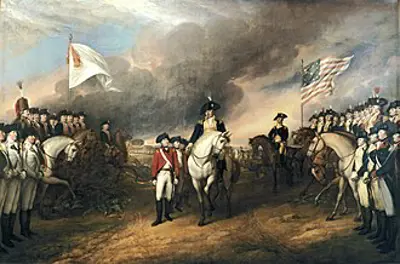
�in Massachusetts. The British offer a pardon to all colonists who lay down their arms. There would be only two exceptions to the amnesty: Samuel Adams and John Hancock, if captured, were to be hanged.
U.S. President Lyndon B. Johnson nominates Solicitor-General Thurgood Marshall to become the first black justice on the U.S. Supreme Court.
The U.S. Supreme Court rules in Texas v. Johnson, 491 U.S. 397, that American flag-burning is a form of political protest protected by the First Amendment.

Cold War: U.S. President Lyndon B. Johnson meets with Soviet Premier Alexei Kosygin in Glassboro, New Jersey for the three-day Glassboro Summit Conference.

On the Feast of St. John the Baptist, Bach leads the first performance of his Christ unser Herr zum Jordan kam, BWV 7, the third cantata of his chorale cantata cycle.

A sudden outbreak of St. John's Dance causes people in the streets of Aachen, Germany, to experience hallucinations and begin to jump and twitch uncontrollably until they collapse from exhaustion.

Cold War: U.S. President John F. Kennedy gives his "Ich bin ein Berliner" speech, underlining the support of the United States for democratic West Germany shortly after Soviet-supported East Germany e�
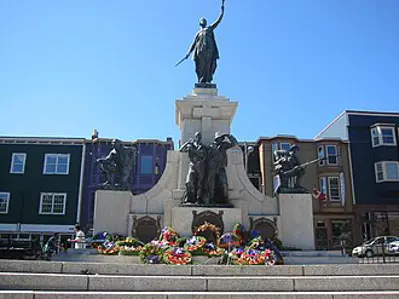
�inaugurated by Field Marshall Douglas Haig, 1st Earl Haig in St. John's, Newfoundland. The date commemorates the first day of the Battle of the Somme, where at Beaumont-Hamel, 86 percent of the Royal�

�ia join into confederation to create the modern nation of Canada. John A. Macdonald is sworn in as the first Prime Minister of Canada. This date is commemorated annually in Canada as Canada Day, a nat�

�-engine Cessna 310 collided over Hendersonville, North Carolina, USA. Both aircraft were destroyed and all passengers and crew were killed, including John T. McNaughton, an advisor to Robert McNamara.
Battle of Bouvines: Philip II of France decisively defeats Imperial, English and Flemish armies, effectively ending John of England's Angevin Empire.
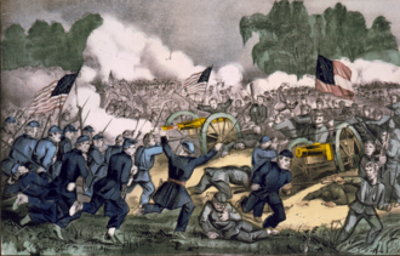
�he Battle of Ezra Church, Confederate troops make a third unsuccessful attempt under General John Bell Hood to prevent Union forces led by General William T. Sherman from approaching Atlanta, Georgia.
Pope Felix III excommunicated patriarch Acacius of Constantinople for his support of the Henoticon and his support of the removal of patriarch John Talaia, leading to the Acacian schism.
American Civil War: Battle of Cedar Mountain: At Cedar Mountain, Virginia, Confederate General Stonewall Jackson narrowly defeats Union forces under General John Pope.
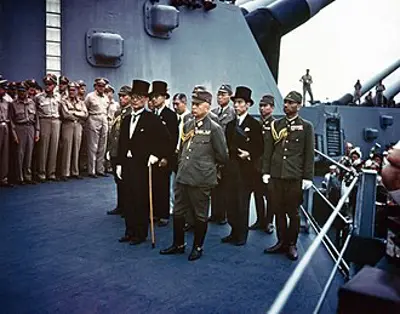
�h Japan announcing its surrender, armed supporters of the Chinese Communist Party kill U.S. intelligence officer John Birch, regarded by some of the American right as the first victim of the Cold War.
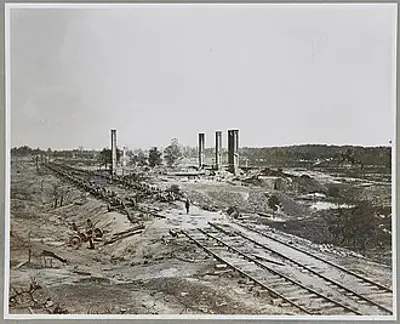
�The Battle of Jonesborough, alongside the overall Atlanta campaign, culminates in a Union victory for General William T. Sherman as Confederate General John Bell Hood orders the evacuation of Atlanta.
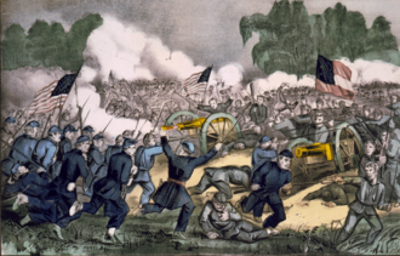
�Civil War: United States President Abraham Lincoln reluctantly restores Union General George B. McClellan to full command after General John Pope's disastrous defeat at the Second Battle of Bull Run.
The Treaty of Alcáçovas is signed by the Catholic Monarchs of Castile and Aragon on one side and Afonso V and his son, Prince John of Portugal.