
1864
Union general Ulysses S
Union general Ulysses S. Grant pulled his troops out of the Battle of Cold Harbor in Hanover County, Virginia, ending one of the bloodiest, most lopsided battles in the American Civil War.
106 results for “Gene Rayburn” — type: selected (140 ms)
Union general Ulysses S. Grant pulled his troops out of the Battle of Cold Harbor in Hanover County, Virginia, ending one of the bloodiest, most lopsided battles in the American Civil War.

Thomas Gage, the governor of the Province of Massachusetts Bay, offered a general pardon to colonists who remained loyal to Britain.

During a general strike in Winnipeg, Canada, members of the Royal North-West Mounted Police attacked a crowd of strikers, armed with clubs and revolvers.

Stand Watie became the last Confederate general of the American Civil War to surrender to Union forces.
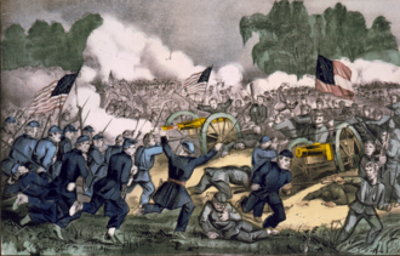
American Civil War: General Sherman's frontal assault against the Confederate Army of Tennessee failed, but did not stop the Union army from advancing on Atlanta.
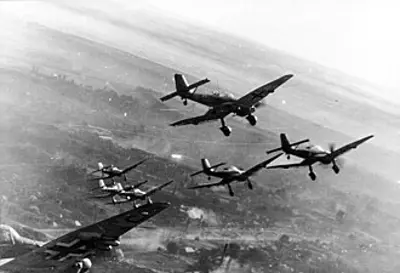
Second World War: The Grand Quartier Général of the French Army was disbanded, following the French surrender.
American Civil War: Confederate general Robert E. Lee launched a series of disjointed and ultimately unsuccessful assaults on the nearly impregnable Union position on Malvern Hill in Henrico County, V�

General Abdel Fattah el-Sisi led a coalition to depose President Mohamed Morsi in a coup d'état in Cairo, suspending the Egyptian Constitution of 2012.

Same-sex marriage became legal in Spain with the coming into effect of a law passed by the Cortes Generales.

Keir Starmer leads the Labour Party to a landslide victory in the United Kingdom general election, ending fourteen years of Conservative rule.
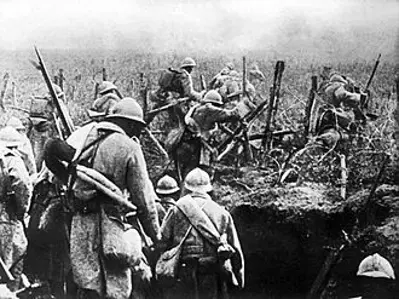
World War I: Allied forces led by the Australian general John Monash won the Battle of Hamel, demonstrating the effectiveness of combined-arms techniques in trench warfare.

Following student protests at Rangoon University, Burmese general Ne Win ordered the demolition of the historic students' union building.
Keir Starmer led the Labour Party to a landslide victory in the United Kingdom general election, ending fourteen years of Conservative rule.
French Revolution: Jacques Necker was dismissed as Director-General of Finances of France, sparking public demonstrations in Paris that led to the storming of the Bastille.

Byzantine emperor Michael I Rangabe (depicted), under threat by conspiracies, abdicated in favor of his general Leo the Armenian, and became a monk.

French Directorate General for External Security personnel aborted an operation to rescue Colombian politician Íngrid Betancourt from FARC guerrillas, resulting in a political scandal.

The New Zealand Wars resumed as British forces led by General Duncan Cameron began the invasion of the Waikato.

French and Indian War: Troops led by French brigadier general François-Charles de Bourlamaque attempted to blow up Fort Carillon, near present-day Ticonderoga, New York, rather than defending it again�
Peruvian War of Independence: Argentine general José de San Martín declared the independence of Peru from the Spanish Empire.
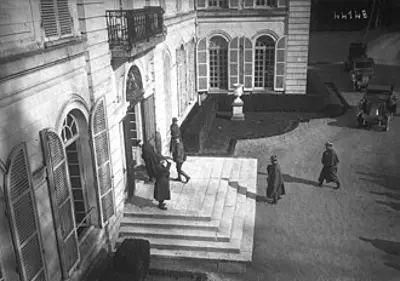
The French army's general headquarters was activated in anticipation of war with Germany.