The Sedition Act of 1918 is passed by the U
The Sedition Act of 1918 is passed by the U.S. Congress, making criticism of the government during wartime an imprisonable offense. It will be repealed less than two years later.
4676 results for “Mary I” — type: events (844 ms)
The Sedition Act of 1918 is passed by the U.S. Congress, making criticism of the government during wartime an imprisonable offense. It will be repealed less than two years later.
The United Kingdom of Great Britain and Ireland and the French Third Republic sign the secret wartime Sykes-Picot Agreement partitioning former Ottoman territories such as Iraq and Syria.
The 16 May 1877 crisis occurs in France, ending with the dissolution of the National Assembly 22 June and affirming the interpretation of the Constitution of 1875 as a parliamentary rather than presid�
Continental Army officer Lachlan McIntosh fatally wounds Button Gwinnett, a signer of the United States Declaration of Independence, in a duel in Savannah, Georgia.
Three gas cylinder bombs explode in front of a vocational school in the Italian city of Brindisi, killing one person and injuring five others.
Mustafa Kemal Atatürk lands at Samsun on the Anatolian Black Sea coast, initiating what is later termed the Turkish War of Independence.
Parks Canada, the world's first national park service, is established as the Dominion Parks Branch under the Department of the Interior.
U.S. President John Quincy Adams signs the Tariff of 1828 into law, sparking outrage in the South and leading to the Nullification crisis.
First publications of the discovery of the HIV virus that causes AIDS in the journal Science by a team of French scientists including Françoise Barré-Sinoussi, Jean-Claude Chermann, and Luc Montagnier�
Church Street bombing: A car bomb planted by UMkhonto we Sizwe explodes on Church Street in South Africa's capital, Pretoria, killing 19 people and injuring 217 others.
In a referendum in Quebec, the population rejects, with 60% of the vote, a government proposal to move towards independence from Canada.
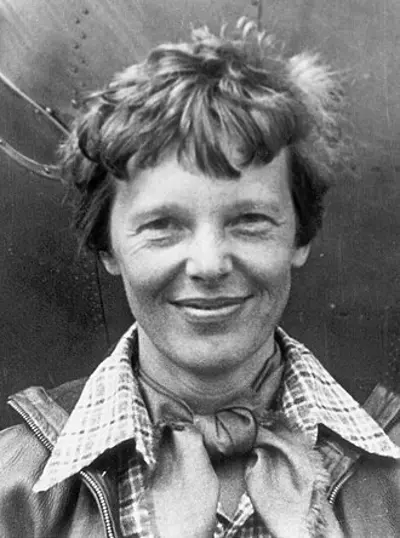
Amelia Earhart takes off from Newfoundland to begin the world's first solo nonstop flight across the Atlantic Ocean by a female pilot, landing in Ireland the next day.
U.S. President Abraham Lincoln signs the Homestead Act into law, opening eighty-four million acres (340,000 km2) of public land to settlers.
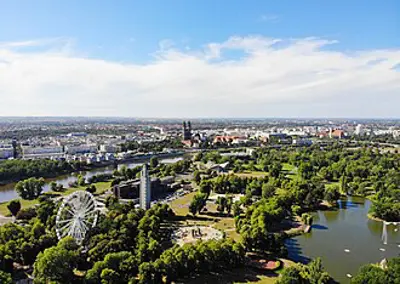
The city of Magdeburg in Germany is seized by forces of the Holy Roman Empire and most of its inhabitants massacred, in one of the bloodiest incidents of the Thirty Years' War.
The 6.8 Mw Boumerdès earthquake shakes northern Algeria with a maximum Mercalli intensity of X (Extreme). More than 2,200 people were killed and a moderate tsunami sank boats at the Balearic Islands.
The Great Atlanta fire of 1917 causes $5.5 million in damages, destroying some 300 acres including 2,000 homes, businesses and churches, displacing about 10,000 people but leading to only one fatality�
President of Mexico Porfirio Díaz and the revolutionary Francisco Madero sign the Treaty of Ciudad Juárez to put an end to the fighting between the forces of both men, concluding the initial phase of�
The Order of St. Alexander Nevsky is instituted in Russia by Empress Catherine I. It would later be discontinued and then reinstated by the Soviet government in 1942 as the Order of Alexander Nevsky.
The Battle of Long Sault concludes after five days in which French colonial militia, with their Huron and Algonquin allies, are defeated by the Iroquois Confederacy.
An explosion occurs in Ürümqi, capital of China's far-western Xinjiang region, resulting in at least 43 deaths and 91 injuries.