
1940
World War II: U
World War II: U.S. President Franklin D. Roosevelt denounces Italy's actions in his "Stab in the Back" speech at the graduation ceremonies of the University of Virginia.
4774 results for “Constantine VI of Constantinople” (608 ms)
World War II: U.S. President Franklin D. Roosevelt denounces Italy's actions in his "Stab in the Back" speech at the graduation ceremonies of the University of Virginia.
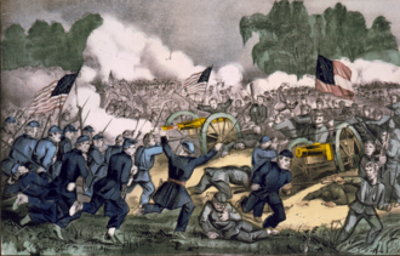
American Civil War: Battle of Big Bethel: Confederate troops under John B. Magruder defeat a much larger Union force led by General Ebenezer W. Pierce in Virginia.
American Civil Rights Movement: Governor of Alabama George Wallace defiantly stands at the door of Foster Auditorium at the University of Alabama in an attempt to block two black students, Vivian Malo�

Buddhist monk Thích Quảng Đức burns himself with gasoline in a busy Saigon intersection to protest the lack of religious freedom in South Vietnam.
The Naval Battle of the Riachuelo is fought on the rivulet Riachuelo (Argentina), between the Paraguayan Navy on one side and the Brazilian Navy on the other. The Brazilian victory was crucial for the�

Marcomannic Wars: The Roman army in Moravia is encircled by the Quadi, who have broken the peace treaty (171). In a violent thunderstorm emperor Marcus Aurelius defeats and subdues them in the so-call�
The United States Supreme Court in Loving v. Virginia declares all U.S. state laws that prohibit interracial marriage to be unconstitutional.
American Civil War, Overland Campaign: Battle of Cold Harbor: Ulysses S. Grant gives the Confederate forces under Robert E. Lee a victory when he pulls his Union troops from their position at Cold Har�
The U.S. Supreme Court struck down laws restricting interracial marriage in the landmark civil rights case Loving v. Virginia.

Union general Ulysses S. Grant pulled his troops out of the Battle of Cold Harbor in Hanover County, Virginia, ending one of the bloodiest, most lopsided battles in the American Civil War.

A jury in Anchorage, Alaska, blames recklessness by Exxon and Captain Joseph Hazelwood for the Exxon Valdez disaster, allowing victims of the oil spill to seek $15 billion in damages.

�New York Times published the first excerpts from the Pentagon Papers, a 7,000-page classified Department of Defense history of the United States' political and military involvement in the Vietnam War.

Riots broke out in Saigon one day after the signing of the Joint Communiqué, an attempt to resolve the Buddhist crisis in South Vietnam.
Subhash Mukherjee, Indian scientist and physician who created India's first, and the world's second, child using in-vitro fertilisation (born 1931)

World War II: The Battle of the Philippine Sea concludes with a decisive U.S. naval victory. The lopsided naval air battle is also known as the "Great Marianas Turkey Shoot".
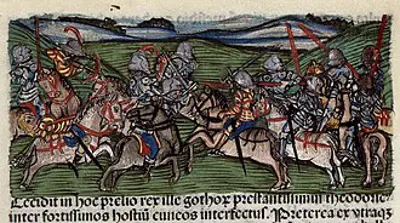
Battle of Chalons: Flavius Aetius battles Attila the Hun. After the battle, which was inconclusive, Attila retreats, causing the Romans to interpret it as a victory.
Daniel D. Tompkins, American lawyer and politician, 6th Vice President of the United States (died 1825)

�battleship HMS Camperdown accidentally rams the British Mediterranean Fleet flagship HMS Victoria which sinks taking 358 crew with her, including the fleet's commander, Vice-Admiral Sir George Tryon.

The 8.4 Mw southern Peru earthquake shakes coastal Peru with a maximum Mercalli intensity of VIII (Severe). A destructive tsunami followed, leaving at least 74 people dead, and 2,687 injured.

Adolf Hitler goes on a three-hour tour of the architecture of Paris with architect Albert Speer and sculptor Arno Breker in his only visit to the city.