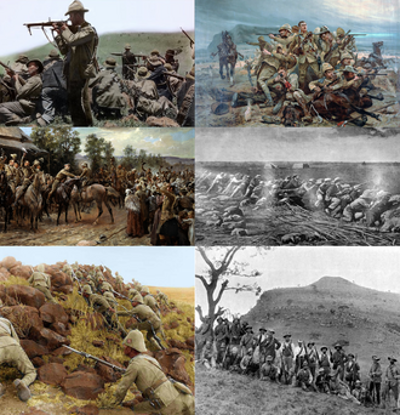
1902
The Second Boer War came to an end with the signing of the Treaty of Vereeniging in Pretoria, South Africa
The Second Boer War came to an end with the signing of the Treaty of Vereeniging in Pretoria, South Africa.
964 results for “World War” — type: selected (301 ms)
The Second Boer War came to an end with the signing of the Treaty of Vereeniging in Pretoria, South Africa.
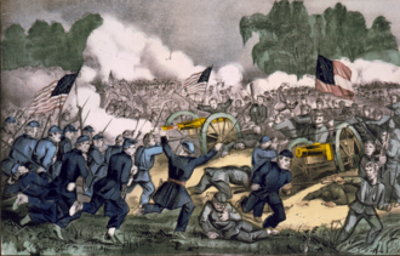
American Civil War: Confederate troops under Joseph E. Johnston and G. W. Smith engaged Union forces under George B. McClellan at the Battle of Seven Pines outside Richmond, Virginia.

The first land battle of the American Civil War after Fort Sumter took place in the village of Fairfax, Virginia.
War of 1812: Mortally wounded, U.S. Navy captain James Lawrence ordered his crew "Don't give up the ship!" as USS Chesapeake was captured by HMS Shannon off the coast of Boston.
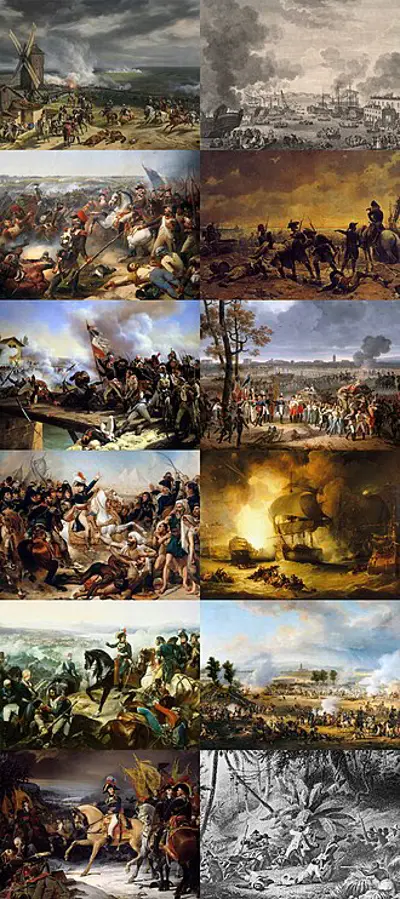
French Revolutionary Wars: A British fleet captured six French ships of the line in a naval battle off Ushant that came to be known as the Glorious First of June (pictured).

�IV signed a secret treaty, requiring England to aid France in its war against the Dutch Republic and the future conversion of Charles to Catholicism, in return for Louis making large payments to Charl�

Bosnian War: U.S. Air Force captain Scott O'Grady was shot down while patrolling the NATO no-fly zone over Bosnia, but ejected safely and was rescued six days later.

Napoleonic Wars: A Franco-Spanish fleet recaptured the British-held Diamond Rock, an uninhabited island at the entrance to the bay leading to Fort-de-France, Martinique.
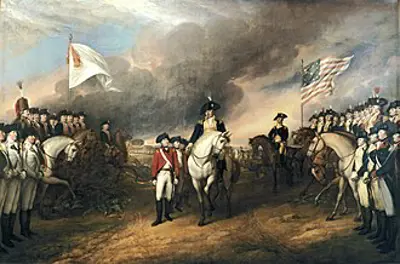
American Revolutionary War: Jack Jouett (pictured) rode 40 miles (64 km) to warn Thomas Jefferson and the Virginia legislature of British cavalry who had been sent to capture them.
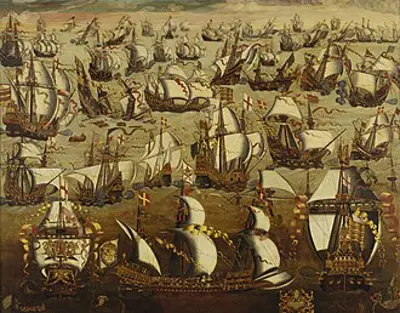
Anglo-Spanish War: The English navy defeated a Spanish–Portuguese fleet off Sesimbra, Portugal, and captured a carrack.
American Revolutionary War: Jack Jouett rode 40 miles (64 km) to warn Thomas Jefferson and the Virginia legislature of British cavalry who had been sent to capture them.

At a speech at Harvard University, United States Secretary of State George Marshall called for economic aid to war-torn Europe, outlining a recovery program that became known as the Marshall Plan.

Second Sino-Japanese War: About 4,000 people died of asphyxiation in Chongqing when the tunnel in which they were hiding became blocked during a raid in the five-year bombing campaign.

Antonio Luna, Commanding General of the Philippine Army, was assassinated in the midst of the Philippine–American War.
Syrian civil war: The Syrian Democratic Forces (soldiers pictured) opened the Second Battle of Raqqa, the final phase of the Raqqa campaign, capturing the de facto capital of the Islamic State four mo�
Falklands War: The Royal Navy destroyer HMS Cardiff engaged and destroyed a British Army helicopter in a friendly-fire incident.
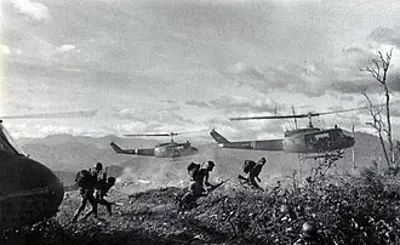
Vietnam War: Australian forces attacked a heavily fortified North Vietnamese base camp at the Battle of Long Khánh.
American Civil War: The Union Army's victory in the First Battle of Memphis virtually eradicated the Confederate naval presence on the Mississippi River.
War of 1812: The British ambushed an American encampment near present-day Stoney Creek, Ontario, capturing two senior officers.

War of the League of Cambrai: Milanese forces with Swiss mercenaries defeated the French in Novara, forcing them to withdraw from the Duchy of Milan and Italy.