
1777
The Second Continental Congress adopted the stars and stripes design for the flag of the United States
The Second Continental Congress adopted the stars and stripes design for the flag of the United States.
2133 results for “Robert D. Keppel” — type: selected (1039 ms)
The Second Continental Congress adopted the stars and stripes design for the flag of the United States.

First English Civil War: Prince Maurice abandoned his siege of Lyme Regis in Dorset after learning of the approach of a Parliamentarian relief force.
American acrobat Nik Wallenda became the first person to walk a tightrope stretched directly over Niagara Falls.
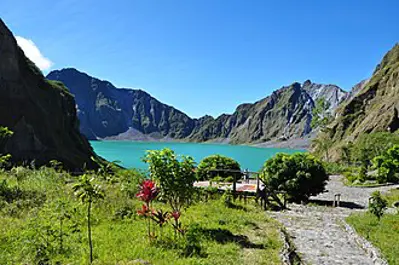
The eruption of Mount Pinatubo in the Philippines deposited large amounts of particulate matter into the atmosphere, enough to lower global temperatures by about 0.5 °C (0.9 °F).

Three African-American circus workers were lynched by a mob in Duluth, Minnesota, a crime that shocked the country for having taken place in the Northern United States.

Pope Leo X issued the papal bull Exsurge Domine, censuring 41 propositions from Martin Luther's Ninety-five Theses and subsequent writings, and threatening him with excommunication unless he recanted.

English musician David Bowie released his breakthrough album, The Rise and Fall of Ziggy Stardust and the Spiders from Mars.

Irish author James Joyce (pictured) began a relationship with Nora Barnacle, and subsequently used the date to set the actions for his 1922 novel Ulysses, commemorated as Bloomsday.

In the Victoria Hall disaster, 183 children were crushed to death when they ran down the stairs to collect gifts after a variety show in Sunderland, England.

After a two-week siege, the French commander of Fort Beauséjour in present-day New Brunswick, Canada, surrendered to British forces, marking the end of Father Le Loutre's War.

Ming forces conquered Đại Ngu in modern-day northern Vietnam, capturing Hồ dynasty emperor Hồ Quý Ly and bringing the country under Chinese rule.

Wildfires erupted across central Portugal, eventually causing the deaths of 66 people.

Riots broke out in Saigon one day after the signing of the Joint Communiqué, an attempt to resolve the Buddhist crisis in South Vietnam.

Guatemalan Revolution: The Guatemalan Congress passed Decree 900, redistributing unused land greater than 224 acres (0.91 km2) in area to local peasants.

Hundreds of Canadian soldiers rioted in Epsom, England, leading to the death of a British police officer.

In Detroit, autoworkers for car manufacturer Studebaker went on strike in the American auto industry's first major strike action.

Mumtaz Mahal (pictured), wife of the Mughal emperor Shah Jahan, died in childbirth; Jahan spent the next seventeen years constructing her mausoleum, the Taj Mahal.

Explorer Francis Drake landed in a region of present-day California, naming it New Albion and claiming it for England.

Hungarian–Ottoman Wars: Wallachian forces led by Vlad Dracula attacked an Ottoman camp at night in an unsuccessful attempt to assassinate Sultan Mehmed II.

The kingdoms of Denmark, Sweden, and Norway formed the Kalmar Union, a personal union under Eric of Pomerania.