The Civil Liberties Act of 1988 became law, authorizing reparations to surviving Japanese Americans interned during…
The Civil Liberties Act of 1988 became law, authorizing reparations to surviving Japanese Americans interned during World War II.
5052 results for “War of the First Coalition: Napoleon Bonaparte conquers Venice” (421 ms)
The Civil Liberties Act of 1988 became law, authorizing reparations to surviving Japanese Americans interned during World War II.
José Antônio Saraiva announced that the Brazilian military would exact reprisals after Uruguay's governing Blanco Party refused Brazil's demands, beginning the Uruguayan War.
The Swedish warship Vasa sank shortly after departing Stockholm on her maiden voyage to take part in the Thirty Years' War.
East Timor: Governor Mário Lemos Pires of Portuguese Timor abandons the capital Dili, following a coup by the Timorese Democratic Union (UDT) and the outbreak of civil war between UDT and Fretilin.
The Latvian–Soviet Peace Treaty, which relinquished Russia's authority and pretenses to Latvia, is signed, ending the Latvian War of Independence.
Between 1,000 and 3,500 Palestinians are killed in the Tel al-Zaatar massacre, one of the bloodiest events of the Lebanese Civil War.
Andronikos IV Palaiologos enters Constantinople by force and captures his father, emperor John V Palaiologos, and his younger brothers during the Byzantine civil war of 1373–1379.
One hundred fifty Palestinians in Beirut are killed in a terrorist attack during the second phase of the Lebanese Civil War.
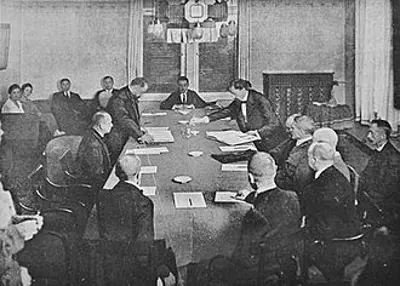
�ing in Newfoundland, British prime minister Winston Churchill and U.S. president Franklin D. Roosevelt (both pictured) issued the Atlantic Charter, establishing a vision for a post–World War II world.
An Italian submarine torpedoes and sinks the Greek cruiser Elli at Tinos harbor during peacetime, marking the most serious Italian provocation prior to the outbreak of the Greco-Italian War in October�
A story in New York World newspaper reveals that the Imperial German government had purchased excess phenol from Thomas Edison that could be used to make explosives for the war effort and diverted it�
German admiral Wilhelm Souchon hands over the two warships under his command to the Ottomans and becomes commander of the Turkish navy, leading later to the entry of the Ottoman Empire in World War I.
Battle of Acosta Ñu: A Paraguayan battalion largely made up of children is massacred by the Brazilian Army during the Paraguayan War.
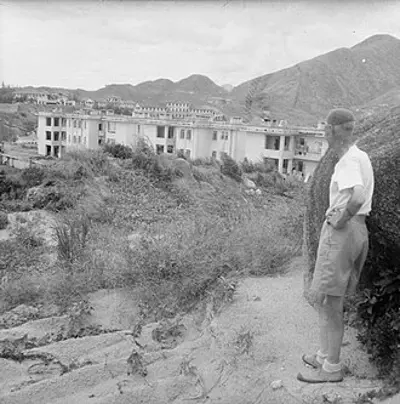
The Stanley Internment Camp in Hong Kong was liberated following the announcement of the surrender of Japan in World War II.
The 766th Independent Infantry Regiment of North Korea was disbanded after fighting for less than two months in the Korean War.
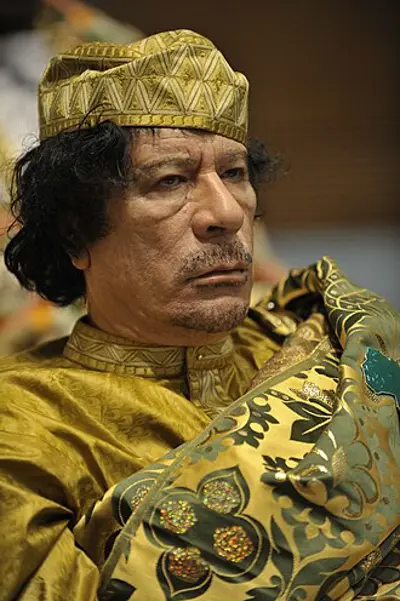
Libyan leader Muammar Gaddafi is overthrown after the National Transitional Council forces take control of Bab al-Azizia compound during the Libyan Civil War.
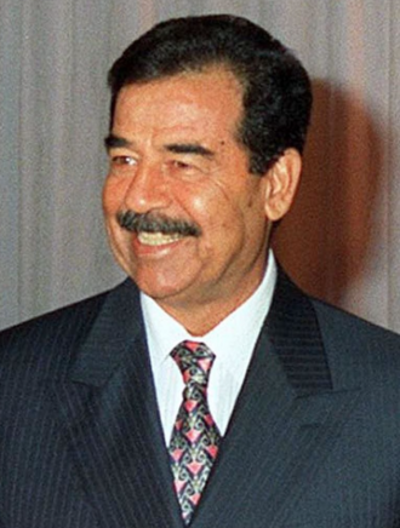
Saddam Hussein appears on Iraqi state television with a number of Western "guests" (actually hostages) to try to prevent the Gulf War.
The Holocaust: Adolf Hitler orders the cessation of Nazi Germany's systematic T4 euthanasia program of the mentally ill and the handicapped due to protests, although killings continue for the remainde�
Adolf Hitler ordered the suspension of the T4 euthanasia program of the mentally ill and disabled, although killings continued in secret for the remainder of World War II.
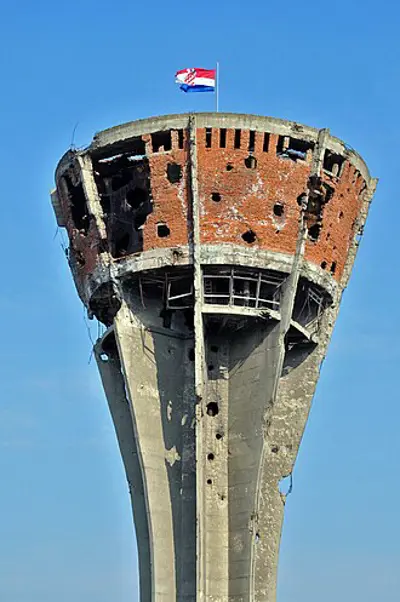
The Battle of Vukovar begins. An 87-day siege of Vukovar by the Yugoslav People's Army (JNA), supported by various Serb paramilitary forces, between August and November 1991 (during the Croatian War o�