Battle of the Golden Spurs (Guldensporenslag in Dutch): A coalition around the Flemish cities defeats the king of…
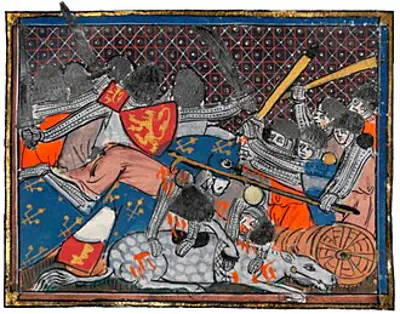
Battle of the Golden Spurs (Guldensporenslag in Dutch): A coalition around the Flemish cities defeats the king of France's royal army.
647 results for “Fran Ryan” — type: events (166 ms)
Battle of the Golden Spurs (Guldensporenslag in Dutch): A coalition around the Flemish cities defeats the king of France's royal army.
Storming of the Bastille in Paris. This event escalates the widespread discontent into the French Revolution. Bastille Day is still celebrated annually in France.
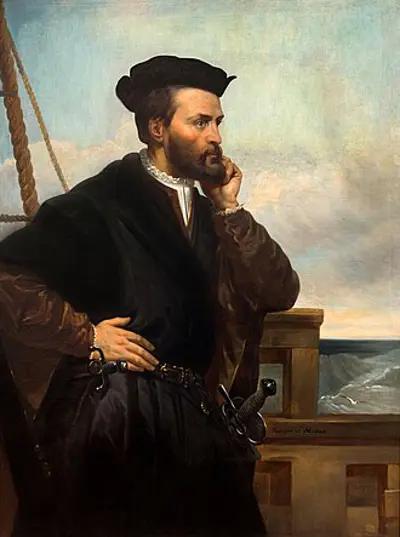
Jacques Cartier, navigator and explorer, returns home to St. Malo after claiming Stadacona (Quebec), Hochelaga (Montreal) and the River of Canada (St. Lawrence River) region for France.
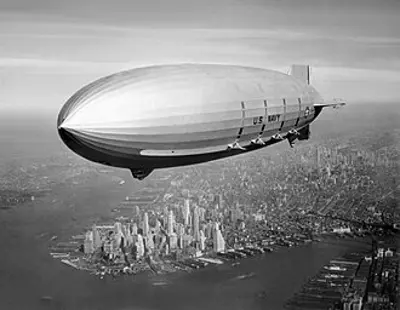
The rigid airship USS Macon surprised the USS Houston near Clipperton Island with a mail delivery for President Franklin D. Roosevelt, demonstrating its potential for tracking ships at sea.
Nicéphore Niépce is awarded a patent by Napoleon for the Pyréolophore, the world's first internal combustion engine, after it successfully powered a boat upstream on the river Saône in France.
�f Cape Finisterre: An inconclusive naval action is fought between a combined French and Spanish fleet under Admiral Pierre-Charles Villeneuve of France and a British fleet under Admiral Robert Calder.
�o the Kingdom of Serbia demanding Serbia to allow the Austrians to determine who assassinated Archduke Franz Ferdinand. Serbia accepts all but one of those demands and Austria declares war on July 28.
French explorer Jacques Cartier plants a cross on the Gaspé Peninsula and takes possession of the territory in the name of Francis I of France.
The office that would later become the United States Post Office Department is established by the Second Continental Congress. Benjamin Franklin of Pennsylvania takes office as Postmaster General.
�of North Tyrol with a victory at the Pontlatzer Bridge and thus prevented the Bavarian Army, which was allied with France, from marching as planned on Vienna during the War of the Spanish Succession.
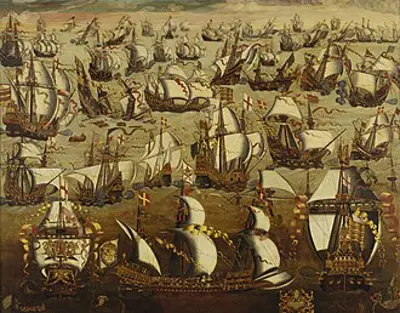
Anglo-Spanish War: Battle of Gravelines: English naval forces under the command of Lord Charles Howard and Sir Francis Drake defeat the Spanish Armada off the coast of Gravelines, France.
The Holocaust: A tip from a Dutch informer leads the Gestapo to a sealed-off area in an Amsterdam warehouse, where they find and arrest Jewish diarist Anne Frank, her family, and four others.
Alice Huyler Ramsey and three friends become the first women to complete a transcontinental auto trip, taking 59 days to travel from New York, New York to San Francisco, California.
Under the direction of Charles Lawrence, the British begin to forcibly deport the Acadians from Nova Scotia to the Thirteen Colonies and France.
�an, mayor of the palace of Austrasia, renounces his position as majordomo and retires to a monastery near Rome. His brother, Pepin the Short, becomes the sole ruler (de facto) of the Frankish Kingdom.
Cesare Borgia, son of Pope Alexander VI, becomes the first person in history to resign the cardinalate; later that same day, King Louis XII of France names him Duke of Valentinois.
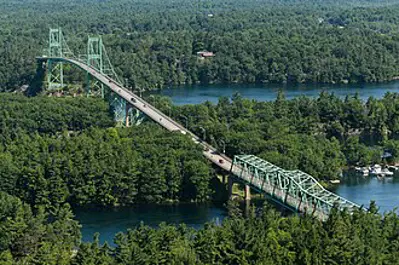
The Thousand Islands Bridge, connecting New York, United States, with Ontario, Canada, over the Saint Lawrence River, is dedicated by U.S. President Franklin D. Roosevelt.
The Huguenot King Henry III of Navarre marries the Catholic Margaret of Valois, ostensibly to reconcile the feuding Protestants and Catholics of France.
World War II: Operation Jubilee (The Dieppe Raid): The 2nd Canadian Infantry Division leads an amphibious assault by allied forces on Dieppe, France and fails.
Battle of Jengland: Erispoe defeats Charles the Bald near the Breton town of Jengland, halting the expansion of West Francia.