1914
The Irish Home Rule Act becomes law, but is delayed until after World War I.
The Irish Home Rule Act becomes law, but is delayed until after World War I.
3248 results for “World War” (239 ms)
The Irish Home Rule Act becomes law, but is delayed until after World War I.
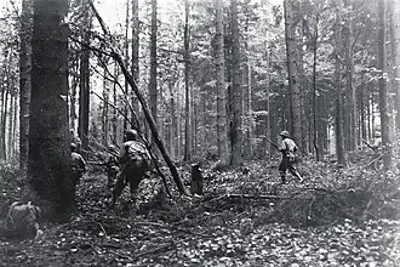
World War II: The Battle of Hürtgen Forest begins. It will become the second-longest individual battle that the U.S. Army has ever fought.
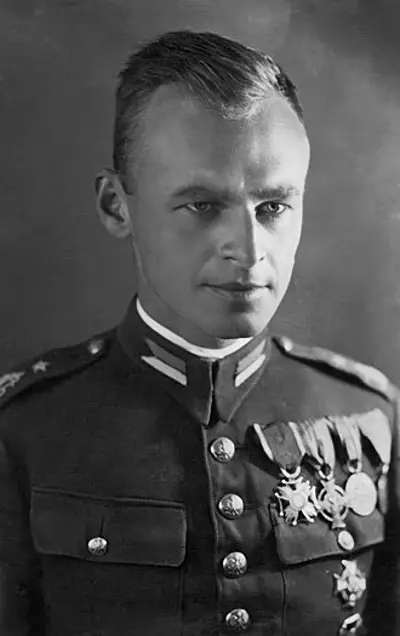
World War II: Witold Pilecki is voluntarily captured and sent to Auschwitz concentration camp to gather and smuggle out information for the resistance movement.
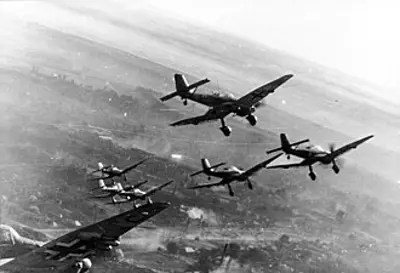
World War II: The Battle of Kępa Oksywska concludes, with Polish losses reaching roughly 14% of all the forces engaged.
World War I: During the East African Campaign, colonial forces of the Belgian Congo (Force Publique) under the command of Charles Tombeur capture the town of Tabora after heavy fighting.
Earl R. Fox, U.S. Navy and Coast Guard veteran; last active U.S. servicemember to serve in World War II (died 2012)
Judith Auer, German World War II resistance fighter (died 1944)
Earl R. Fox, U.S. Navy and Coast Guard veteran; last active U.S. servicemember to serve in World War II (born 1919)
World War II: Polish resistance leader Witold Pilecki allowed himself to be captured by German forces and sent to Auschwitz to gather intelligence.

The first Cannes Film Festival is held, having been delayed for seven years due to World War II.
Second World War: Allied forces captured San Marino from the German Army.
World War II: Australian troops led by Gordon Grimsley King defeated Imperial Japanese forces at the Battle of Kaiapit in New Guinea.
World War II: Nazi forces began a mass extermination campaign against the civilian residents of around 20 villages on the Greek island of Crete, eventually killing more than 500 men.
Second World War: The German Army began the Massacre of the Acqui Division on the Greek island of Cephalonia, executing 5,155 Italian soldiers in the next five days.
World War I: The Battle of Nazareth ended with the British Empire victorious over the Ottomans.
World War II: A joint German–Soviet military parade in Brest-Litovsk is held to celebrate the successful invasion of Poland.
First World War: The German submarine U-9 sank three Royal Navy cruisers, resulting in approximately 1,450 deaths.
World War II: The Matanikau action on Guadalcanal begins: U.S. Marines attack Japanese units along the Matanikau River.
World War I: The Battle of Haifa takes place in present-day Israel, part of the Ottoman Empire at that time.
World War II: Surviving elements of the British 1st Airborne Division withdraw from Arnhem via Oosterbeek.