
306
Constantine the Great was proclaimed Roman emperor by his troops after the death of Constantius Chlorus.
Constantine the Great was proclaimed Roman emperor by his troops after the death of Constantius Chlorus.
2133 results for “Robert D. Keppel” — type: selected (1023 ms)
Constantine the Great was proclaimed Roman emperor by his troops after the death of Constantius Chlorus.
The New Irish Republican Army was formed from a merger of a number of dissident republican militant groups.

After coming second to Nguyễn Văn Thiệu in a rigged presidential election, Trương Đình Dzu was jailed by a South Vietnamese military court for illicit currency transactions.

The Canadian National Vimy Memorial, dedicated to Canadian Expeditionary Force members killed in the First World War, was unveiled in Pas-de-Calais, France.

L. L. Zamenhof (pictured) published Unua Libro, the first publication to describe Esperanto, a constructed international language.

A major oil spill from the Colonial Pipeline was discovered in Mecklenburg County, North Carolina (system map pictured).

The last nine Aston Martin DB9 units rolled off the production line, marking the end of a twelve-year manufacturing period.

Police in Tokyo found the mummified remains of Sogen Kato, thought to have died in 1978, leading to widespread inquiries into the status of isolated elderly people in Japan.

American musician Madonna released her self-titled debut album, which set the standard for the genre of dance-pop for decades.

First Jacobite rising: Scottish and Irish Jacobites defeated Williamite forces at Killiecrankie, Scotland.
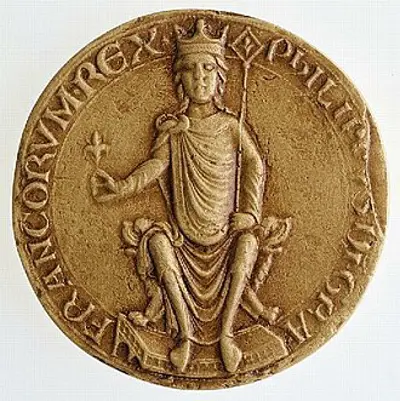
Philip II of France decisively won the Battle of Bouvines, the conclusive battle of the 1213–1214 Anglo-French War.

During his invasion of Scotland, Siward, Earl of Northumbria, defeated Macbeth, King of Scotland, in an engagement north of the Firth of Forth.

Unable to penetrate the city's defences, the Sclaveni gave up their siege of the Byzantine city of Thessalonica.

In the deadliest air accident in Pakistan's history, Airblue Flight 202 crashed into the Margalla Hills north of Islamabad, killing all 152 aboard.

Britain's costliest tornado struck Birmingham, injuring 39 people and causing £40 million of damage across the city.

An earthquake registering 7.6 Mw, one of the deadliest in history, devastated Tangshan, China, and killed at least 240,000 people.

At the Salzburg Conference, Adolf Hitler demanded the replacement of much of Slovakia's cabinet.

During the excavation of a 7th-century ship burial at Sutton Hoo in Suffolk, England, archaeologists discovered the Sutton Hoo helmet (pictured), widely associated with King Rædwald of East Anglia.

The Australasian Antarctic Expedition began with the departure of SY Aurora from London.

A Category 1 hurricane (map pictured) made landfall in Azua Province, Dominican Republic, and destroyed three large schooners at Santo Domingo; only one crew member on the three vessels survived.