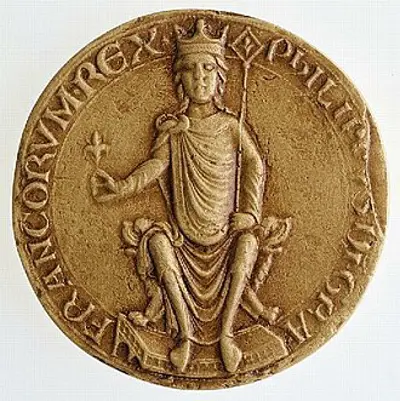
Philip II of France decisively won the Battle of Bouvines, the conclusive battle of the 1213–1214 Anglo-French War.
2129 results for “Thea D. Hodge” — type: selected (1049 ms)
Philip II of France decisively won the Battle of Bouvines, the conclusive battle of the 1213–1214 Anglo-French War.
During his invasion of Scotland, Siward, Earl of Northumbria, defeated Macbeth, King of Scotland, in an engagement north of the Firth of Forth.
Unable to penetrate the city's defences, the Sclaveni gave up their siege of the Byzantine city of Thessalonica.
In the deadliest air accident in Pakistan's history, Airblue Flight 202 crashed into the Margalla Hills north of Islamabad, killing all 152 aboard.
Britain's costliest tornado struck Birmingham, injuring 39 people and causing £40 million of damage across the city.
An earthquake registering 7.6 Mw, one of the deadliest in history, devastated Tangshan, China, and killed at least 240,000 people.
At the Salzburg Conference, Adolf Hitler demanded the replacement of much of Slovakia's cabinet.
During the excavation of a 7th-century ship burial at Sutton Hoo in Suffolk, England, archaeologists discovered the Sutton Hoo helmet (pictured), widely associated with King Rædwald of East Anglia.
The Australasian Antarctic Expedition began with the departure of SY Aurora from London.
A Category 1 hurricane (map pictured) made landfall in Azua Province, Dominican Republic, and destroyed three large schooners at Santo Domingo; only one crew member on the three vessels survived.
Peruvian War of Independence: Argentine general José de San Martín declared the independence of Peru from the Spanish Empire.
Crusades: The siege of Damascus ended in a decisive victory for the Muslims, leading to the disintegration of the Second Crusade.
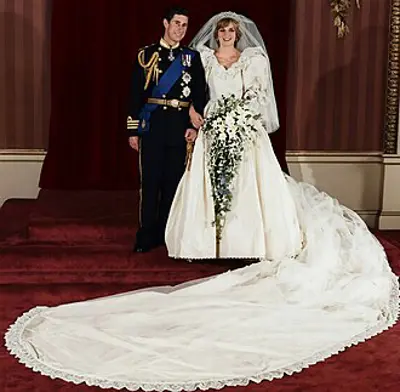
An estimated worldwide television audience of 750 million watched the wedding of Prince Charles and Lady Diana Spencer (combined coat of arms pictured) at St Paul's Cathedral in London.
Korean War: Over fears that North Korean soldiers were infiltrating refugee columns, U.S. forces concluded a four-day massacre of hundreds of civilians through shootings and air attacks near the vill�
The first shots of World War I were fired by the Austro-Hungarian river monitor Bodrog on Serbian defences near Belgrade.
French physicist Augustin-Jean Fresnel submitted a memoir on the diffraction of light to the Royal Academy of Sciences, providing strong support for the wave theory of light.
More than 150 people died after heavy rains triggered a landslide in the village of Malin in Maharashtra, India.
American labor-union leader Jimmy Hoffa disappeared after last being seen outside a restaurant near Detroit.
At the height of a political crisis known as the royal question, four workers were shot dead by the Belgian Gendarmerie at a strike in Grâce-Berleur.
In Montevideo, the Uruguay national football team (team pictured) won the inaugural FIFA World Cup, defeating Argentina 4–2 in the final.