1845
Captain Sir John Franklin and his ill-fated Arctic expedition depart from Greenhithe, England
Captain Sir John Franklin and his ill-fated Arctic expedition depart from Greenhithe, England.
6835 results for “Isidro de Espinosa” (634 ms)
Captain Sir John Franklin and his ill-fated Arctic expedition depart from Greenhithe, England.
Jean-Pierre Christin developed the centigrade temperature scale.
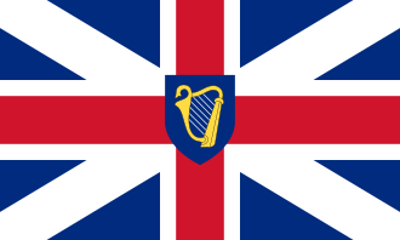
An Act of Parliament declaring England a Commonwealth is passed by the Long Parliament. England would be a republic for the next eleven years.

Thirty Years' War: French forces under the duc d'Enghien decisively defeat Spanish forces at the Battle of Rocroi, marking the symbolic end of Spain as a dominant land power.
John II of Castile defeats the Infantes of Aragon at the First Battle of Olmedo.
Albert Richardson, English architect and educator, designed the Manchester Opera House (died 1964)
Benjamin Baker, English engineer, designed the Forth Bridge (born 1840)
Button Gwinnett, British-born American politician and signer of the United States Declaration of Independence (born 1735)

Parks Canada, the world's first national park service, was established as the Dominion Parks Branch under the Department of the Interior.

Captain John Franklin (pictured) departed Greenhithe, England, on an expedition to the Canadian Arctic in search of the Northwest Passage; all 129 men were later lost when their ships became icebound�

French physicist Jean-Pierre Christin published the design of a mercury thermometer using the centigrade scale, with 0 representing the melting point of water and 100 its boiling point.

The Chinese authorities declare martial law in the face of pro-democracy demonstrations, setting the scene for the Tiananmen Square massacre.

The Popular Movement of the Revolution political party is established in the Democratic Republic of the Congo.

The Mecklenburg Declaration of Independence is allegedly signed in Charlotte, North Carolina.
Hernan Cortés defeats Pánfilo de Narváez, sent by Spain to punish him for insubordination.

The Second Battle of Lincoln is fought near Lincoln, England, resulting in the defeat of Prince Louis of France by William Marshal, 1st Earl of Pembroke.

A Magyar raiding army defeats forces of the Muslim frontier state of Fraxinetum.