The future Henry II of England marries Eleanor of Aquitaine
The future Henry II of England marries Eleanor of Aquitaine. He would become king two years later, after the death of his cousin once removed King Stephen of England.
9966 results for “George O'Hanlon” (862 ms)
The future Henry II of England marries Eleanor of Aquitaine. He would become king two years later, after the death of his cousin once removed King Stephen of England.
An earthquake measuring .mw-parser-output .tooltip-dotted{border-bottom:1px dotted;cursor:help}Ms7.8 struck Shanxi Province in northern China, resulting in at least 52,600 deaths.
The first regularly scheduled transatlantic flights begin between Idlewild Airport (now John F Kennedy International Airport) in New York City and Heathrow Airport in London, operated by El Al Israel�
The Sedition Act of 1918 is passed by the U.S. Congress, making criticism of the government during wartime an imprisonable offense. It will be repealed less than two years later.
The United Kingdom of Great Britain and Ireland and the French Third Republic sign the secret wartime Sykes-Picot Agreement partitioning former Ottoman territories such as Iraq and Syria.
Nikola Tesla delivers a lecture describing the equipment which will allow efficient generation and use of alternating currents to transmit electric power over long distances.
Imperial Russia signs the Treaty of Bucharest, ending the Russo-Turkish War. The Ottoman Empire cedes Bessarabia to Russia.
The Battle of Alamance, a pre-American Revolutionary War battle between local militia and a group of rebels called The "Regulators", occurs in present-day Alamance County, North Carolina.
The first Chuck E. Cheese location, the first family restaurant to integrate food, animated entertainment (example pictured), and an indoor arcade, opened in San Jose, California.
The Sedition Act was passed in the United States, forbidding Americans from using "disloyal, profane, scurrilous, or abusive language" about the government, flag, or armed forces during the ongoing W�
Button Gwinnett, a signer of the United States Declaration of Independence, is wounded in a duel with Continental Army officer Lachlan McIntosh, dying of his injuries several days later.
Mexican–American War: Mexico ratifies the Treaty of Guadalupe Hidalgo thus ending the war and ceding California, Nevada, Utah and parts of four other modern-day U.S. states to the United States for U�
U.S. President John Quincy Adams signs the Tariff of 1828 into law, sparking outrage in the South and leading to the Nullification crisis.
In Bangkok, the Thai military (pictured) concluded a week-long crackdown on widespread protests by forcing the surrender of opposition leaders.
First World War: Australian and New Zealand troops repelled the third attack on Anzac Cove, inflicting heavy casualties on the attacking Ottoman forces.
The International System of Units (SI): The base units are redefined, making the international prototype of the kilogram obsolete.
Church Street bombing: A car bomb planted by UMkhonto we Sizwe explodes on Church Street in South Africa's capital, Pretoria, killing 19 people and injuring 217 others.
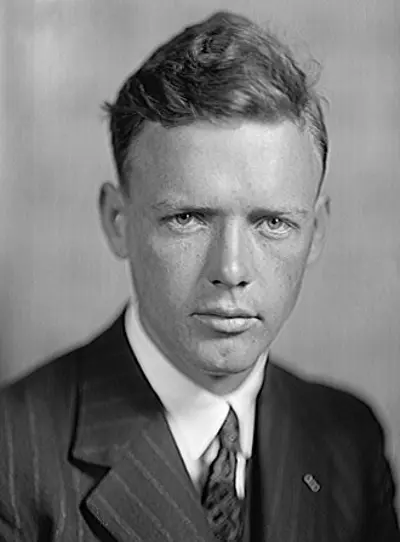
Charles Lindbergh takes off for Paris from Roosevelt Field in Long Island, N.Y., aboard the Spirit of St. Louis on the first nonstop solo flight across the Atlantic Ocean, landing 33+1⁄2 hours later.
U.S. President Abraham Lincoln signs the Homestead Act into law, opening eighty-four million acres (340,000 km2) of public land to settlers.
The city of Magdeburg in Germany is seized by forces of the Holy Roman Empire and most of its inhabitants massacred, in one of the bloodiest incidents of the Thirty Years' War.