1849
William R
William R. Day, American jurist and politician, 36th United States Secretary of State (died 1923)
76219 results for “A. W. Mailvaganam” (3860 ms)
William R. Day, American jurist and politician, 36th United States Secretary of State (died 1923)
King Æthelred I of Northumbria is murdered in Corbridge by a group led by his ealdormen, Ealdred and Wada. The patrician Osbald is crowned, but abdicates within 27 days.

The 51-day FBI siege of the Branch Davidian building in Waco, Texas, US, ends when a fire breaks out. Seventy-six Davidians, including 18 children under age 10, died in the fire.
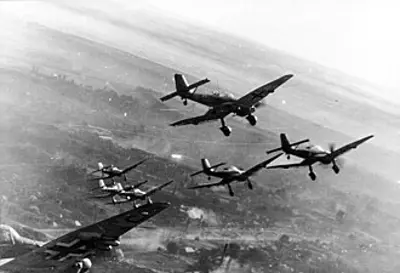
World War II: In German-occupied Poland, the Majdan-Tatarski ghetto is established, situated between the Lublin Ghetto and a Majdanek subcamp.
An Austrian corps is defeated by the forces of the Duchy of Warsaw in the Battle of Raszyn, part of the struggles of the Fifth Coalition. On the same day the Austrian main army is defeated by a First�

American Revolutionary War: Following the Battles of Lexington and Concord, the Siege of Boston begins with American militias blocking land access to the British-held city.

Johnson Space Center shooting: William Phillips barricades himself with a handgun in NASA's Johnson Space Center in Houston, Texas, before killing a male hostage and himself.

U.S. President William McKinley signs a joint resolution to Congress for declaration of war against Spain, beginning the Spanish–American War.

War of the Fifth Coalition: Commanded by Napoleon, Franco-German forces defeated a reinforced Austrian corps at the Battle of Abensberg.

The Supreme Court in La Paz, Bolivia, sentences former dictator Luis García Meza to 30 years in jail without parole for murder, theft, fraud and violating the constitution.
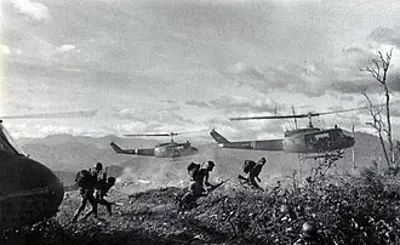
Vietnam War: President of South Vietnam Nguyễn Văn Thiệu flees Saigon, as Xuân Lộc, the last South Vietnamese outpost blocking a direct North Vietnamese assault on Saigon, falls.
Australian labour movement: Stonemasons and building workers on building sites around Melbourne march from the University of Melbourne to Parliament House to achieve an eight-hour day.
War of the First Coalition: In the climax of the Montenotte Campaign, Napoleon Bonaparte decisively defeats the army of Piedmont at the Battle of Mondovi, leading to Piedmont's surrender a week later�
The Laguna Copperplate Inscription (the earliest known written document found in what is now the Philippines): the Commander-in-Chief of the Kingdom of Tondo, as represented by the Honourable Jayadew�

In response to a dispute over wheat production quotas, Leonard Casley declared his 75 km2 (29 sq mi) farm in Western Australia to be an independent country as the Hutt River Province.

World War II: Prisoners at the Jasenovac concentration camp revolt. Five hundred twenty are killed and around eighty escape.
Winthrop M. Crane, American businessman and politician, 40th Governor of Massachusetts (died 1920)
Second World War: In retaliation for the Royal Air Force's bombing of Lübeck, the Luftwaffe began a series of air raids across England, beginning with Exeter.

Civil war breaks out in the Dominican Republic when Colonel Francisco Caamaño overthrows the triumvirate that had been in power since the coup d'état against Juan Bosch.