
1863
American Civil War: Robert E
American Civil War: Robert E. Lee and his Army of Northern Virginia begin marching to invade the North for a second time, starting the Gettysburg campaign.
1122 results for “Tiny Tim (musician)” (138 ms)
American Civil War: Robert E. Lee and his Army of Northern Virginia begin marching to invade the North for a second time, starting the Gettysburg campaign.

�War II: A hunter-killer group of the United States Navy captures the German Kriegsmarine submarine U-505: The first time a U.S. Navy vessel had captured an enemy vessel at sea since the 19th century.

�tern Idaho, U.S., collapsed (failure pictured) as its reservoir was being filled for the first time, resulting in the deaths of eleven people and 13,000 cattle, and causing up to $2 billion in damage.

Emperor Tenji of Japan introduces a water clock (clepsydra) called Rokoku. The instrument, which measures time and indicates hours, is placed in the capital of Ōtsu.

The film Cleopatra, starring Elizabeth Taylor and Richard Burton, is released in US theaters. It was the most expensive film made at the time.

�gers teammates Steve Garvey, Davey Lopes, Ron Cey and Bill Russell play together as an infield for the first time, going on to set the Major League Baseball record of staying together for 8+1⁄2 years.
�crowd demonstrating in favor of Perón in Buenos Aires, killing 364 and injuring at least 800. At the same time on the ground, some soldiers attempt to stage a coup but are suppressed by loyal forces.

The town of Murchison, New Zealand is rocked by a 7.8 magnitude earthquake killing 17. At the time it was New Zealand's worst natural disaster.

�he Battle of Waterloo results in the defeat of Napoleon Bonaparte by the Duke of Wellington and Gebhard Leberecht von Blücher forcing him to abdicate the throne of France for the second and last time.
The current international law defending indigenous peoples, Indigenous and Tribal Peoples Convention, 1989, is ratified for the first time by Norway.

�13 of the 124 passengers on board, making it the deadliest U.S. plane crash at the time. This accident led to decades of research into downburst and microburst phenomena and their effects on aircraft.

Elections are held for the Northern Ireland Assembly, which will lead to power-sharing between unionists and nationalists in Northern Ireland for the first time.

Hyde Park and several other Illinois townships vote to be annexed by Chicago, forming the largest United States city in area and second largest in population at the time.

Swedish tennis player Björn Borg wins his fifth Wimbledon final and becomes the first male tennis player to win the championships five times in a row (1976–1980).

Mathematical calculations suggest that it is on this day that dwarf planet Pluto moved inside the orbit of Neptune for the last time before 1979.
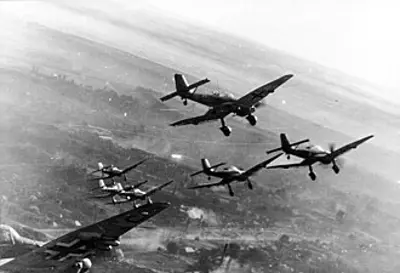
World War II: Battle of Kursk: German and Soviet forces engage in the Battle of Prokhorovka, one of the largest armored engagements of all time.

Germany won the FIFA World Cup final against Argentina, with Mario Götze scoring the game's only goal (pictured) in the extra time.

William Chaney (pictured), a historian of Anglo-Saxon England, retired after a half a century at Lawrence University, by which time 80% of living alumni had attended the school during his tenure.

�aliban and al-Qaeda guerrillas attack US Army and Afghan National Army troops in Afghanistan. The U.S. deaths were, at that time, the most in a single battle since the beginning of operations in 2001.

Austria, Britain, France, Prussia and Russia conclude the London Straits Convention, which prevents warships to cross the Bosporus and Dardanelles in times of war.