
1864
Union general Ulysses S
Union general Ulysses S. Grant pulled his troops out of the Battle of Cold Harbor in Hanover County, Virginia, ending one of the bloodiest, most lopsided battles in the American Civil War.
1531 results for “Andy O'Sullivan” — type: selected (448 ms)
Union general Ulysses S. Grant pulled his troops out of the Battle of Cold Harbor in Hanover County, Virginia, ending one of the bloodiest, most lopsided battles in the American Civil War.

Following the successful French invasion of Malta, the Knights Hospitaller surrendered Malta to Napoleon, initiating two years of occupation.

Soviet aircraft shot down a Swedish military plane carrying out signals-intelligence gathering operations, followed three days later by the shootdown of a second plane searching for the first one.
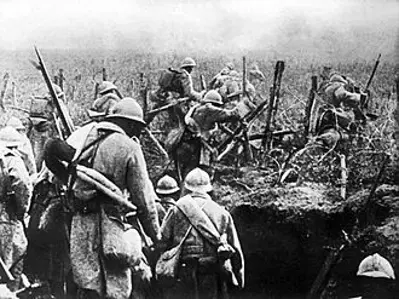
World War I: The Battle of Mont Sorrel in the Ypres Salient came to an end as a Canadian assault led German forces to withdraw to their original lines.

US president George W. Bush designated 140,000 square miles (360,000 km2) around the Northwestern Hawaiian Islands as the Papahānaumokuākea Marine National Monument, now one of the world's largest pr�

Charles Darwin received a manuscript by fellow naturalist Alfred Russel Wallace on natural selection, which encouraged him to publish his own theory of evolution.

The Basque separatist group ETA detonated a car bomb at a Hipercor shopping centre in Barcelona, killing 21 people and injuring 45 others.

Iranian student Neda Agha-Soltan was shot dead in Tehran during the presidential election protests; footage of her death was widely distributed over the Internet, making it "probably the most widely �
The U.S. Supreme Court delivered its decision in the landmark case Miller v. California, establishing the Miller test for determining what is obscene material.
Greek War of Independence: A combined Egyptian and Ottoman army began an invasion of the Mani Peninsula, but were initially held off by the Maniots at the fortifications of Vergas.

Two Metro trains collided in Washington, D.C., killing nine people and injuring eighty others.
A magnitude-6.5 earthquake struck northwestern Iran, killing at least 230 people and injuring 1,300 others; the official response, perceived to be slow, later caused widespread public anger.
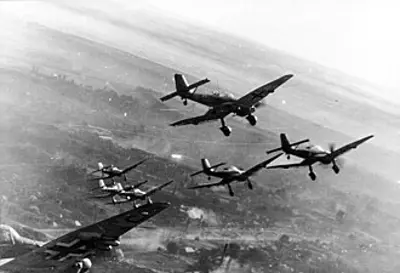
World War II: As Axis troops began their invasion of the Soviet Union, the Lithuanian Activist Front started an uprising to liberate Lithuania from Soviet occupation.

J. S. Bach led the first performance of Brich dem Hungrigen dein Brot, BWV 39 (page pictured), on the Sunday after Trinity, one of few new cantatas of that year.

John Isner defeated Nicolas Mahut at the Wimbledon Championships, concluding the longest match in tennis history, which lasted 11 hours and 5 minutes over three days.

The U.S. Navy's first two fast battleships, North Carolina and Washington, of the North Carolina class, were respectively ordered from the New York and Philadelphia Naval Shipyards.

An outbreak of dancing mania, in which crowds of people danced themselves to exhaustion, began in Aachen (in present-day Germany) before spreading to other parts of Europe.

In response to a Freedom of Information Act request, the CIA acknowledged the existence of Area 51, a secretive U.S. Air Force facility in Nevada and a subject of various UFO, and other, conspiracy t�
The U.S. Supreme Court ruled in Obergefell v. Hodges that the right of same-sex couples to marry is guaranteed by the Fourteenth Amendment.
The U.S. Supreme Court granted federal recognition to same-sex marriage when it overturned the Defense of Marriage Act.