
1898
U
U.S. President William McKinley signs a joint resolution to Congress for declaration of war against Spain, beginning the Spanish–American War.
1414 results for “William Jessop” (133 ms)
U.S. President William McKinley signs a joint resolution to Congress for declaration of war against Spain, beginning the Spanish–American War.
A week after being arrested by the Prussian Secret Police, French police inspector Guillaume Schnaebelé is released on order of William I, German Emperor, defusing a possible war.
Fletcher Christian, the acting lieutenant on board the Royal Navy ship Bounty, led a mutiny against the commander William Bligh in the South Pacific.
Lieutenant Colonels Joseph O. Fletcher and William P. Benedict of the United States land a plane at the North Pole.

�Place Riot: A riot breaks out at the Astor Opera House in Manhattan, New York City over a dispute between actors Edwin Forrest and William Charles Macready, killing at least 22 and injuring over 120.

The Second Battle of Lincoln is fought near Lincoln, England, resulting in the defeat of Prince Louis of France by William Marshal, 1st Earl of Pembroke.

The Manchester Ship Canal in the United Kingdom is officially opened by Queen Victoria, who later knights its designer Sir Edward Leader Williams.
The Pitt–Tierney duel takes place on Putney Heath outside London. A bloodless duel between the prime minister of Great Britain William Pitt the Younger and his political opponent George Tierney.
Avignonet massacre: A group of Cathars, with the probable connivance of Count Raymond VII of Toulouse, murdered the inquisitor William Arnaud and eleven of his companions.

�n the Battle of Stoney Creek, considered a critical turning point in the war, a British force of 700 under John Vincent defeats an American force twice its size under William Winder and John Chandler.

Unhappy with U.S. president Woodrow Wilson's handling of the RMS Lusitania sinking, William Jennings Bryan resigned as Secretary of State.

Hundred Years' War: On the second day of the Battle of Jargeau, Joan of Arc leads the French army in their capture of the city and the English commander, William de la Pole, 1st Duke of Suffolk.
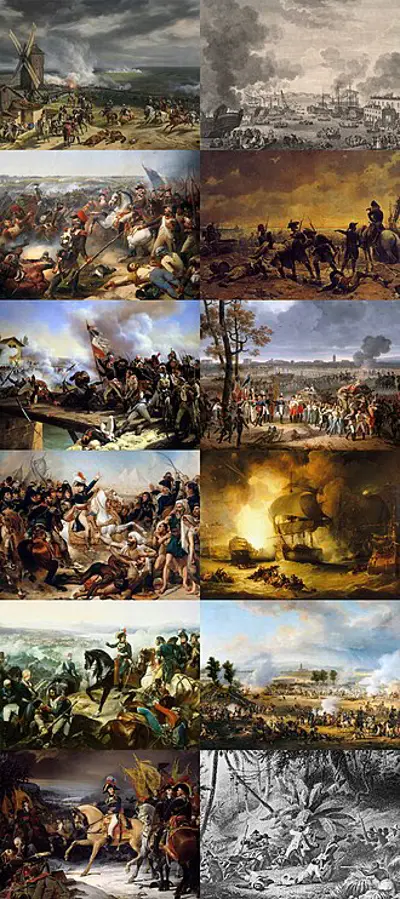
�llis's Retreat, a British Royal Navy squadron led by Vice Admiral William Cornwallis strongly resists a much larger French Navy force and withdraws largely intact, setting up the French Navy defeat at�

Hershel W. Williams, American Marine Corps warrant officer, last living Medal of Honor recipient from World War II (born 1923)

U.S. President Warren G. Harding appoints former President William Howard Taft as Chief Justice of the United States.

English Civil War: Battle of Roundway Down: In England, Henry Wilmot, 1st Earl of Rochester, commanding the Royalist forces, heavily defeats the Parliamentarian forces led by Sir William Waller.
American Civil War: Battle of Peachtree Creek: Near Atlanta, Georgia, Confederate forces led by General John Bell Hood unsuccessfully attack Union troops under General William T. Sherman.