The Sedition Act of 1918 is passed by the U
The Sedition Act of 1918 is passed by the U.S. Congress, making criticism of the government during wartime an imprisonable offense. It will be repealed less than two years later.
16745 results for “Malik-Shah I” (1214 ms)
The Sedition Act of 1918 is passed by the U.S. Congress, making criticism of the government during wartime an imprisonable offense. It will be repealed less than two years later.
The United Kingdom of Great Britain and Ireland and the French Third Republic sign the secret wartime Sykes-Picot Agreement partitioning former Ottoman territories such as Iraq and Syria.
The 16 May 1877 crisis occurs in France, ending with the dissolution of the National Assembly 22 June and affirming the interpretation of the Constitution of 1875 as a parliamentary rather than presid�
Continental Army officer Lachlan McIntosh fatally wounds Button Gwinnett, a signer of the United States Declaration of Independence, in a duel in Savannah, Georgia.
The first Chuck E. Cheese location, the first family restaurant to integrate food, animated entertainment (example pictured), and an indoor arcade, opened in San Jose, California.
Based on the results of a referendum held about one month earlier, the Kingdom of Sikkim (flag pictured) abolished its monarchy and was annexed to become the 22nd state of India.
Three gas cylinder bombs explode in front of a vocational school in the Italian city of Brindisi, killing one person and injuring five others.
Mustafa Kemal Atatürk lands at Samsun on the Anatolian Black Sea coast, initiating what is later termed the Turkish War of Independence.
Parks Canada, the world's first national park service, is established as the Dominion Parks Branch under the Department of the Interior.
U.S. President John Quincy Adams signs the Tariff of 1828 into law, sparking outrage in the South and leading to the Nullification crisis.
Breakup of Yugoslavia: With the local Serb population boycotting the referendum, Croatians voted in favour of independence from Yugoslavia.
Parks Canada, the world's first national park service, was established as the Dominion Parks Branch under the Department of the Interior.
Captain John Franklin (pictured) departed Greenhithe, England, on an expedition to the Canadian Arctic in search of the Northwest Passage; all 129 men were later lost when their ships became icebound�
French physicist Jean-Pierre Christin published the design of a mercury thermometer using the centigrade scale, with 0 representing the melting point of water and 100 its boiling point.
First publications of the discovery of the HIV virus that causes AIDS in the journal Science by a team of French scientists including Françoise Barré-Sinoussi, Jean-Claude Chermann, and Luc Montagnier�
Church Street bombing: A car bomb planted by UMkhonto we Sizwe explodes on Church Street in South Africa's capital, Pretoria, killing 19 people and injuring 217 others.
In a referendum in Quebec, the population rejects, with 60% of the vote, a government proposal to move towards independence from Canada.
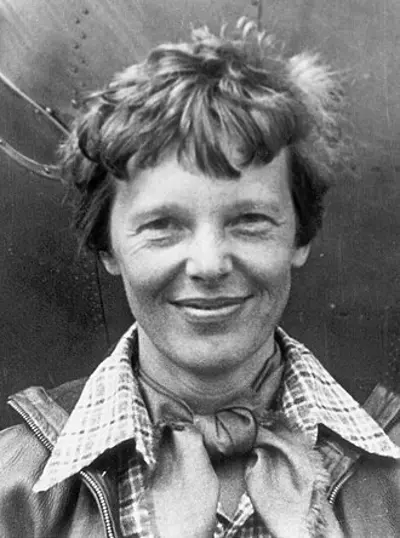
Amelia Earhart takes off from Newfoundland to begin the world's first solo nonstop flight across the Atlantic Ocean by a female pilot, landing in Ireland the next day.
U.S. President Abraham Lincoln signs the Homestead Act into law, opening eighty-four million acres (340,000 km2) of public land to settlers.