1894
Joseph Henry Woodger, English biologist, philosopher, and academic (died 1981)
Joseph Henry Woodger, English biologist, philosopher, and academic (died 1981)
18750 results for “Alan J. Pakula” (987 ms)
Joseph Henry Woodger, English biologist, philosopher, and academic (died 1981)
James F. Byrnes, American stenographer and politician, 49th United States Secretary of State (died 1972)
Jurgis Baltrušaitis, Lithuanian poet, critic, and translator (died 1944)
John Scott Haldane, Scottish physiologist, physician, and academic (died 1936)
Theodor Herzl, Austro-Hungarian Zionist philosopher, journalist and author (died 1904)
Jane Miller Thengberg, Scottish-Swedish governess and educator (died 1902)
William Buell Richards, Canadian lawyer and judge, 1st Chief Justice of Canada (died 1889)
John André, English soldier and spy (died 1780)
Jean-Baptiste Barrière, French cellist and composer (died 1747)
A new Constitution of Japan went into effect, providing for a parliamentary system of government, guaranteeing certain fundamental rights, and relegating the Japanese monarchy to a purely ceremonial �
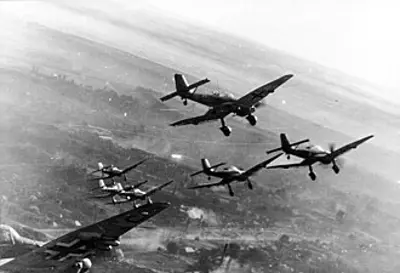
Second World War: Japanese forces began an invasion of Tulagi and nearby islands in the British Solomon Islands, enabling them to threaten and intercept supply and communication routes between the Un�
Lieutenant Colonels Joseph O. Fletcher and William P. Benedict of the United States land a plane at the North Pole.
Nkuwu Nzinga, the ruler of the Kingdom of Kongo, was baptised as João I by Portuguese missionaries.
New post-war Japanese constitution goes into effect.
The Great Fire of 1901 begins in Jacksonville, Florida.
Neapolitan War: Joachim Murat, King of Naples, is defeated by the Austrians at the Battle of Tolentino, the decisive engagement of the war.
Kongo monarch Nkuwu Nzinga is baptised by Portuguese missionaries, adopting the baptismal name of João I.