Otto I, Duke of Merania (born c
Otto I, a member of the House of Andechs, was Duke of Merania from 1204 until his death. He was also Count of Burgundy from 1208 to 1231, by his marriage to Countess Beatrice II, a…
Otto I, Duke of Merania (born c
Explore 37 historical events from 1230β1239.
Otto I, a member of the House of Andechs, was Duke of Merania from 1204 until his death. He was also Count of Burgundy from 1208 to 1231, by his marriage to Countess Beatrice II, a…
Otto I, Duke of Merania (born c
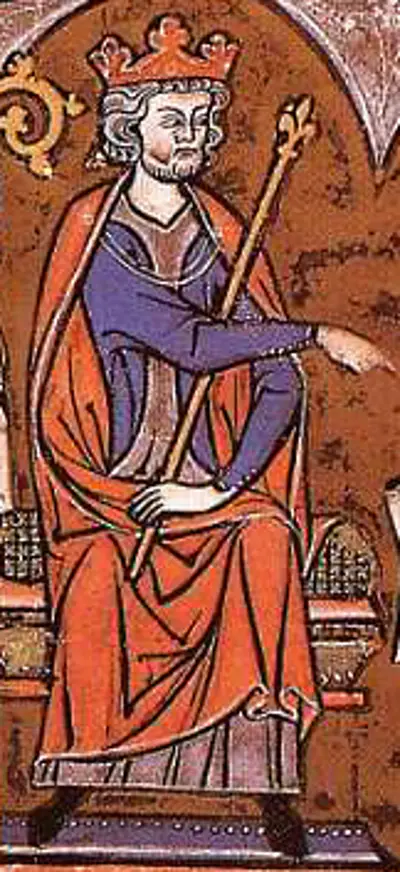
Richard Marshal, 3rd Earl of Pembroke, was the son of William Marshal, 1st Earl of Pembroke and brother of William Marshal, 2nd Earl of Pembroke, whom he succeeded to the Earldom o…
Richard Marshal, 3rd Earl of Pembroke (born 1191)
The Mongol conquest of the Jin dynasty, also known as the Mongol–Jin War, was fought between the Mongol Empire and the Jurchen-led Jin dynasty in Manchuria and North China. The war…
Mongol–Jin war: The Mongols entered Kaifeng after a successful siege and began looting in the fallen capital of the Jin
The Mongol conquest of the Jin dynasty, also known as the Mongol–Jin War, was fought between the Mongol Empire and the Jurchen-led Jin dynasty in Manchuria and North China. The war…
Mongol–Jin War: The Mongols entered and began looting Kaifeng, the capital of the Jin dynasty of China, after a 13-month
Roger of Wendover, probably a native of Wendover in Buckinghamshire, was an English chronicler of the 13th century.
Roger of Wendover, Benedictine monk and chronicler
Emilia Bicchieri, OP was an Italian Catholic nun of the Dominican Order. Born to a patrician, she is best known for founding a convent in her hometown of Vercelli, where she served…
Emilia Bicchieri, Italian saint (died 1314)
William de Braose was the son of Reginald de Braose by his first wife, Grecia Briwere. He was an ill-fated member of the House of Braose, a powerful and long-lived dynasty of March…
William de Braose, English son of Reginald de Braose (born 1197)
William de Braose was the son of Reginald de Braose by his first wife, Grecia Briwere. He was an ill-fated member of the House of Braose, a powerful and long-lived dynasty of March…
William de Braose is hanged by Prince Llywelyn the Great
The shikken was a senior government post held by members of the Hōjō clan, officially a regent of the shogunate. From 1199 to 1333, during the Kamakura period, the shikken served …
Shikken Hojo Yasutoki of the Kamakura shogunate promulgates the Goseibai Shikimoku, the first Japanese legal code…
Óláfr Guðrøðarson, also known as Olaf the Black, was a thirteenth-century King of the Isles, and a member of the Crovan dynasty. He was a son of Guðrøðr Óláfsson, King of the Isles…
Olaf the Black, Manx son of Godred II Olafsson
Edward I, also known as Edward Longshanks and the Hammer of the Scots, was King of England from 1272 to 1307. Concurrently, he was Lord of Ireland, and from 1254 to 1306 ruled Gasc…
Edward I, English king (died 1307)
Emilia Bicchieri, OP was an Italian Catholic nun of the Dominican Order. Born to a patrician, she is best known for founding a convent in her hometown of Vercelli, where she served…
Emilia Bicchieri, Italian saint (died 1314)
Peter des Roches was bishop of Winchester in the reigns of King John of England and his son Henry III. He was not an Englishman, but rather a native of the Touraine, in north-centr…
Peter des Roches, bishop of Winchester
James I the Conqueror was the 11th King of Aragon, 38th Count of Barcelona, and Lord of Montpellier from 1213 to 1276; King of Majorca from 1231 to 1276; and King of Valencia from …
King James I of Aragon conquers Valencia from the Moors. Shortly thereafter, he proclaims himself king of Valencia.
James I the Conqueror was the 11th King of Aragon, 38th Count of Barcelona, and Lord of Montpellier from 1213 to 1276; King of Majorca from 1231 to 1276; and King of Valencia from …
James I of Aragon founds the Kingdom of Valencia.
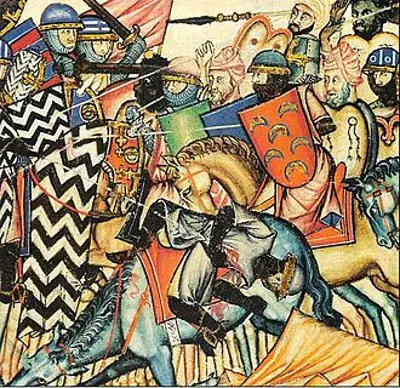
The Reconquista or the fall of al-Andalus was a series of military campaigns by northern Iberian Christian polities against Muslim-ruled al-Andalus, which had previously been part …
Spanish Reconquista: The Battle of the Puig between the Moorish forces of Taifa of Valencia against the Crown of…
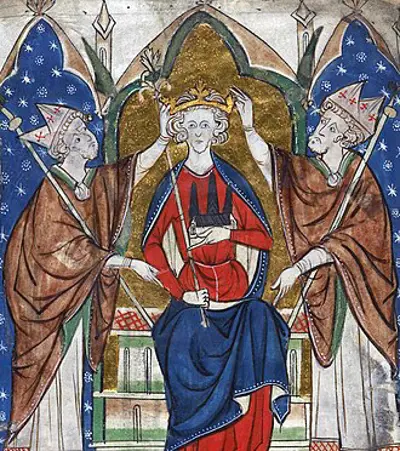
Henry III, also known as Henry of Winchester, was King of England, Lord of Ireland and Duke of Aquitaine from 1216 until his death in 1272.
Henry III of England and Alexander II of Scotland signed the Treaty of York, establishing the Anglo-Scottish border,…
The Treaty of York was an agreement between the kings Henry III of England and Alexander II of Scotland, signed at York on 25 September 1237, which affirmed that Northumberland, Cu…
England and Scotland sign the Treaty of York, establishing the location of their common border.
Óláfr Guðrøðarson, also known as Olaf the Black, was a thirteenth-century King of the Isles, and a member of the Crovan dynasty. He was a son of Guðrøðr Óláfsson, King of the Isles…
Olaf the Black, Manx son of Godred II Olafsson
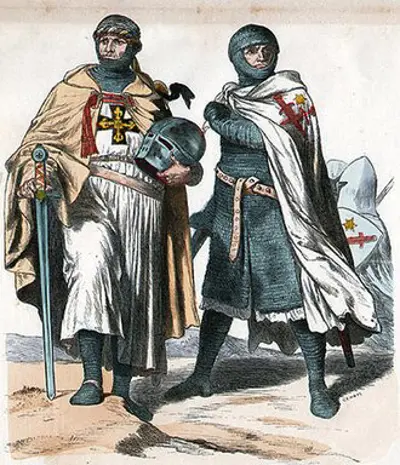
The Battle of Saule was fought on 22 September 1236, between the Livonian Brothers of the Sword and pagan troops of Samogitians and Semigallians. Between 48 and 60 knights were kil…
The Samogitians defeat the Livonian Brothers of the Sword in the Battle of Saule.
Roger of Wendover, probably a native of Wendover in Buckinghamshire, was an English chronicler of the 13th century.
Roger of Wendover, Benedictine monk and chronicler
Ingeborg of Denmark was Queen of France by marriage to Philip II of France. She was a daughter of Valdemar I of Denmark and Sofia of Minsk.
Ingeborg of Denmark, Queen of France (born 1175)
The Livonian crusade consisted of the various military Christianisation campaigns in medieval Livonia – modern Latvia and Estonia – during the Papal-sanctioned Northern Crusades in…
Livonian Crusade: The Livonian Brothers of the Sword were soundly defeated by pagan Samogitian and Semigallian troops…
Henry I, named "The Courageous", was a member of the House of Reginar and first duke of Brabant from 1183/84 until his death.
Henry I, duke of Brabant (born 1165)
Andrew II, also known as Andrew of Jerusalem, was King of Hungary and Croatia between 1205 and 1235. He ruled the Principality of Halych from 1188 until 1189/1190, and again betwee…
Andrew II of Hungary (born 1175)
Richard Marshal, 3rd Earl of Pembroke, was the son of William Marshal, 1st Earl of Pembroke and brother of William Marshal, 2nd Earl of Pembroke, whom he succeeded to the Earldom o…
Richard Marshal, 3rd Earl of Pembroke (born 1191)
Otto I, a member of the House of Andechs, was Duke of Merania from 1204 until his death. He was also Count of Burgundy from 1208 to 1231, by his marriage to Countess Beatrice II, a…
Otto I, Duke of Merania (born c
Emperor Chūkyō was the 85th emperor of Japan, according to the traditional order of succession. His reign spanned only two months in 1221, and he was not officially listed amongst…
Emperor Chūkyō of Japan (born 1218)
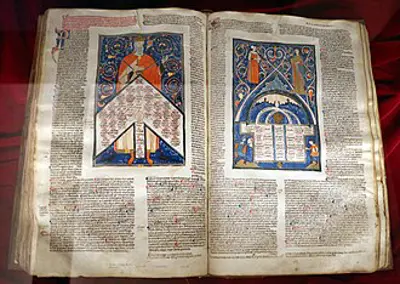
The Decretals of Gregory IX, also collectively called the Liber extra, are a source of medieval Catholic canon law. In 1230, Pope Gregory IX ordered his chaplain and confessor, Ray…
The Decretals of Gregory IX, a new canonical collection assembled by Raymond of Peñafort, are promulgated.
Floris IV was the count of Holland from 1222 to 1234. He was born in The Hague, a son of William I of Holland and his first wife, Adelaide of Guelders.
Floris IV, Dutch nobleman (born 1210)
Hugh Foliot was a medieval Bishop of Hereford. Related somehow to his predecessor at Hereford, he served as a priest and papal judge as well as being an unsuccessful candidate as B…
Hugh Foliot, bishop of Hereford (born c. 1155)
Emperor Go-Horikawa , was the 86th emperor of Japan who reigned during the Jōō period, according to the traditional order of succession. His reign spanned the years from 1221 throu…
Emperor Go-Horikawa of Japan (born 1212)
The Mongol conquest of the Jin dynasty, also known as the Mongol–Jin War, was fought between the Mongol Empire and the Jurchen-led Jin dynasty in Manchuria and North China. The war…
Mongol–Jin war: The Mongols entered Kaifeng after a successful siege and began looting in the fallen capital of the Jin
The Mongol conquest of the Jin dynasty, also known as the Mongol–Jin War, was fought between the Mongol Empire and the Jurchen-led Jin dynasty in Manchuria and North China. The war…
Mongol–Jin War: The Mongols entered and began looting Kaifeng, the capital of the Jin dynasty of China, after a 13-month