John I of Brienne, Count of Eu
John I of Brienne was the son of Alphonso of Brienne and Marie de Lusignan. His mother was the heiress of Eu, Seine-Maritime, and he succeeded his father as Count of Eu in 1260.
John I of Brienne, Count of Eu
Explore 49 historical events from 1290β1299.
John I of Brienne was the son of Alphonso of Brienne and Marie de Lusignan. His mother was the heiress of Eu, Seine-Maritime, and he succeeded his father as Count of Eu in 1260.
John I of Brienne, Count of Eu
Öljeyitü Khan, born Temür, also known by his temple name as the Emperor Chengzong of Yuan, was the second emperor of the Yuan dynasty of China, ruling from 10 May 1294 to 10 Februa…
Temür, grandson of Kublai, is elected Khagan of the Mongols with the reigning title Oljeitu
Öljeyitü Khan, born Temür, also known by his temple name as the Emperor Chengzong of Yuan, was the second emperor of the Yuan dynasty of China, ruling from 10 May 1294 to 10 Februa…
Temür, Khagan of the Mongols, is enthroned as Emperor of the Yuan dynasty
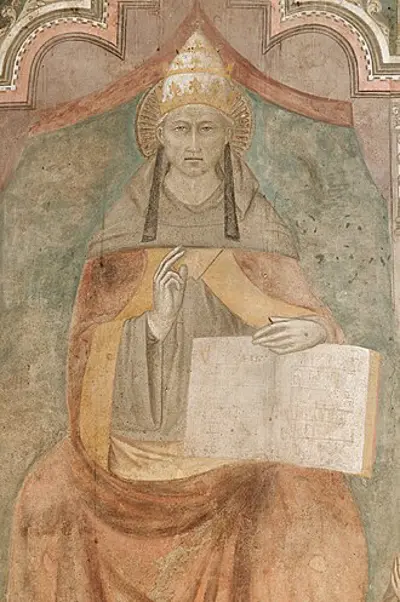
The 1292–94 papal election, was the last papal election which did not take the form of a papal conclave. After the death of Pope Nicholas IV on 4 April 1292, the eleven surviving c…
Election of pope Celestine V following the death of pope Nicholas IV two years prior.
Sancho IV of Castile called the Brave, was the king of Castile, León and Galicia from 1284 to his death. Following his brother Ferdinand's death, he gained the support of nobles wh…
King Sancho IV of Castile creates the Estudio de Escuelas de Generales in Alcalá de Henares
The 1293 Kamakura earthquake in Japan occurred at about 06:00 local time on 27 May 1293. It had an estimated magnitude of 7.1–7.5 and triggered a tsunami. The estimated death toll …
An earthquake strikes Kamakura, Kanagawa, Japan, killing about 23,000
The Mongols are an East Asian ethnic group native to Mongolia and China, as well as the republics of Buryatia and Kalmykia in Russia. The Mongols are the principal member of the la…
Mongols depart Java after the failed Mongol invasion against King Kertanegara of Singhasari
Meir of Rothenburg (c. 1215 – 2 May 1293) was a German Rabbi and poet, as well as a major contributing author of the tosafot on Rashi's commentary on the Talmud. He is also known …
Meir of Rothenburg, German rabbi (born c
Henry of Ghent, also known as Henricus de Gandavo and Henricus Gandavensis, was a scholastic philosopher who acquired the nickname of Doctor Solemnis.
Henry of Ghent, philosopher (born c
Majapahit, also known as Wilwatikta, was a Javanese Hindu-Buddhist thalassocratic empire in Southeast Asia based on the island of Java. At its greatest extent, following significan…
Majapahit forces under Raden Wijaya won a major victory in the Mongol invasion of Java, now considered to be the foundin
Adolf was the count of Nassau from about 1276 and the elected king of Germany from 1292 until his deposition by the prince-electors in 1298. He was never crowned by the pope, which…
Election of Count Adolf of Nassau as King of the Romans in the Dominican monastery of Frankfurt
Rhys ap Maredudd was a senior member of the Welsh royal house of Deheubarth, a principality of Medieval Wales. He was the great grandson of The Lord Rhys, prince of south Wales, an…
Rhys ap Maredudd, Welsh nobleman and rebel leader
Nobility is a social class found in many societies that have an aristocracy. It is normally appointed by and ranked immediately below royalty. Nobility has often been an estate of …
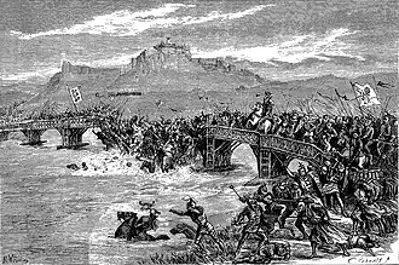
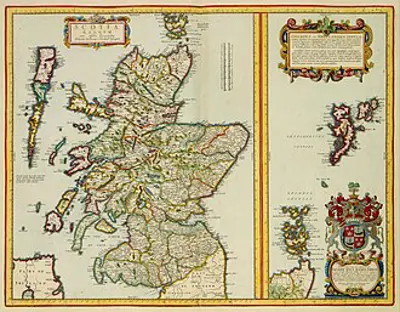
Scottish nobles recognize the authority of Edward I of England pending the selection of a king
The siege of Acre took place in 1291 and resulted in the Crusaders' losing control of Acre to the Mamluk Sultanate of Egypt. It is considered one of the most important battles of t…
Fall of Acre, the end of Crusader presence in the Holy Land
Hawys Gadarn (Hawys ferch Owain ap Gruffudd ap Gwenwynwyn), also known as the Hardy, the Powerful, the Intrepid, and Hawise de la Pole, (1291 – c. 1353) was the daughter of Owen de…
Hawys Gadarn, Welsh noblewoman (died 1353)
Sayyid Jalaluddin Surkh-Posh Naqvi Al Bukhari (Persian: سید جلال الدین سرخ پوش بخاری, c. 595-690 AH, 1190 – 1295 CE was a saint from the Indian subcontinent. He belonged to the Jal…
Sufi Saint Sayyid Jalaluddin Surkh-Posh Bukhari
Alfonso III, called the Liberal and the Free, was king of Aragon and Valencia, and count of Barcelona from 1285 until his death. He conquered the Kingdom of Majorca between his suc…
Alfonso III of Aragon (born 1265)
Eleanor of Provence was a Provençal noblewoman who became Queen of England as the wife of King Henry III from 1236 until his death in 1272. She served as regent of England during t…
Eleanor of Provence, queen of England (born 1223)
Rudolf of Habsburg (1 May 1218 – 15 July 1291) was a German nobleman and the first member of the House of Habsburg to become King of the Romans, reigning from 1273 until his death.…
Rudolf I of Germany (born 1218)
Ladislaus IV of Hungary, also known as Ladislaus the Cuman, was King of Hungary and Croatia from 1272 to 1290. His mother, Elizabeth, was the daughter of a chieftain from the pagan…
Ladislaus IV, King of Hungary, is assassinated at the castle of Körösszeg (modern-day Cheresig in Romania).
Edward I, also known as Edward Longshanks and the Hammer of the Scots, was King of England from 1272 to 1307. Concurrently, he was Lord of Ireland, and from 1254 to 1306 ruled Gasc…
King Edward I of England issues the Edict of Expulsion, banishing all Jews (numbering about 16,000) from England.
Beatrice "Bice" di Folco Portinari was an Italian woman who has been commonly identified as the principal inspiration for Dante Alighieri's Vita Nuova, and is also identified with …
Beatrice Portinari, object of Dante Alighieri's adoration (born 1266)
Henry Probus was a member of the Silesian branch of the royal Polish Piast dynasty. He was Duke of Silesia at Wrocław from 1266, as well as the ruler of the Seniorate Province of K…
Henryk IV Probus, duke of Wrocław and high duke of Kraków (born c
Ladislaus IV of Hungary, also known as Ladislaus the Cuman, was King of Hungary and Croatia from 1272 to 1290. His mother, Elizabeth, was the daughter of a chieftain from the pagan…
Ladislaus IV, king of Hungary (born 1262)