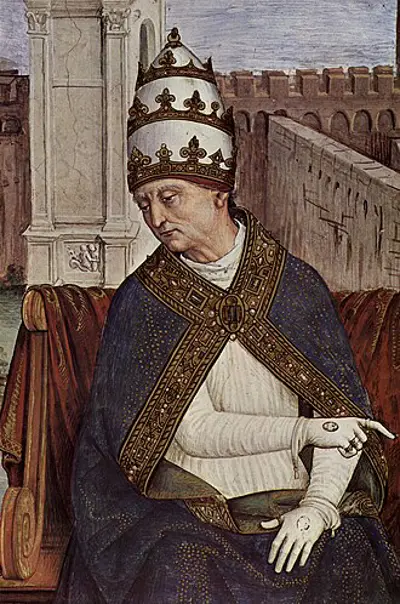
Pope Pius II (born 1405)
Pope Pius II, born Enea Silvio Bartolomeo Piccolomini, was head of the Catholic Church and ruler of the Papal States from 19 August 1458 to his death in 1464.
Pope Pius II (born 1405)
Explore 87 historical events from 1460β1469.
Pope Pius II, born Enea Silvio Bartolomeo Piccolomini, was head of the Catholic Church and ruler of the Papal States from 19 August 1458 to his death in 1464.
Pope Pius II (born 1405)
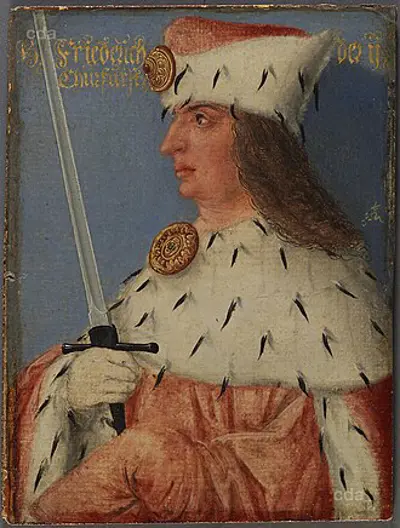
Frederick II, The Gentle was Prince-Elector and Arch-Marshal of the Holy Roman Empire, who ruled as Duke of Saxony and Margrave of Meissen (1428–1464) and Landgrave of Thuringia (1…
Frederick II, Elector of Saxony (born 1412)
Lorenzo di Pierfrancesco de' Medici, nicknamed the Popolano, was an Italian banker and politician, the brother of Giovanni il Popolano. He belonged to the junior branch of the Hous…
Lorenzo di Pierfrancesco de' Medici, Florentine patron of the arts (died 1503)
Isidore or Isidor of Kiev, also known as Isidore of Thessalonica, was a prelate of Byzantine Greek origin. From 1437 to 1441, he served as the metropolitan of Kiev and all Rus', ba…
Isidore of Kiev (born 1385)
Flavio Biondo was an Italian Renaissance humanist historian. He was one of the first historians to use a three-period division of history and is known as one of the first archaeolo…
Flavio Biondo, Italian historian and author (born 1392)
Infanta Catarina ; was a Portuguese infanta (princess), daughter of King Edward of Portugal and Eleanor of Aragon.
Catherine of Portugal, Portuguese princess (born 1436)
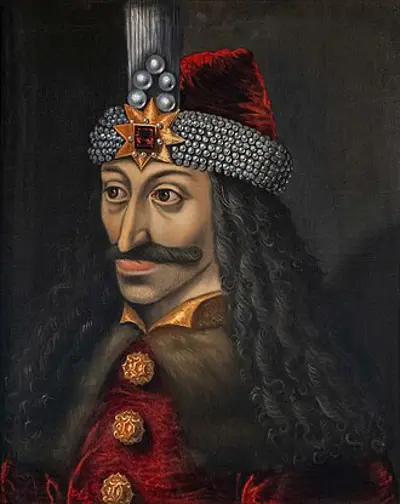
Vlad III, commonly known as Vlad the Impaler or Vlad Dracula, was Voivode of Wallachia three times between 1448 and his death. He is regarded as a Christian hero in Romania due to …
Vlad the Impaler attempts to assassinate Mehmed II (The Night Attack at Târgovişte), forcing him to retreat from Wallach
The Thirteen Years' War, also called the War of the Cities, was a conflict fought in 1454–1466 between the Prussian Confederation, allied with the Crown of the Kingdom of Poland, a…
Thirteen Years' War: A Polish army under Piotr Dunin decisively defeats the Teutonic Order at the Battle of Świecino.
Baccio d'Agnolo, born Bartolomeo Baglioni, was an Italian woodcarver, sculptor, and architect from Florence.
Baccio D'Agnolo, Italian woodcarver, sculptor and architect (died 1543)
Philipp II of Hanau-Lichtenberg ruled the County of Hanau-Lichtenberg from 1480 until his death.
Philipp II, Count of Hanau-Lichtenberg (died 1504)
Louis XII, also known as Louis of Orléans, was King of France from 1498 to 1515 and King of Naples from 1501 to 1504. The son of Charles I, Duke of Orléans, and Marie of Cleves, he…
Louis XII, king of France (died 1515)
Queen Jeonghyeon, of the Papyeong Yun clan, was a posthumous name bestowed to the wife and third queen consort of Yi Hyeol, King Seongjong and the mother of Yi Yeok, King Jungjong.…
Queen Jeonghyeon, Korean royal consort (died 1530)
Henry Medwall was the first known English vernacular dramatist. Fulgens and Lucrece (c.1497), whose heroine must choose between two suitors, is the earliest known secular English…
Henry Medwall, first known English vernacular dramatist (died 1501)
Pietro Pomponazzi was an Italian philosopher. He is sometimes known by his Latin name, Petrus Pomponatius.
Pietro Pomponazzi, Italian philosopher (died 1525)
Catherine Asenina Zaccaria or Catherine Palaiologina was the daughter of the Prince of Achaea, Centurione II Zaccaria and a Byzantine lady hailing from the prestigious houses of As…
Catherine Zaccaria, Despotess of the Morea
The Hungarian–Ottoman wars were a series of battles between the Ottoman Empire and the medieval Kingdom of Hungary. Following the Byzantine Civil War, the Ottoman capture of Gallip…
Hungarian–Ottoman Wars: Wallachian forces led by Vlad Dracula attacked an Ottoman camp at night in an unsuccessful attem
The Ottoman conquest of Lesbos took place in September 1462. The Ottoman Empire, under Sultan Mehmed II, laid siege to the island's capital, Mytilene. After its surrender, the othe…
The Ottoman conquest of Lesbos ended upon the surrender of commander Niccolò Gattilusio; the conquering Mehmed II…
Edward IV was King of England from 4 March 1461 to 3 October 1470, then again from 11 April 1471 until he died in 1483. A member of the House of York, he was a central figure in th…
Edward, Earl of March, is crowned King Edward IV of England
The Ming dynasty, officially the Great Ming, was an imperial dynasty of China that ruled from 1368 to 1644, following the collapse of the Mongol-led Yuan dynasty. The Ming was the …
The Ming dynasty Chinese military general Cao Qin stages a coup against the Tianshun Emperor.
The Empire of Trebizond or the Trapezuntine Empire was one of the three Byzantine rump states of the Byzantine Empire that existed during the 13th through to the 15th century. The …
The Empire of Trebizond surrenders to the forces of Sultan Mehmed II. This is regarded by some historians as the real…
Raffaele Sansoni Galeoti Riario was an Italian cardinal of the Renaissance, mainly known as the constructor of the Palazzo della Cancelleria and the person who invited Michelangelo…
Raffaele Riario, Italian cardinal (died 1521)
Alexander Jagiellon was Grand Duke of Lithuania from 1492 and King of Poland from 1501 until his death in 1506. He was the fourth son of Casimir IV Jagiellon and a member of the Ja…
Alexander Jagiellon, Polish king (died 1506)
Jacopo Salviati was a Florentine politician and son-in-law of Lorenzo de' Medici.
Jacopo Salviati, Italian politician (died 1533)
Domenico Veneziano was an Italian painter of the early Renaissance, active mostly in Perugia and Tuscany.
Domenico Veneziano, Italian painter (born c