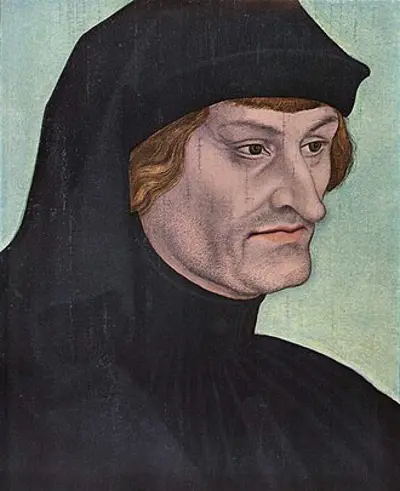
Ernest, Elector of Saxony (born 1441)
Ernest, known in German as Ernst, was Elector of Saxony from 1464 to 1486. He established the Ernestine line of Saxon princes.
Ernest, Elector of Saxony (born 1441)
Explore 105 historical events from 1480β1489.
Ernest, known in German as Ernst, was Elector of Saxony from 1464 to 1486. He established the Ernestine line of Saxon princes.
Ernest, Elector of Saxony (born 1441)
Elizabeth of Denmark, Norway, and Sweden was a Danish princess who became Electress of Brandenburg as the wife of Joachim I Nestor, Elector of Brandenburg. She was the daughter of …
Elizabeth of Denmark, Electress of Brandenburg (died 1555)
Anna, Princess of Mecklenburg-Schwerin was a Landgravine of Hesse by marriage to William II of Hesse. She was appointed regent in the guardian regency during the minority of her so…
Anna of Mecklenburg-Schwerin, Landgravine of Hesse (died 1525)
Alexander Stewart, Duke of Albany, was a Scottish prince and the second surviving son of King James II of Scotland. He fell out with his older brother, King James III, and fled to …
Alexander Stewart, duke of Albany (born 1454)
Richard III was King of England from 26 June 1483 until his death in 1485. He was the last king of the Plantagenet dynasty and its cadet branch, the House of York. His defeat and d…
Richard III of England (born 1452)
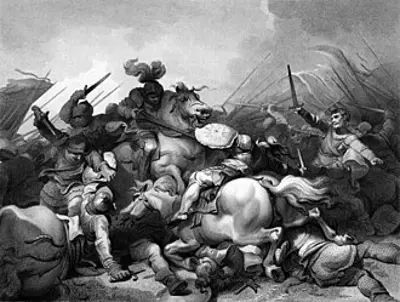
The Battle of Bosworth or Bosworth Field was the last significant battle of the Wars of the Roses, the civil war between the houses of Lancaster and York that extended across Engla…
The Battle of Bosworth Field occurs; King Richard III of England's death in battle marks the end of the reigning…
Johannes Bugenhagen, also called Doctor Pomeranus by Martin Luther, was a German theologian and Lutheran priest who introduced the Protestant Reformation in the Duchy of Pomerania …
Johannes Bugenhagen, Polish-German priest and reformer (died 1558)
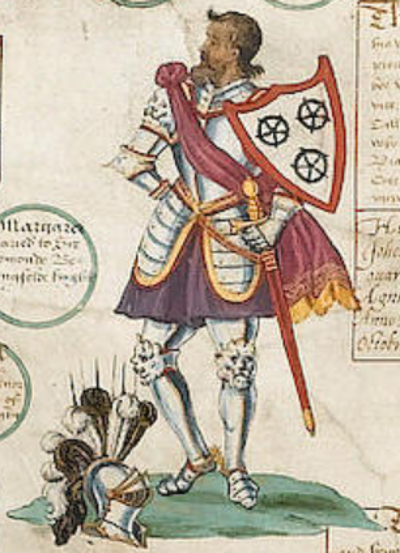
Sir James Harrington of Hornby was an English politician and soldier who was a prominent Yorkist supporter in Northern England during the Wars of the Roses, having been retained by…
James Harrington, Yorkist knight
John Howard, 1st Duke of Norfolk, also known as Jack of Norfolk, was an English nobleman, soldier, politician, and the first Howard Duke of Norfolk. He was a close friend and loyal…
John Howard, 1st Duke of Norfolk (born 1430)
Sir Richard Ratcliffe, KG was a close confidant of Richard III of England.
Richard Ratcliffe, supporter of Richard III
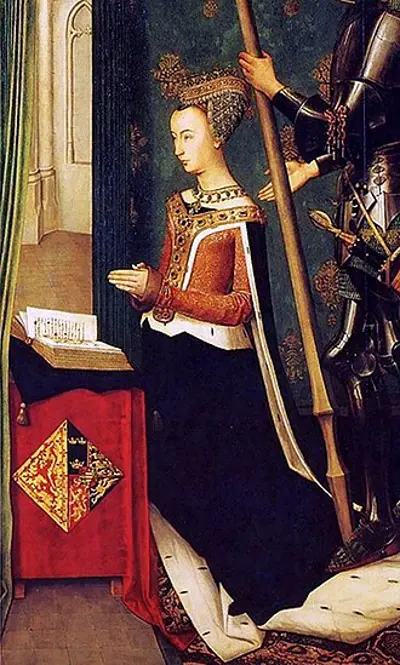
Sir William Brandon of Soham, Cambridgeshire was Henry Tudor's standard-bearer at the Battle of Bosworth, where he was killed by King Richard III. He was the father of Charles Bran…
William Brandon, supporter of Henry VII (born 1426)
William Catesby was a principal councillor to Richard III of England. He also served as Chancellor of the Exchequer and Speaker of the House of Commons during Richard's reign. The …
William Catesby, supporter of Richard III (born 1450)
The Battle of Bosworth or Bosworth Field was the last significant battle of the Wars of the Roses, the civil war between the houses of Lancaster and York that extended across Engla…
At the Battle of Bosworth Field, Lancastrian forces under Henry Tudor, Earl of Richmond, defeated Yorkist forces under…
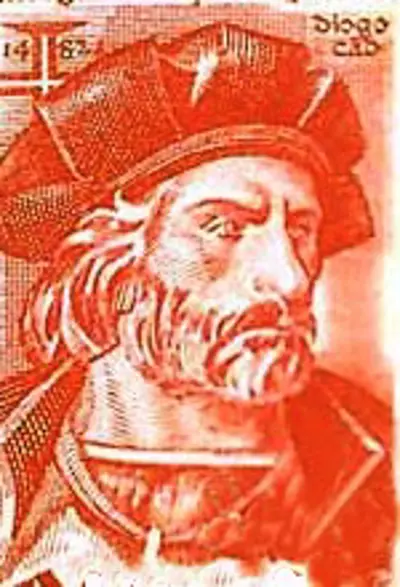
Diogo Cão, also known as Diogo Cam, was a Portuguese mariner and one of the most notable explorers of the fifteenth century. He made two voyages along the west coast of Africa in t…
Portuguese sea captain Diogo Cão finds the mouth of the Congo River.
Julius Caesar Scaliger, or Giulio Cesare della Scala, was an Italian scholar and physician, who spent a major part of his career in France. He employed the techniques and discoveri…
Julius Caesar Scaliger, Italian physician and scholar (died 1558)
The Battle of Lochmaben Fair was an engagement in Lochmaben, Scotland, on 22 July 1484 between Scottish loyalists to James III of Scotland and the rebels Alexander Stewart, Duke of…
Battle of Lochmaben Fair: A 500-man raiding party led by Alexander Stewart, Duke of Albany and James Douglas, 9th Earl…
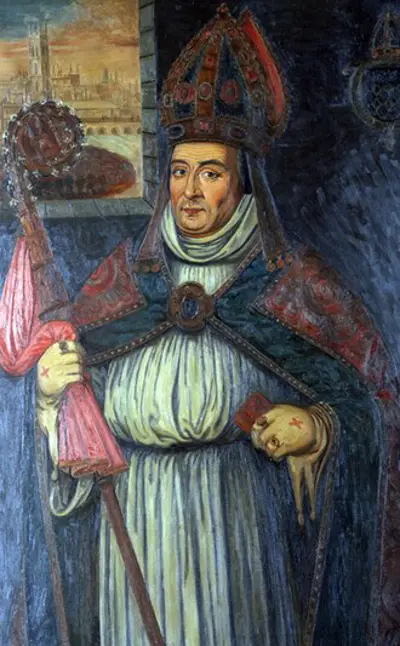
Pope Innocent VIII, born Giovanni Battista Cybo, was head of the Catholic Church and leader of the Papal States from 29 August 1484 to his death, in July 1492. Son of the viceroy o…
Pope Innocent VIII succeeds Pope Sixtus IV.
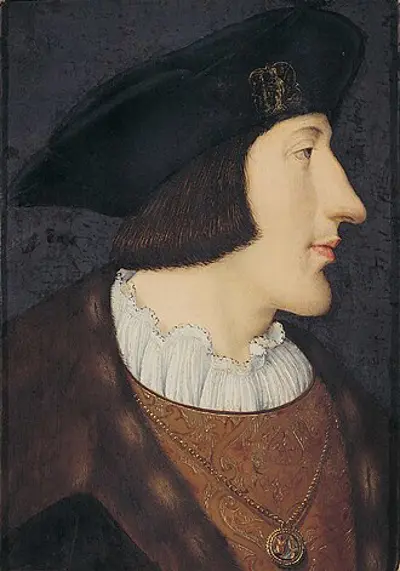
Prince Bartholomeus Welser was a German banker. In 1528 he signed an agreement with Charles V, emperor of the Holy Roman Empire, granting a concession in Venezuela Province, which …
Bartholomeus V
Mino da Fiesole, also known as Mino di Giovanni, was an Italian Renaissance sculptor from Poppi, Tuscany. He is noted for his portrait busts.
Mino da Fiesole, Italian sculptor (born c. 1429)
Pope Sixtus IV (or Xystus IV, Italian: Sisto IV; born Francesco della Rovere; was head of the Catholic Church and leader of the Papal States from 9 August 1471 until his death in 1…
Sixtus IV, pope of the Catholic Church (born 1414)
Richard III was King of England from 26 June 1483 until his death in 1485. He was the last king of the Plantagenet dynasty and its cadet branch the House of York. His defeat and de…
Richard III becomes King of England
Richard III was King of England from 26 June 1483 until his death in 1485. He was the last king of the Plantagenet dynasty and its cadet branch the House of York. His defeat and de…
Richard III and Anne Neville are crowned King and Queen of England.
Pope Sixtus IV (or Xystus IV, Italian: Sisto IV; born Francesco della Rovere; was head of the Catholic Church and leader of the Papal States from 9 August 1471 until his death in 1…
Pope Sixtus IV consecrates the Sistine Chapel.
Gran Canaria, also Grand Canary Island, is the third-largest and second-most-populous island of the Canary Islands, a Spanish archipelago off the Atlantic coast of Northwest Africa…
Gran Canaria, the main island of the Canary Islands, is conquered by the Kingdom of Castile