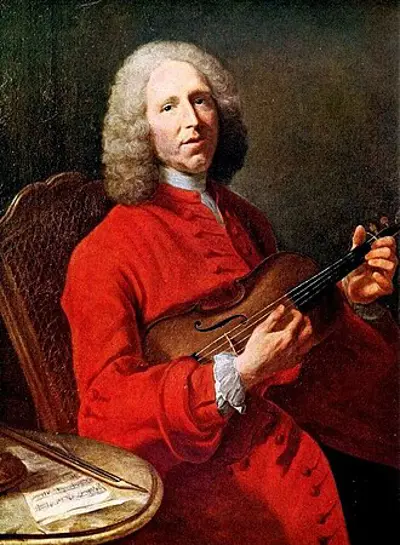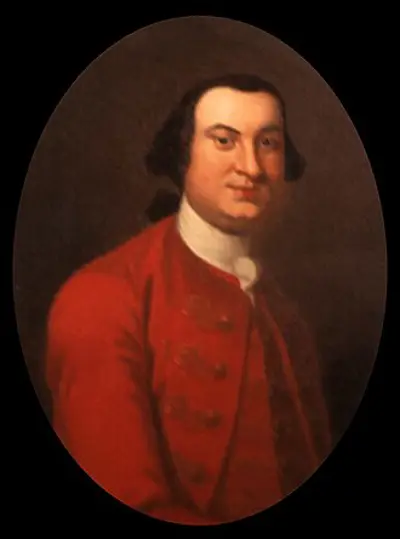
Marie Harel, French cheesemaker (died 1844)
Marie Harel was a French cheesemaker, who, along with Abbot Charles-Jean Bonvoust, invented Camembert cheese, according to local legend.
Marie Harel, French cheesemaker (died 1844)
Explore 148 historical events from 1760β1769.
Marie Harel was a French cheesemaker, who, along with Abbot Charles-Jean Bonvoust, invented Camembert cheese, according to local legend.
Marie Harel, French cheesemaker (died 1844)
August Friedrich Ferdinand von Kotzebue was a German playwright, who had also worked as a Russian diplomat.
August von Kotzebue, German playwright and author (died 1819)
Samuel Dexter was an early American statesman who served both in Congress and in the Presidential Cabinets of John Adams and Thomas Jefferson. A native of Boston, Massachusetts, De…
Samuel Dexter, American lawyer and politician, 4th United States Secretary of War, 3rd United States Secretary of the Tr
John Rennie was a Scottish civil engineer who designed many bridges, canals, docks and warehouses, and a pioneer in the use of structural cast-iron.
John Rennie the Elder, Scottish engineer (died 1821)
Antonín Vranický, Germanized as Anton Wranitzky, and also seen as Wranizky, was a Czech violinist and composer of the 18th century. He was the half brother of Pavel Vranický.
Antonín Vranický, Czech violinist and composer (died 1820)
Jacob Hübner was a German entomologist. He was the author of Sammlung Europäischer Schmetterlinge (1796–1805), a founding work of entomology.
Jacob Hübner, German entomologist and author (died 1826)
Thomas Simpson FRS was a British mathematician and inventor known for the eponymous Simpson's rule to approximate definite integrals. The attribution, as often in mathematics, can …
Thomas Simpson, English mathematician and academic (born 1710)
Jonas Alströmer was a pioneer of agriculture and industry in Sweden.
Jonas Alströmer, Swedish businessman (born 1685)
Samuel Richardson was an English writer and printer known for three epistolary novels: Pamela; or, Virtue Rewarded (1740), Clarissa; or, The History of a Young Lady (1748) and The …
Samuel Richardson, English author and painter (born 1689)
The Exhibition of 1761 was the inaugural art exhibition staged by the Society of Artists of Great Britain (SAGB), a group of painters, architects and sculptors. The exhibition open…
The inaugural exhibition of the Society of Artists of Great Britain opened at Spring Gardens in London
The siege of Quebec, also known as the second siege of Quebec, was a 1760 French attempt to retake Quebec City, in New France, which had been captured by Britain the previous year.…
French forces commence the siege of Quebec which is held by the British
The siege of Quebec, also known as the second siege of Quebec, was a 1760 French attempt to retake Quebec City, in New France, which had been captured by Britain the previous year.…
French forces besieging Quebec retreat after the Royal Navy arrives to relieve the British garrison
The Expulsion of the Acadians was the eviction of French colonialists of the North American region historically known as Acadia between 1755 and 1764 by Great Britain. It included …
Great Upheaval: New England planters arrive to claim land in Nova Scotia, Canada, taken from the Acadians
Lieutenant-Colonel Robert Rogers was a British Army officer and frontiersman. Born in Methuen, Province of Massachusetts Bay, he fought in King George's War, the French and Indian …
French and Indian War: Robert Rogers and his Rangers surprise French held Fort Sainte Thérèse on the Richelieu River nea
The Battle of Landeshut was an engagement fought on 23 June 1760 during the Third Silesian War.
Seven Years' War: Battle of Landeshut: Austria defeats Prussia
The Anglo-Cherokee War, was also known from the Anglo-European perspective as the Cherokee War, the Cherokee Uprising, or the Cherokee Rebellion. The war was a conflict between Bri…
Anglo-Cherokee War: Cherokee warriors defeat British forces at the Battle of Echoee near present-day Otto, North Carolin
Johann Peter Hebel was a German short story writer, dialectal poet, Lutheran theologian and pedagogue, most famous for a collection of Alemannic lyric poems and one of German tales…
Johann Peter Hebel, German author and poet (died 1826)
Claude Joseph Rouget de Lisle was a French army officer of the French Revolutionary Wars. Lisle is known for writing the words and music of the Chant de guerre pour l'armée du Rhin…
Claude Joseph Rouget de Lisle, French captain, engineer, and composer (died 1836)
Johan Gadolin was a Finnish chemist, physicist and mineralogist. Gadolin discovered a "new earth" containing the first rare-earth compound yttrium, which was later determined to be…
Johan Gadolin, Finnish chemist, physicist, and mineralogist (died 1852)
Jean-Baptiste Louvet de Couvray was a French novelist, playwright and journalist.
Jean-Baptiste Louvet de Couvrai, French author, playwright, journalist, and politician (died 1797)
The Battle of Restigouche was a naval battle fought in 1760 during the Seven Years' War on the Restigouche River between the British Royal Navy and the small flotilla of vessels of…
British forces defeat French forces in the last naval battle in New France.
Christian Kramp was a French mathematician, who worked primarily with factorials.
Christian Kramp, French mathematician and academic (died 1826)
Margaret Shippen was the second wife of General Benedict Arnold. She has been described as "the highest-paid spy in the American Revolution".
Peggy Shippen, American wife of Benedict Arnold and American Revolutionary War spy (died 1804)
István Pauli or István Pável was a Hungarian Slovene Roman Catholic priest. Pauli was the teacher of Pertoča György Kousz, who was the author of a hymnal in Pertoča.
István Pauli, Hungarian-Slovene priest and poet (died 1829)