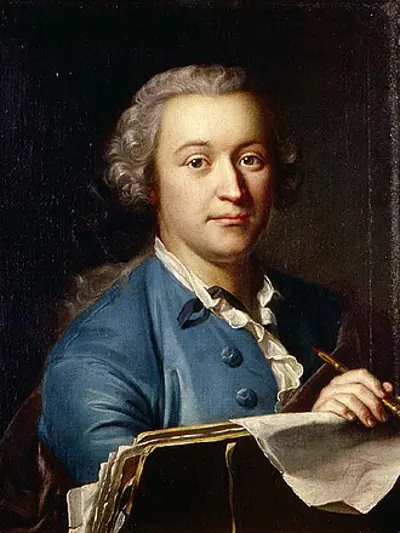
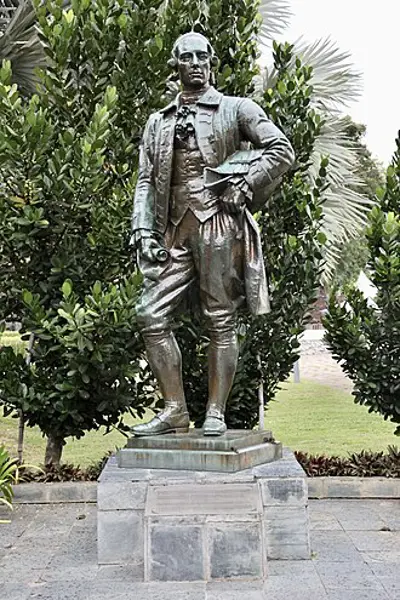
Christian VIII of Denmark (died 1848)
Christian VIII was King of Denmark from 1839 to 1848 and, as Christian Frederick, King of Norway in 1814.
Christian VIII of Denmark (died 1848)
Explore 404 historical events from 1780β1789.
Christian VIII was King of Denmark from 1839 to 1848 and, as Christian Frederick, King of Norway in 1814.
Christian VIII of Denmark (died 1848)
Justinus Andreas Christian Kerner was a German poet, practicing physician, and medical writer. He gave the first detailed description of botulism.
Justinus Kerner, German poet and author (died 1862)
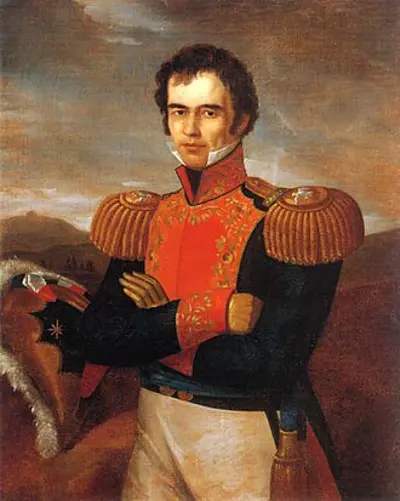
Guadalupe Victoria, born José Miguel Ramón Adaucto Fernández y Félix, was a Mexican general and politician who fought for independence against the Spanish Empire in the Mexican War…
Guadalupe Victoria, Mexican general and politician (died 1843)
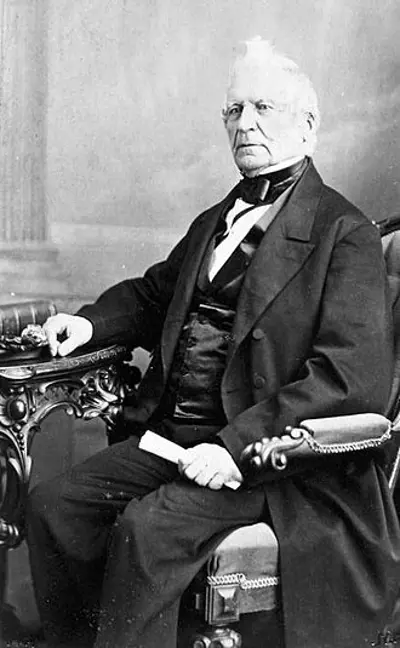
Louis-Joseph Papineau, born in Montreal, Quebec, was a politician, lawyer, and the landlord of the seigneurie de la Petite-Nation. He led the reformist Patriote movement, organized…
Louis-Joseph Papineau, Canadian lawyer and politician (died 1871)
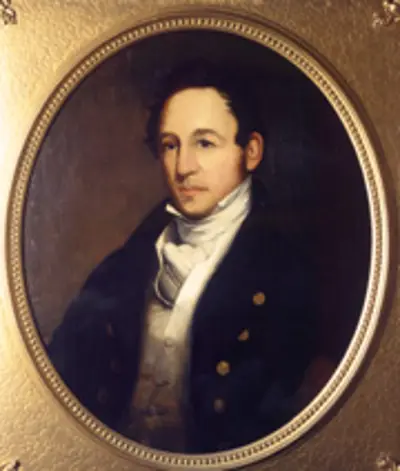
Stevenson Archer was a judge and United States Representative from Maryland, representing the sixth district from 1811 to 1817 and from 1819 to 1821. His son Stevenson Archer and f…
Stevenson Archer, American judge and politician (died 1848)
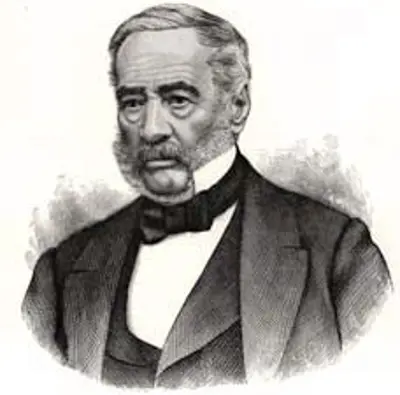
Philippe-Joseph Aubert de Gaspé was a Canadian lawyer, writer, and seigneur. He is known chiefly for his novel Les Anciens Canadiens, considered the first classic of French Canadia…
Philippe-Joseph Aubert de Gaspé, Canadian captain and author (died 1871)
Charles John Stanley was an English composer and organist.
John Stanley, English organist and composer (born 1712)
Carl Wilhelm Scheele was a German-Swedish pharmaceutical chemist.
Carl Wilhelm Scheele, German-Swedish chemist and pharmacist (born 1742)
Dom Peter III, nicknamed the Builder, was King of Portugal from 24 February 1777 to his death in 1786, by marriage to his niece Queen Dona Maria I.
Peter III of Portugal (born 1717)
Major General Nathanael Greene was an American military officer and planter who served in the Continental Army during the Revolutionary War. He emerged from the war with a reputati…
Nathanael Greene, American general (born 1742)
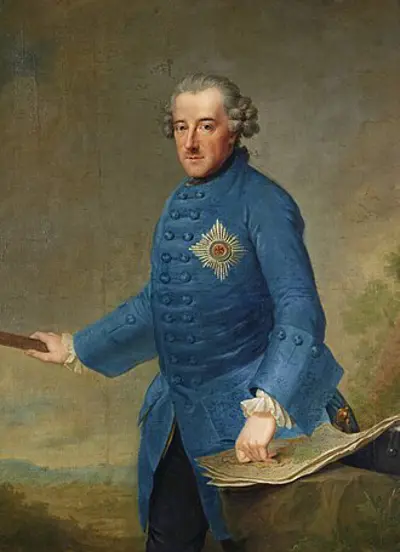
Frederick II was the monarch of Prussia from 1740 until his death in 1786. He was the last Hohenzollern monarch titled King in Prussia, declaring himself King of Prussia after anne…
Frederick the Great, Prussian king (born 1712)
Jonas Hanway, FRSA, was an English merchant, writer and philanthropist. He was the first male Londoner to carry an umbrella and was a noted opponent of tea drinking. Hanway created…
Jonas Hanway, English merchant and philanthropist (born 1712)
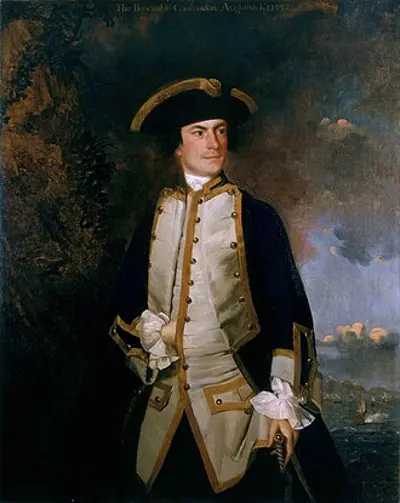
Admiral of the White Augustus Keppel, 1st Viscount Keppel, PC was a Royal Navy officer and politician who sat in the House of Commons from 1755 to 1782. He saw action in command of…
Augustus Keppel, 1st Viscount Keppel, English admiral and politician (born 1725)
Johann Ludwig Aberli was a Swiss painter and etcher.
Johann Ludwig Aberli, Swiss painter and illustrator (born 1723)
The Marriage of Figaro, K. 492, is a commedia per musica in four acts composed in 1786 by Wolfgang Amadeus Mozart, with an Italian libretto written by Lorenzo Da Ponte. It premiere…
The Marriage of Figaro (audio featured), an opera buffa by Wolfgang Amadeus Mozart, premiered at the Burgtheater in Vien
An earthquake occurred on 1 June 1786 in and around Kangding, in what is now China's Sichuan province. It had an estimated magnitude of about 7.75 and a maximum perceived intensity…
Ten days after being formed by an earthquake, a landslide dam on the Dadu River in China was destroyed by an aftershock,
Francis Light was a British sailor and explorer best known for founding the colony of Penang and its capital city of George Town in 1786. Light was the father of William Light, who…
Francis Light founded George Town (city hall pictured), the first British settlement in Southeast Asia and the…
Disfranchisement, also disenfranchisement or voter disqualification, is the restriction of suffrage of a person or group of people, or a practice that has the effect of preventing …
Angered by high tax burdens and disfranchisement, farmers in western Massachusetts led by Daniel Shays began an armed…
Alexandre Pierre-François Boëly was a French composer, organist, pianist, and violist.
Alexandre Pierre François Boëly, French pianist and composer (died 1858)
John Wilson FRSE was a Scottish advocate, literary critic and author, the writer most frequently identified with the pseudonym Christopher North of Blackwood's Edinburgh Magazine.
John Wilson, Scottish author and critic (died 1854)
King's Chapel is an independent Unitarian congregation in Boston, Massachusetts, United States. It is affiliated with the Unitarian Universalist Association and describes itself as…
The Boston King's Chapel adopts James Freeman's revised prayer book, without the Nicene Creed, establishing it as the fi
John James Audubon was a French-American artist, entrepreneur, naturalist, explorer, and ornithologist. His combined interests in painting and ornithology turned into a plan to mak…
John James Audubon, French-American ornithologist and painter (died 1851)
William Jackson Hooker was an English botanist and botanical illustrator, who became the first director of Kew when in 1841 it was recommended to be placed under state ownership as…
William Hooker, English botanist and academic (died 1865)
Mordecai Manuel Noah was an American sheriff, playwright, diplomat, journalist, and utopian. He was born in a family of mixed Ashkenazi and Portuguese Sephardic ancestry and was th…
Mordecai Manuel Noah, American journalist, playwright, and diplomat (died 1851)