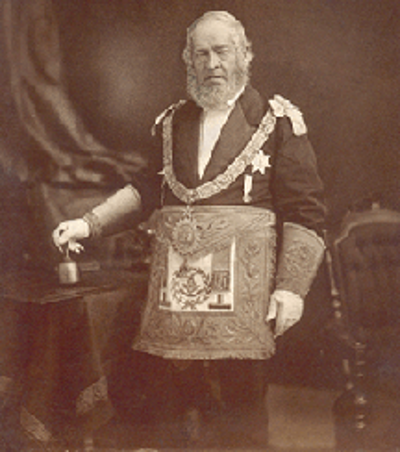
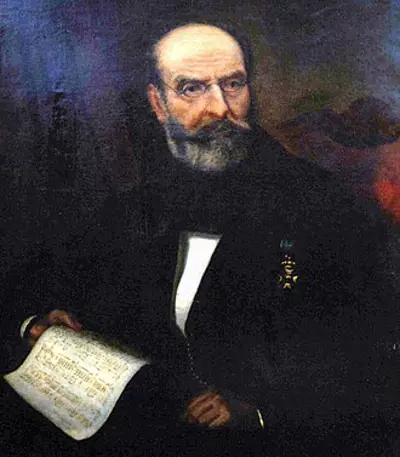
Pope Pius IX (died 1878)
Pope Pius IX was head of the Catholic Church from 16 June 1846 until his death in February 1878.
Pope Pius IX (died 1878)
Explore 312 historical events from 1790β1799.
Pope Pius IX was head of the Catholic Church from 16 June 1846 until his death in February 1878.
Pope Pius IX (died 1878)
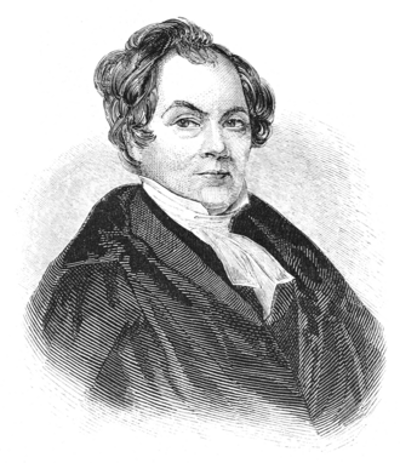
Gaspard-Gustave de Coriolis was a French mathematician, mechanical engineer and scientist. He is best known for his work on the supplementary forces that are detected in a rotating…
Gaspard-Gustave de Coriolis, French mathematician and engineer (died 1843)
In volcanology, a lava dome is a circular, mound-shaped protrusion resulting from the slow extrusion of viscous lava from a volcano. Dome-building eruptions are common, particularl…
A lava dome collapses on Mount Unzen, near the city of Shimbara on the Japanese island of Kyūshū, creating a deadly tsun
Kentucky, officially the Commonwealth of Kentucky, is a landlocked state in the Southeastern region of the United States. It borders Illinois, Indiana, and Ohio to the north, West …
Kentucky is admitted as the 15th state of the United States
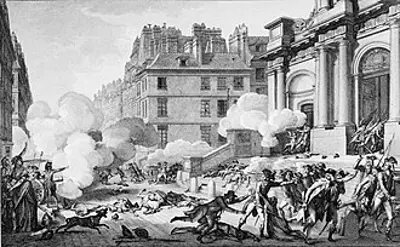
The Brunswick Manifesto was a proclamation issued by Charles William Ferdinand, Duke of Brunswick, commander of the Allied army, on 25 July 1792 to the population of Paris during t…
The Brunswick Manifesto is issued to the population of Paris promising vengeance if the French royal family is harmed.
Sir Thomas Livingstone Mitchell, often called Major Mitchell, was a Scottish surveyor and explorer of Southeastern Australia. He was born in Scotland and served in the British Army…
Thomas Mitchell, Scottish-Australian colonel and explorer (died 1855)
John Linnell was an English engraver, portrait painter, and landscape painter. He was a naturalist and a rival to the artist John Constable. He had a taste for Northern European ar…
John Linnell, English painter and engraver (died 1882)
Ferdinand Christian Baur was a German Protestant theologian and founder and leader of the (new) Tübingen School of theology. Following Hegel's theory of dialectic, Baur argued that…
Ferdinand Christian Baur, German theologian and scholar (died 1860)
James Beaumont Neilson was a Scottish inventor whose hot-blast process greatly increased the efficiency of smelting iron.
James Beaumont Neilson, Scottish engineer and businessman (died 1865)
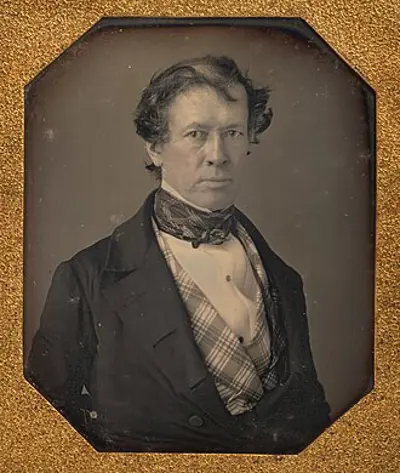
George Mifflin Dallas was an American politician and diplomat who served as the 11th vice president of the United States from 1845 to 1849. He also served as the mayor of Philadelp…
George M. Dallas, American lawyer and politician, 11th Vice President of the United States (died 1864)
Karl Friedrich Bahrdt, also spelled Carl Friedrich Bahrdt, was an unorthodox German Protestant biblical scholar, theologian, and polemicist. Controversial during his day, he is som…
Karl Friedrich Bahrdt, German theologian and author (born 1741)
John Montagu, 4th Earl of Sandwich, PC, FRS was a British statesman who succeeded his grandfather Edward Montagu, 3rd Earl of Sandwich, as the Earl of Sandwich in 1729, at the age …
John Montagu, 4th Earl of Sandwich, English politician, Secretary of State for the Northern Department (born 1718)
Charles Simon Favart was a French playwright and theatre director. The Salle Favart in Paris is named after him.
Charles Simon Favart, French playwright and composer (born 1710)
Lucius Levy Solomons was a Jewish Canadian merchant and fur trader.
Levy Solomons, Canadian merchant and fur trader (born 1730)
Admiral George Brydges Rodney, 1st Baron Rodney, KB was a Royal Navy officer, politician and colonial administrator. He is best known for his service in the American War of Indepen…
George Brydges Rodney, 1st Baron Rodney, English admiral and politician, 16th Governor of Newfoundland (born 1718)
Benjamin Tupper was an American soldier in the French and Indian War, and an officer of the Continental Army during the American Revolutionary War, achieving the rank of brevet bri…
Benjamin Tupper, American general and surveyor (born 1738)
John Paul Jones was a British-American naval officer who served in the Continental Navy during the American Revolutionary War. Often referred to as the "Father of the American Navy…
John Paul Jones, Scottish-American admiral and diplomat (born 1747)
René Nicolas Charles Augustin de Maupeou, marquis de Morangles was a French lawyer, politician, and chancellor of France, whose attempts at reform signalled the failure of enlighte…
René Nicolas Charles Augustin de Maupeou, French lawyer and politician, Chancellor of France (born 1714)
Claude Joseph Rouget de Lisle was a French army officer of the French Revolutionary Wars. Lisle is known for writing the words and music of the Chant de guerre pour l'armée du Rhin…
French composer Claude Joseph Rouget de Lisle wrote "La Marseillaise", now the national anthem of France
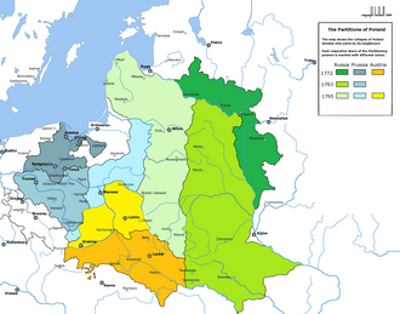
The Great Sejm, also known as the Four-Year Sejm was a Sejm (parliament) of the Polish–Lithuanian Commonwealth that was held in Warsaw between 1788 and 1792. Its principal aim beca…
The Great Sejm of the Polish–Lithuanian Commonwealth was disbanded following the Russian invasion of Poland
Captain George Vancouver was an English Royal Navy officer and explorer best known for leading the Vancouver Expedition, which explored and charted North America's northwestern Pac…
Captain George Vancouver of the Royal Navy claimed the land around Puget Sound in the Pacific Northwest for Great Britai
The Belfast Harp Festival, called by contemporary writers The Belfast Harpers Assembly, 11–14 July 1792, was a three-day musical and patriotic event organised in Belfast, Ireland,…
The Belfast Harp Festival, an early event in the Gaelic revival, began at the Assembly Rooms.
James Buchanan Jr. was the 15th president of the United States, serving from 1857 to 1861. He also served as the 17th United States secretary of state from 1845 to 1849 and represe…
James Buchanan, American soldier, lawyer, and politician, 15th President of the United States (died 1868)
Samuel Finley Breese Morse was an American inventor and painter. After establishing his reputation as a portrait painter, Morse, in his middle age, contributed to the invention of …
Samuel Morse, American painter and inventor, co-invented the Morse code (died 1872)