1819
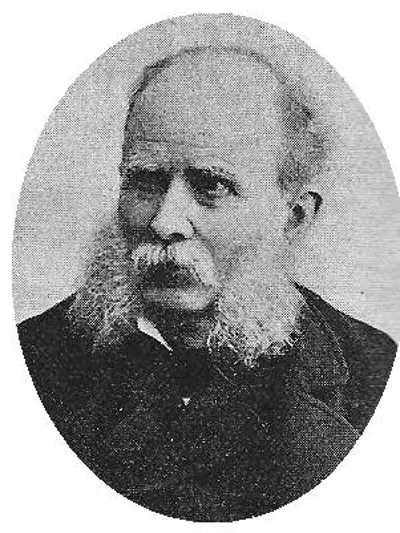
Wilhelm Wattenbach, German historian and academic (died 1897)
Wilhelm Wattenbach, was a German historian.
Wilhelm Wattenbach, German historian and academic (died 1897)
Explore 620 historical events from 1810–1819.
Wilhelm Wattenbach, was a German historian.
Wilhelm Wattenbach, German historian and academic (died 1897)
Armand Hippolyte Louis Fizeau was a French physicist who, in 1849, measured the speed of light to within 5% accuracy. In 1851, he measured the speed of light in moving water in an …
Hippolyte Fizeau, French physicist and academic (died 1896)
Narcís Monturiol i Estarriol was a Spanish lawyer, artist, journalist, newspaper publisher and engineer born in Figueres, Catalonia. He was the inventor of the first air-independen…
Narcís Monturiol, Spanish engineer and publisher (died 1885)
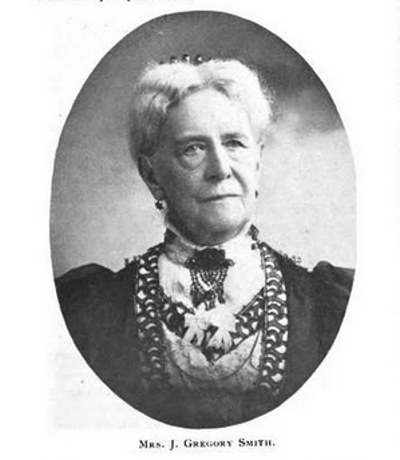
Ann Eliza Smith was an American author. She was president of the board of managers for the Vermont woman's exhibit at the Centennial Exposition of 1876, at Philadelphia, and was fr…
Ann Eliza Smith, American author and patriot (died 1905)
Heinrich Joseph Dominicus Denzinger was a leading German Catholic theologian and author of the Enchiridion symbolorum et definitionum, a work commonly referred to simply as Denzing…
Heinrich Joseph Dominicus Denzinger, German theologian and author (died 1883)
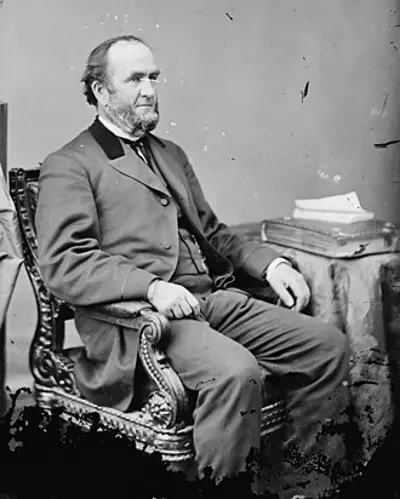
Austin Franklin Pike was a United States representative and senator from New Hampshire. Born in Hebron, New Hampshire, he pursued an academic course, studied law, and was admitted …
Austin F. Pike, American lawyer and politician (died 1886)
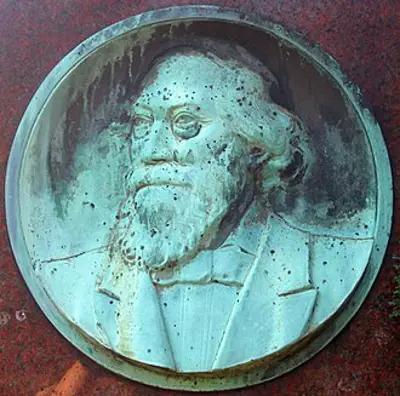
Christian August Friedrich Garcke was a German botanist who was a native of Bräunrode, Saxony-Anhalt.
Christian August Friedrich Garcke, German botanist (died 1904)
Mary Moser was an English painter who was one of the most celebrated female artists in 18th-century Britain. One of only two female founding members of the Royal Academy in 1768, M…
Mary Moser, English painter and academic (born 1744)
Kamehameha I, also known as Kamehameha the Great, was the conqueror and first ruler of the Kingdom of Hawaii. The state of Hawaii gave a statue of him to the National Statuary Hall…
Kamehameha I, king of the Hawaiian Islands (born 1738)
The Public Universal Friend was an American preacher born in Cumberland, Rhode Island, to Quaker parents. After suffering a severe illness in 1776, the Friend claimed to have died …
The Public Universal Friend, American evangelist (born 1752)
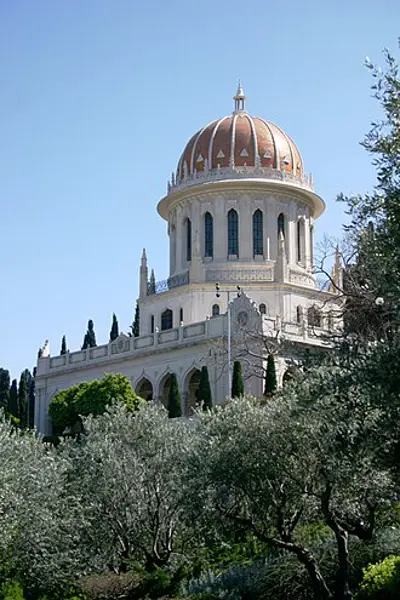
The Báb was an Iranian religious leader who founded Bábism, and is also one of the central figures of the Baháʼí Faith. The Báb gradually and progressively revealed his claim in hi…
Báb, Iranian religious leader, founded Bábism (died 1850)
Admiral Sir William Cornwallis, was a Royal Navy officer and politician. Cornwallis took part in a number of decisive battles including the siege of Louisbourg in 1758, when he was…
William Cornwallis, English admiral and politician (born 1744)
Oliver Hazard Perry was a United States Navy officer from South Kingstown, Rhode Island. A prominent member of the Perry family naval dynasty, he was the son of Sarah Wallace Alexa…
Oliver Hazard Perry, American commander (born 1785)
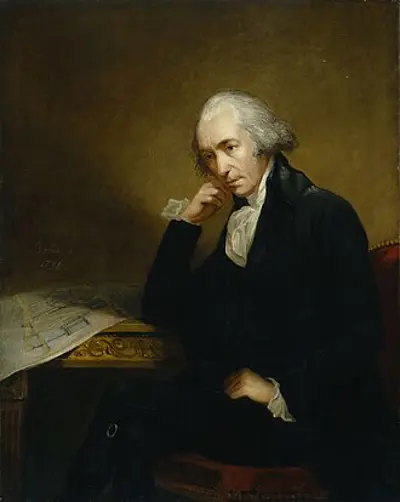
James Watt was a Scottish inventor, engineer and chemist who improved on Thomas Newcomen's 1712 Newcomen steam engine with his Watt steam engine in 1776, which was fundamental to t…
James Watt, Scottish engineer and instrument maker (born 1736)
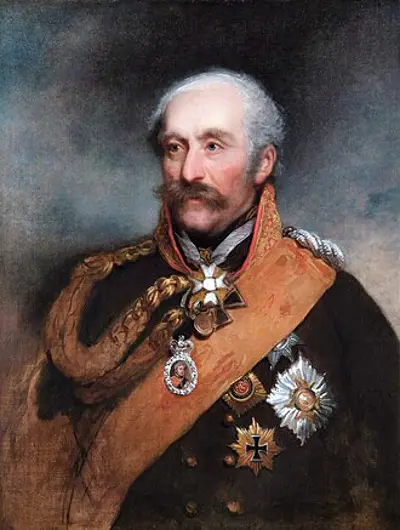
Gebhard Leberecht von Blücher, Graf (count), later elevated to Fürst (prince) von Wahlstatt, was a Prussian Generalfeldmarschall. He earned his greatest recognition after leading h…
Gebhard Leberecht von Blücher, Prussian general (born 1742)
John Jeffries was an American medical doctor, scientist, and military surgeon with the British Army in Nova Scotia and New York during the American Revolution. He is best known for…
John Jeffries, American physician and surgeon (born 1744)
James Bunbury White was an American politician and millwright. He was a member of both chambers of the North Carolina General Assembly, was the first to represent Columbus County i…
James Bunbury White, American politician (born 1774)
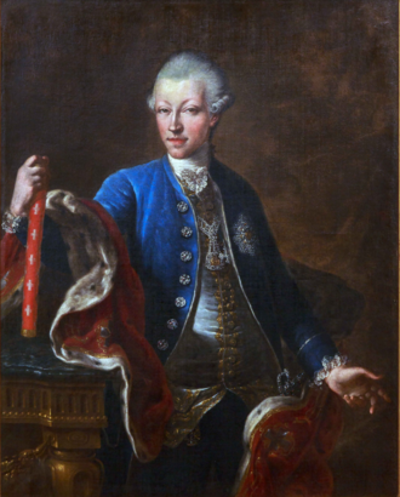
Charles Emmanuel IV was King of Sardinia and ruler of the Savoyard states from 16 October 1796 until 1802, when he abdicated in favour of his brother Victor Emmanuel I.
Charles Emmanuel IV, king of Sardinia (born 1751)
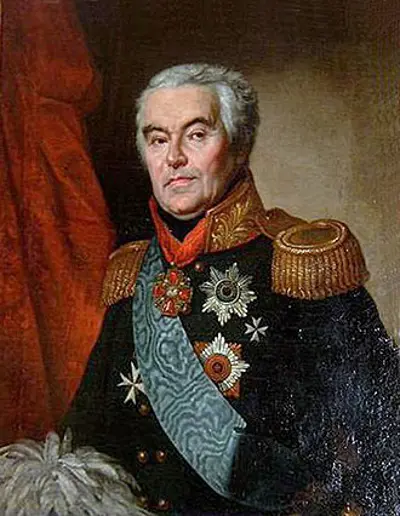
Count Sergey Kuzmich Vyazmitinov was a Russian general and statesman.
Sergey Vyazmitinov, Russian general and politician, War Governor of Saint Petersburg (born 1744)
The 1819 Rann of Kutch earthquake occurred at about 18:45 to 18:50 local time on 16 June 1819. It had an estimated magnitude ranging from 7.7 to 8.2 on the moment magnitude scale a…
A strong earthquake in the Kutch district of Gujarat, India, caused a local zone of uplift that dammed the Nara River, w
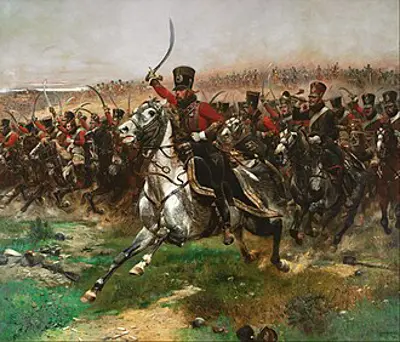
Cavalry are groups of soldiers or warriors who fight mounted on horseback. Until the 20th century, cavalry were the most mobile of the combat arms, operating as light cavalry in th…
Around 15 people were killed and 400 to 700 others injured when cavalry charged into a crowd demanding the reform of…
The United States Senate is a chamber of the bicameral United States Congress; it is the upper house, and the U.S. House of Representatives is the lower house. Together, the Senate…
The United States Senate ratifies the Rush–Bagot Treaty, limiting naval armaments on the Great Lakes and Lake Champlain
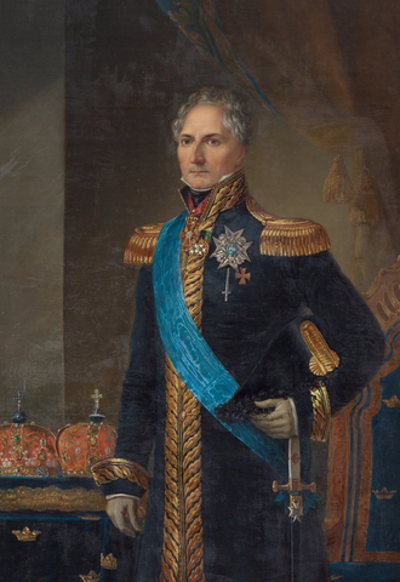
Charles XIV John was King of Sweden and Norway from 1818 until his death in 1844 and the first monarch of the Bernadotte dynasty. In Norway, he is known as Charles III John ; befor…
Carl III of Sweden–Norway is crowned king of Norway, in Trondheim.

Augustin-Jean Fresnel was a French civil engineer and physicist whose research in optics led to the almost unanimous acceptance of the wave theory of light, fully supplanting Newto…
French physicist Augustin Fresnel signs his preliminary "Note on the Theory of Diffraction" (deposited on the following