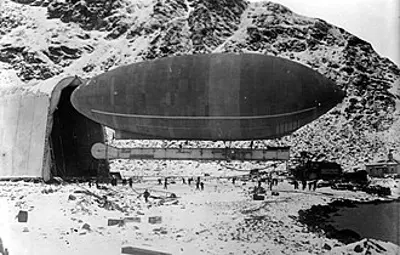
The America was a non-rigid airship built by Louis Mutin Godard in France in 1906 for the journalist Walter Wellman's attempt to reach the North Pole by air. Wellman first conceived of using a balloon to fly to the pole during a failed polar attempt by boat and sledge from Svalbard in 1894. He then visited Paris to review the state of balloon technology but left disappointed by the lack of acceptable steering and propulsion capability. A decade later while at the 1905 Portsmouth Peace Conference he learned of recent innovations in French dirigible design and believed a solution might be at hand for his Arctic aerial plan. After receiving the backing of newspaper publisher Victor F. Lawson, the Wellman Chicago Record-Herald Polar Expedition was announced, and Wellman traveled to Paris in search of a suitable design and manufacturer. In the meantime a public company was established to raise the $US 250,000 required for the expedition and airship.
Airship America is launched from New Jersey in the first attempt to cross the Atlantic by a powered aircraft.
On October 15, in the year 1910, Airship America is launched from New Jersey in the first attempt to cross the Atlantic by a powered aircraft. This event is recorded as a Historical Events event in the history of October 15, a notable event in this corner of history.
Key Facts
- This event took place on October 15, 1910 (AD era).
- It is categorised as a Historical Events event in recorded history.
- Referenced in 1 Wikipedia article.
- Wikipedia source last updated on 10 September 2026.
On This Date in History
This article draws on content from Wikipedia, available under CC BY-SA 4.0.
More on October 15
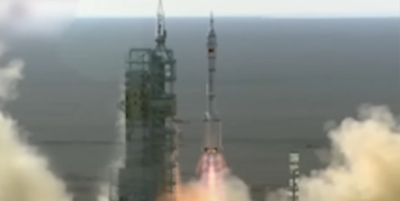
China launches Shenzhou 5, its first crewed space mission.
Shenzhou 5 was the first human spaceflight mission of the Chinese space program, launched on 15 October 2003. The Shenzhou spacecraft was launched on a Long March 2F launch vehicl…
China launches Shenzhou 5, its first crewed space mission.
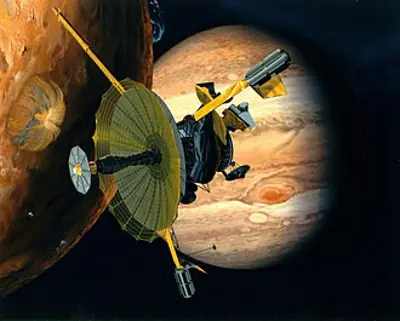
NASA's Galileo spacecraft passes within 112 miles (180 km) of Jupiter's moon Io.
Galileo was an American robotic space probe that studied the planet Jupiter and its moons, as well as the asteroids Gaspra and Ida. Named after the Italian astronomer Galileo Gali…
NASA's Galileo spacecraft passes within 112 miles (180 km) of Jupiter's moon Io.
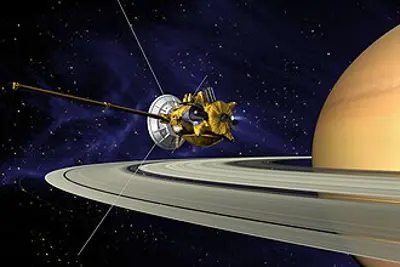
The Cassini probe launches from Cape Canaveral on its way to Saturn.
Cassini–Huygens, commonly called Cassini, was a joint space-research mission by NASA, the European Space Agency (ESA), and the Italian Space Agency (ASI) to send a space probe to …
The Cassini probe launches from Cape Canaveral on its way to Saturn.

The United States, under the Clinton administration, returns Haiti's first democratically elected president,…
Bill Clinton's tenure as the 42nd president of the United States began with his first inauguration on January 20, 1993, and ended on January 20, 2001. Clinton, a Democrat from Ark…
The United States, under the Clinton administration, returns Haiti's first democratically elected president,…

The "Oh-My-God particle", an ultra-high-energy cosmic ray measured at 40,000,000 times that of the highest energy…
The Oh-My-God particle (as physicists dubbed it) was an ultra-high-energy cosmic ray detected on 15 October 1991 by the Fly's Eye camera in Dugway Proving Ground, Utah, United Sta…
The "Oh-My-God particle", an ultra-high-energy cosmic ray measured at 40,000,000 times that of the highest energy…
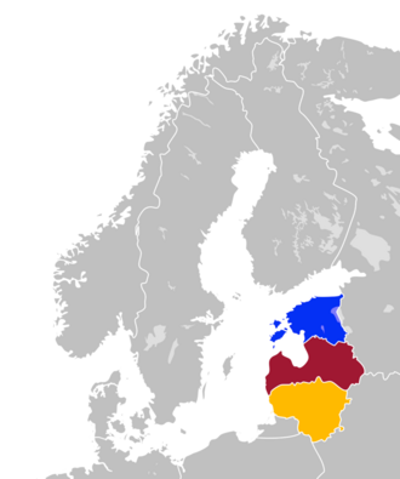
The leaders of the Baltic States, Arnold Rüütel of Estonia, Anatolijs Gorbunovs of Latvia and Vytautas Landsbergis of…
The Baltic states or the Baltic countries is a geopolitical term encompassing Estonia, Latvia, and Lithuania. All three countries are members of NATO, the European Union, the Euro…
The leaders of the Baltic States, Arnold Rüütel of Estonia, Anatolijs Gorbunovs of Latvia and Vytautas Landsbergis of…

Comments 0
Sign in to join the discussion.